
 By Admin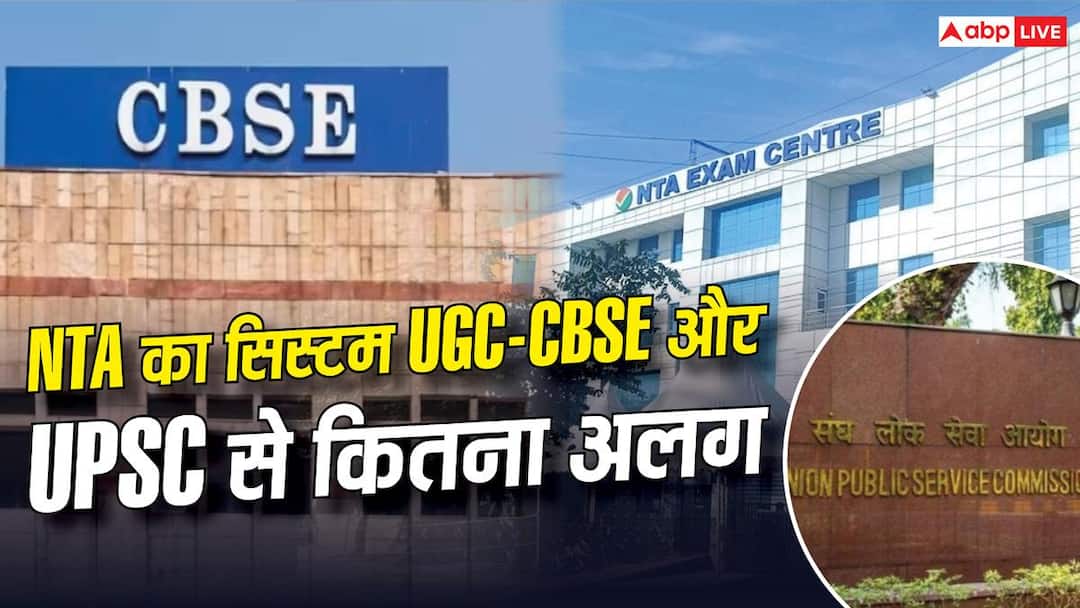
Amidst the ongoing protests over paper leak, the central government seems to be in action mode regarding NTA. Along with major changes in NTA, the government is planning to remodel its entire structure within the next one month. According to reports, these changes are being made on the basis of the recommendation of the High Level Expert Committee, so that the examination system can be made more secure and transparent than before. With these changes, now senior officers will also be appointed in NTA for important areas like cyber security investigation and psychometrics.
Amidst the paper leak and all these matters, now comparisons are being made with NTA and UGC-CBSE and UPSC examination agencies. In such a situation, let us tell you today how the entire system of NTA works and how different its system is from UGC-CBSE and UPSC.
What is NTA and why was this agency created?
National Testing Agency NTA was established by the Center in 2017 as an autonomous body under the Ministry of Education. It has been registered under the Society Registration Act 1860 and also comes under the purview of the RTI Act. The purpose of creating NTA was to conduct the country’s major entrance examinations through a professional, transparent and technology-based system. Earlier, different institutions used to conduct their own examinations, due to which there was a lack of uniformity in the examination system.
Which examinations does NTA conduct?
Currently, NTA conducts many major entrance examinations of the country, which include JEE Main, NEET UG, CUET UG, CUET PG, UGC NET, CSIR UGC NET, CMAT, GPAT and Hotel Management and other entrance examinations. Every year, through these examinations, lakhs of students take admission in different universities and institutes across the country.
How does NTA’s system work?
It is often believed that the work of NTA is only to conduct examinations, but the responsibility of the agency is much wider than this. Selection of examination centres, process of question paper preparation, technical arrangements, examination conduct, data management, release of results and use of new technology to improve the examination system also form a major part of the responsibility of NTA. Apart from this, the examination centers are selected from the list of already approved government schools, CBSE affiliated institutes and if necessary, AICTE approved colleges. The consent and standards of the examination centers are also re-reviewed every year.
How is NTA different from CBSE and UGC NET?
Before the formation of NTA, national admission examinations like medical and engineering were mainly conducted by CBSE. Whereas UGC used to decide the rules and eligibility related to examinations like UGC NET. After the formation of NTA, the responsibility was separated, now UGC only decides the rules and eligibility related to higher education, while the entire technical and administrative responsibility of conducting the examination rests with NTA. Similarly, CBSE now mainly focuses on school education and board examinations. After the formation of NTA, many examinations were made computer based. Apart from this, most of the processes like application, admit card and result were also made completely online. Before the formation of NTA, many such processes were mostly done offline.
Also read- Great opportunity to get a job in NCERT CIET, recruitment on many contractual posts.
What is the difference between NTA and UPSC?
After the paper leak controversies, NTA is also being compared with UPSC, because both conduct national level examinations. However, there is a lot of difference in the structure and functioning of both the institutions. UPSC is a constitutional body formed under Article 315 of the Constitution, while NTA is an autonomous body formed under the Society Registration Act. While UPSC has its own permanent administrative structure and a long-developed confidential examination system, a large number of employees in NTA work through representative appointment, contractual and outsourcing arrangements. Apart from this, the main examination of UPSC is subjective, whereas most of the examinations of NTA are objective and OMR or computer based.
Also read- NTA’s income doubled in 5 years, earned more than Rs 1100 crore from exam
Education Loan Information:
Calculate Education Loan EMI