
 By Admin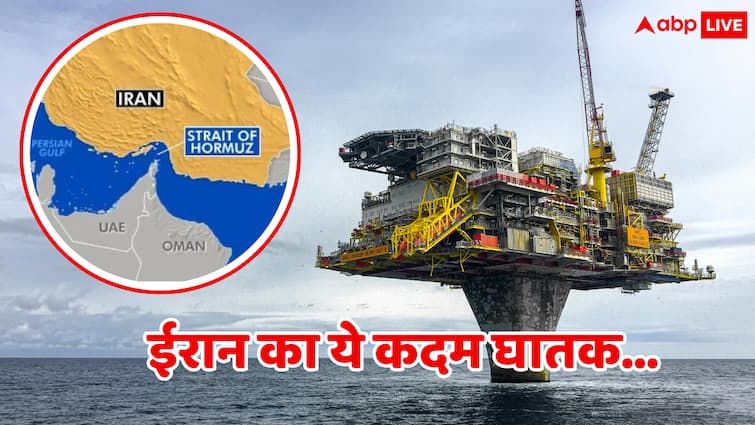
All the crude oil (crude oil) that comes out in the world passes through a very narrow path, its name is Hormuz Strait. This route is located between Iran and Oman and its width is just 33 kilometers. Through this, big oil producing countries like Saudi Arabia, Iran, Iraq, Kuwait, Qatar and UAE send their crude oil and gas to the world.
Iran’s threat caused a stir
Recently, amid the increasing tension between Iran and Israel, Iran has indicated that it can consider closing the Strait of Hormuz. Ismail Kausari, a senior member of the Iranian Parliament and commander of the Revolutionary Guard, said that Iran is keeping every option open to punish the enemies. However, Iran has given such threats even in the past, but now when the situation is like war, the concern has increased further.
Why is this waterway so important?
The hormuz is the most important way of energy for the watercrowded world. According to the International Energy Agency (IEA), 25 percent of the world’s crude oil and LNG pass through here. In 2022 alone, about 20 million barrels per day passed through this route. There is so much traffic on this path that more than 3,000 ships come from here every month.
Why the alarm bell for India?
India imports about 90 percent of its needs, and more than 40 percent of that comes from the middle-east. That is, the same path that passes through hormuz. If this route is interrupted, India may suffer heavy losses. This will increase oil prices, increase shipping expenses and insurance premiums and will affect everything from petrol-diesel to industry.
What is the government’s preparation?
Union Petroleum Minister Hardeep Singh Puri has assured people that India has 74 days of oil reserves. It has 40–42 days with IOCL, 9 days in government reserves, and the remaining BPCL and HPCL. That is, India is still completely safe, but the situation may be shocked if the situation deteriorates.
Will Iran really shut down the path?
Experts believe that this path is as important for Iran as for the rest of the world. Iran also sells oil to China by this route, and China is its biggest customer. In such a situation, if the path is closed, Iran will suffer loss itself. That is why it is hardly possible to close the whole way, but still in a situation like war, supply can stop at any time, which will be a huge shock for the world.
Crude oil prices already started increasing
As stress increased, oil prices reacted rapidly. US crude oil has reached $ 72.64 per barrel and Brent crude has reached $ 74.10 per barrel. Earlier, these prices were between $ 65–70. If the crisis increases, then an increase of 5 to 10 dollars per barrel can be seen.
What will be the result?
If the supply of hormuz drainage is interrupted, then fuel prices in the world may touch the sky, inflation may increase, and the economic growth of countries like India can be affected. Because it is not just a matter of oil, it is a complex issue related to trade, supply chain and geopolitics.
The hormuz is a small stitched, but its importance is very large. Its open supply for a emerging country like India is like a lifeline. And this is why every time there is a struggle in the world, the eyes first go on this path. This is not just a sea route, it is the pulse of the world’s energy.
Also read: If you follow the formula of 10x21x12 in SIP investment, then in a few years, millionaires will be made