
 By Admin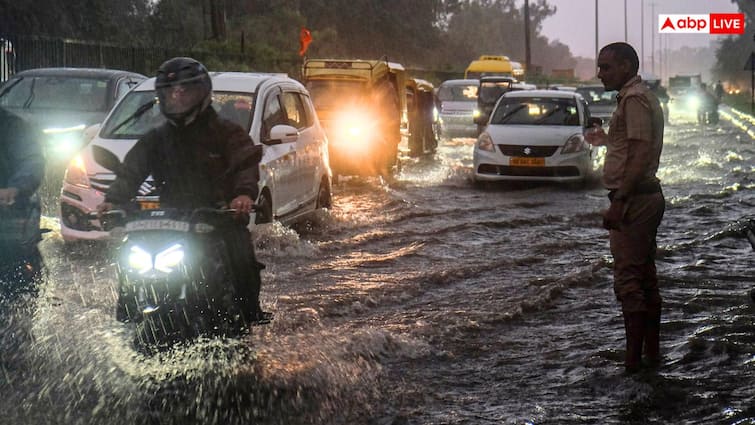
The intermittent rains in Delhi-NCR on Monday disturbed the normal life. The Meteorological Department has predicted heavy to very heavy rainfall in the coming days. In view of this alert, orders were given to operate all schools and offices in Gurugram on 2 September in online format. At the same time, it was decided to keep all schools closed on 2 September in Chandigarh.
Gurugram District Disaster Management Authority issued a consultation on Monday, stating that the city received more than 100 mm of rain from 3 pm to 7 pm. The Meteorological Department has issued an orange alert for heavy to very heavy rains on September 2.
Work from Home in Gurugram
All corporate offices and private institutions were advised to allow employees to work from home. All schools were instructed to conduct online classes on 2 September.
Due to continuous rains, there was a situation of severe traffic jam on the Delhi-Jaipur highway. Long queues of vehicles started from Sirhaul border to Manesar. The Wazirabad area received more than 85 mm of rain, which led to the problem of waterlogging and traffic jam in many places.
How long will it rain?
Visibility at Palam Airport decreased to 800 meters during heavy rains. Mahesh Palawat, vice -president of the private weather agency Skymet, said that this rain is due to monsoon and unusually active Western disturbances. In Delhi-NCR, intermittent rains may continue till September 5.
The entire North India is in the grip of heavy rains at this time. At the same time, heavy rains in Chandigarh and surrounding areas have disturbed life. The roads are full of water, many pits have been filled with water, flood situation has also been created in fields and canals.
After the heavy rains on 1 September, the water level of Yamuna and other rivers also increased, due to which the Haryana-Punjab administration has taken precautionary steps. The Chandigarh administration ordered all schools to be closed on Tuesday (September 2), while relief and rescue work has been intensified in many affected districts.
Administration preparations and meetings
Officials of Punjab and Haryana have reviewed the situation in view of the continuous rains and increasing threat. Haryana CM Naib Singh Saini discussed the situation with the Deputy Commissioners through a video conference and directed to ensure the arrangement of shelter and food for the flood affected people.
Many gates of Hathinikund barrage have been opened so that the pressure of Yamuna can be reduced. More than 100 mm of water has been recorded in Chandigarh due to continuous rains, while the district administration in Haryana has been ordered to be vigilant and keep all the closed schools completely closed.
Flood situation worsens in Punjab
Many districts of Punjab are facing rain and floods. Pathankot, Gurdaspur, Fazilka, Kapurthala, Tarn Taran, Ferozepur, Hoshiarpur and Amritsar are the most affected. The rains in Hoshiarpur district made the situation more serious, where water entered the villages and damaged crops. In Garhshankar and surrounding areas, dozens of villages and streets are submerged.
After overnight rain, houses were flooded in villages like Hakumatpur, Baddon, Alawalpur, Bhana, Thakkarwal and Khanpur. SDM Sanjeev Kumar of Garhshankar said that the administration has provided food and drink for the affected families through gurdwaras.
Effect of rain of Himachal and Jammu and Kashmir
The heavy rains in the catchment areas of Himachal Pradesh and Jammu and Kashmir have made the situation of Punjab-Haryana more critical. Explain that the reason for this rain in the north load is the Western disturbance. Sutlej, Vyas and Ravi rivers are in spate due to heavy rains. Due to the rise in the water level of seasonal rivers, the low -lying areas have been flooded.
Officials say that the water level may increase further due to continuous rains, in such a situation, people have been appealed to go to safe places and not to go out unnecessarily. Relief teams are constantly monitoring the affected areas so that the needy can get immediate help.