
 By Admin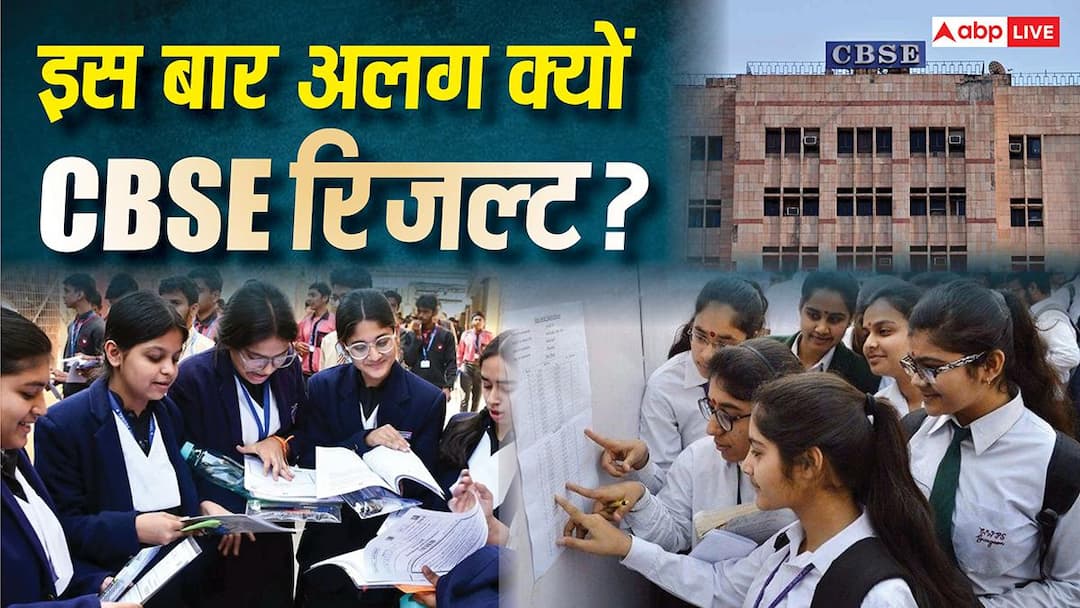
CBSE Class 12 results 2026 have been completely different from previous years in many ways. A total of 94,028 students have scored more than 90% marks. At the same time, 17,113 children scored more than 95% marks. The board conducted many big experiments this year, the effect of which is clearly visible everywhere from the checking process to the result numbers. Let us understand how good these changes have been and how bad they have been…
What was different and better this time?
1. ‘Touchless-Dust’ Digital Checking: On-Screen Marking (OSM)
In 2026, the method of checking 12th answer sheets (copies) changed completely. For the first time, the ‘On-Screen Marking’ (OSM) system was implemented, which the controller of examinations himself named ‘No Touch, No Dust – Clean Evaluation’.
- What used to happen earlier: Teachers would physically carry bundles of copies, turn pages and make additions and subtractions manually.
- Now what happened: Students took the exam using pen and paper only, but all the copies were first scanned and uploaded on the central server. Then the teachers did not get the bundle of any one school, instead they logged in on their computers and kept checking the scanned copies of different schools one by one.
- Advantages: Its biggest advantage was that the problem of addition-subtraction mistakes and missing any answer was almost eliminated. The entire process became faster and more reliable than before, as there was no need to collect, carry and store piles of papers.
2. Results will come soon and copy will also be available soon
Due to the new digital system, the wait for results also reduced. Whereas earlier it used to take about 60 days to examine the copies, thanks to OSM, this time the target was set to complete it in just 8-9 days. The result of this is that the 12th result was released on May 13 itself. Also, transparency in the system has increased to such an extent that students can order and view the scanned copy of their checked copy online.
3. This time numbers were not distributed randomly (effect of less moderation)
This was perhaps the biggest and most controversial change, whose impact was directly visible on the results. In the last few years, it has been alleged that CBSE is increasing ‘Marks Inflation’ by giving more marks than required under the moderation policy. For this reason, a huge increase of 247% was recorded in the last 10 years in the number of students scoring more than 95% marks in 2025.
This time, the Board implemented its rules of moderation and granting of grace marks very strictly to check ‘inflation’. Grace marks were given only to those students who were missing 1-2 marks from the 33% passing marks, or whose question paper had a proven mistake. The direct effect of this strictness was that this time more than 94,000 students scored above 90% marks, which is about 21,000 more.
What is the worrying aspect of the result this time?
1. Big drop in passing percentage and top scorers
The biggest blow to strict checking and limited moderation has been on the pass percentage and the number of top scorers.
- 12th pass percentage: It was only 85.20% in 2026, which is a big decline of 3.19% compared to last year (88.39%).
- Those who scored more than 95%: While last year 24,867 students had secured more than 95% marks, this time the figure fell to only 17,113. This decline clearly shows how strictly the Board has banned the policy of ‘number distribution’.
- Girls’ performance: Although girls are still better than boys, their pass percentage also fell to 88.86% from 91.64% last time.
2. Digital checking has its own initial problems
While OSM is the way of the future, its introduction also faced many technical hurdles. For many teachers, checking copies on the screen for hours was a difficult task. During the investigation, complaints like the scanned copies being blurred and the server running slow came to light at some places.
3. Maths and Physics papers increased the difficulties of students
This time the examination was difficult for the students because some papers were quite challenging. Especially in the 10th Maths and 12th Maths papers, there was a lot of difference in the level of difficulty of different sets. Some sets were so difficult that they were compared to competitive exams like JEE, due to which a teacher even filed a Public Interest Litigation (PIL) in this matter.
4. Noise of false news and fake website of ‘Grace Marks’
To take advantage of the chaos at the time of results, various kinds of rumors were spread on social media. At many places it was claimed that all the students would get 25-25 marks for free. CBSE had to clarify that grace marks are only for those students who have missed passing by 1-2 marks. Besides, fake result links also went viral. In such a situation, it was a big challenge for the board to make the students aware.
So overall, the CBSE 2026 results have proved to be a strong step towards curbing ‘inflation of numbers’ and digital transparency. This change has increased the ‘real value’ of marks, but its impact was also clearly visible in the form of decline in passing percentage and the number of top scorers. This is the beginning of a reform, but it is equally important to understand the technical challenges associated with it and the mental pressure of the students.
Education Loan Information:
Calculate Education Loan EMI