
 By Admin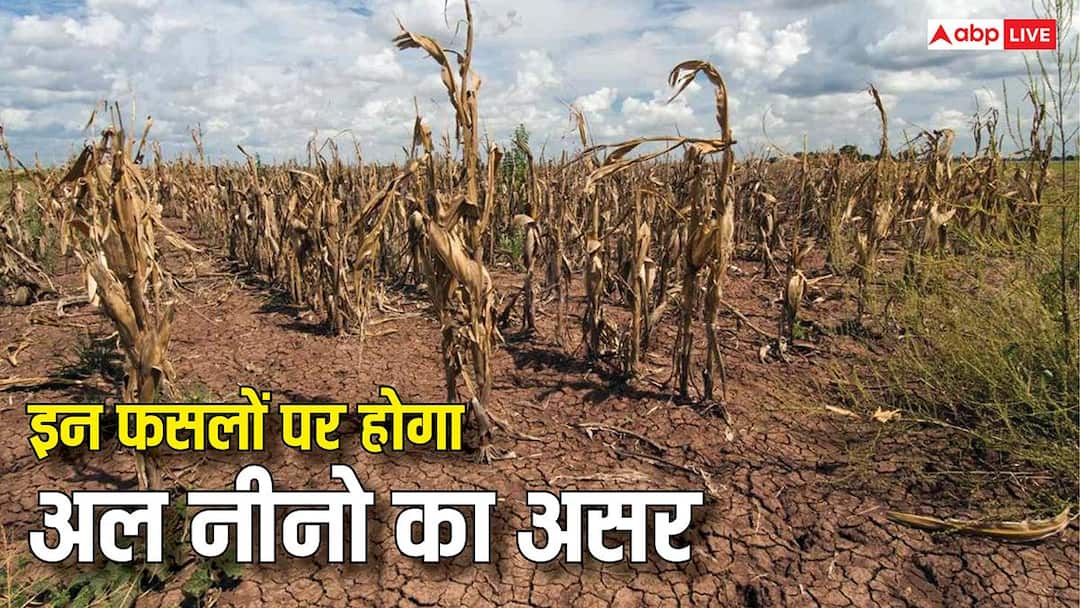
El Nino Impact On Crops: These days the fear of El Nino is increasing rapidly in many parts of the country. Due to this seasonal change in the Pacific Ocean, the sea surface temperature suddenly increases. Which has a direct and fatal impact on our Indian monsoon. Due to this, monsoon winds become very weak and there is severe shortage of rain in many parts of the country.
This year also, seeing the continuously increasing heatwave and deteriorating pre-monsoon conditions, the Agriculture Department has come on full alert mode. The biggest danger due to El Nino is delay in sowing of Kharif season crops and complete loss of soil moisture. Let us tell you which crops are going to be hit the hardest by the shadow of this drought.
El Nino will affect these crops
The first and deadly attack of El Nino is seen on the most important crop of Kharif season i.e. paddy (rice). Paddy plants require standing water in the initial stages and due to weak monsoon, both its planting and yield are badly affected. Apart from paddy, cotton cultivation also does not escape its attack.
Because due to lack of water and increasing temperature, the attack of sucking insects like aphids and white fly suddenly increases. Even a long-duration cash crop like sugarcane, which requires frequent heavy irrigation, is on the verge of drying up due to water crisis. Along with these major crops, the growth of pulse crops like arhar, moong and urad also stops due to the disappearance of soil moisture.
Also read: How much does Gir cow of Rajasthan cost? It gives 10 to 18 liters of milk every day.
Farmers can save their hard work with these measures
To deal with this big seasonal crisis, it is very important for the farmers to make some modern changes in their old traditional farming methods. The first step should be that farmers should choose climate-resilient varieties of seeds that require less water and can tolerate drought. To utilize every drop of water properly, micro-irrigation techniques like drip irrigation and sprinklers should be adopted immediately.
Keep an eye on the weather department’s forecasts
Along with this, keep a constant eye on the forecasts of the Meteorological Department and slightly change or delay your sowing time according to the rain pattern. Use mulching to conserve soil moisture and instead of relying on a single crop, do multi-cropping so that even if one crop fails, the loss can be compensated by the other.
Also read: Bumper irrigation will be done with less water and nominal expenditure, the government is giving huge subsidy on this irrigation technique.