
 By Admin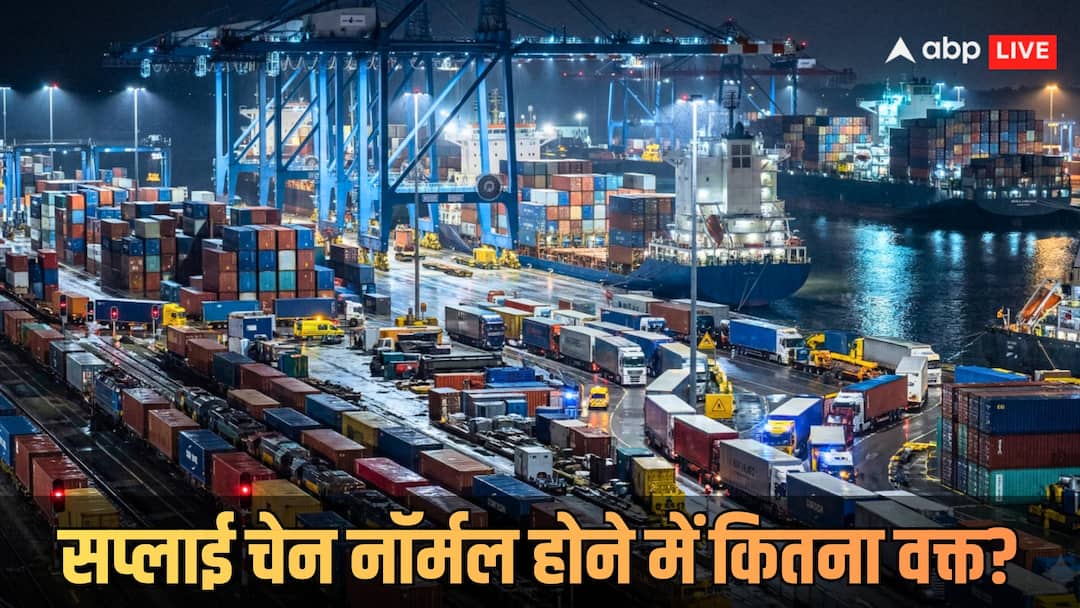
‘Ships of the world, start your engines. Let the oil flow…’ On June 14, 2026, US President Donald Trump informed the world by writing this post on Truth Social. A ceasefire agreement has been reached with Iran. With this, the US-Iran war that has been going on for 107 days will stop and the path to 20 percent of the world’s oil supply will open again. On June 19 (Friday), both the countries will formally sign this Memorandum of Understanding (MoU) in Geneva, Switzerland. This was announced by Pakistan Prime Minister Shehbaz Sharif, whose government had mediated the backchannel talks for the past several weeks. Will oil tankers start running in the strait at 12 noon on Friday or will it take months for the global supply chain to return to normal? Let us understand in the explainer…
First of all, let us know how much time will it take for the supply chain to become normal?
Trump has announced that the Strait of Hormuz will open. But foreign affairs expert and BHU professor Priyankar Upadhyay says, ‘It is not that thousands of tankers will start running again at 12 noon on Friday. It may take a week to several months for the actual supply chain to become normal. Let’s understand this deorbit timeline:
- Before the signing (14-19 June): Iran is still adamant on its conditions. Iran’s Deputy Foreign Minister Kazim Gharibabadi said, ‘We have included all our major demands in the draft. This document is not a sign of trust in Washington. The 60-day talks will start only when we are confident that America has fulfilled its promises. The US administration has indicated that preparations for removing the mines will be done by Friday.
- First 7 days of deal (19-26 June): As soon as both sides sign on June 19, the US Navy will immediately lift its blockade. Also, Iran will get immediate relief from oil sanctions. However, VLCC tankers will start moving out of the interior of the Persian Gulf within a few hours. First of all, those tankers which are already loaded and were strategically stopped in the Gulf will come out first. Experts believe that if all technical and administrative issues are resolved, the first tanker can exit the strait in 2-3 days, but large-scale traffic may take a week.
- Days 7 to 30 of the deal (June 26-July 19): The biggest hurdle is mines. American officials allege that Iran had laid mines at many places in the strait during the conflict. Only once the Navy’s path is cleared, private tankers will be able to pass through. Trump wrote, ‘The strait will open for the purpose of removing mines with the signing of the deal on Friday.’ Therefore, this is not a normal re-opening. The agreement with Iran will bring back the confidence of the companies. The shipping insurance premium which was skyrocketing for the last three months will gradually become normal.
- 30 to 60 days (July 19-August): America will have to fulfill all its promises. Although oil prices may fall sharply initially, if there is a delay in clearing mines or there is an impasse in nuclear negotiations, prices may rise again. Experts believe that if there are no further attacks or tension increases, the shipping volume could reach the pre-war level of 140 per day in three to four months (September-October 2026).
There remains a warning that in the event of a new military operation by Israel in Lebanon, Iran could decide to close Hormuz again or target tankers, which could again put the global economy at risk.
How big a relief is this deal for India?
India is the third largest oil importer in the world. Before the war started, India used to import more than 88% of its crude oil requirement. Half of it came from the Gulf countries, which passes through Hormuz. India also imports 60% of LPG gas for domestic consumption, of which 90% comes through Hormuz. Half of the demand for LNG gas also depends on imports, of which 65% came from Qatar and UAE. Due to the war, all of them were in deep trouble.
But after this deal, there are three big immediate reliefs for the Indian government:
- Petrol and diesel prices will fall soon: At the peak of the war, the price of Brent crude had reached the level of $ 119 per barrel, which was $ 70-72 in February. As soon as Trump announced the deal, Brent crude fell 4% to around $84 per barrel. The prices of petrol and diesel in India were increased in May. The price of petrol and diesel increased by about Rs 7.50 per liter, CNG by Rs 6 per kg and LPG cylinder by Rs 89. Experts estimate that if oil prices remain stable at $84 or go below that, the government may soon cut the prices of petrol and diesel by Rs 2 to Rs 5 per liter. At the same time, the price of cylinder may decrease by 30 to 50 rupees.
- Less pressure on rupee: According to estimates by global analytical company CRISIL, every $10 per barrel increase in oil prices increases India’s oil import bill by $13-14 billion. Due to fall in oil prices, India will need less dollars, which will strengthen the rupee.
- Reduction in inflation: According to CareEdge economist Revati Kasture, every $10 increase in crude oil prices increases India’s headline inflation by 55-60 basis points (0.55-0.60%). If the price of oil falls then inflation will start decreasing in the same proportion. This is a big relief for crores of families who are currently struggling with the burden of subsidy of Rs 650 crore per day.
Will India be able to get Iranian oil back?
India has made a lot of changes in its oil import list in the last few months. According to the Petroleum Ministry, the purchase of crude oil from non-Hormuz sources like Russia, Latin America and Africa increased from 55% to 70% in April-May 2026. Whereas there was a situation of decline in imports. But after this agreement, the possibility of return of Iranian crude oil has opened.
According to the draft MoU, the US will ‘exempt Iranian oil sanctions for a specific period.’ This means that India will be able to import oil directly from Iran, which has traditionally been beneficial for India. However, it is not yet clear for how many days this exemption will be and what will be its conditions.
Can the atmosphere worsen again?
It is also true that this agreement is delicate. According to Priyankar Upadhyay, there are still many questions left in this deal:
- The biggest threat is Israel. Trump clearly said that he is angry with Netanyahu and said that ‘Israel should not carry out any more attacks in Lebanon, especially on a day when we were very close to a peace agreement.’ Although the deal held, if Israel starts any military action again, Iran or Hezbollah could respond immediately.
- The Iranian Supreme National Security Council has also made it clear that ‘until America gives assurance of fulfilling its promises, the final talks will be postponed.’ This means that until the money comes to India’s account, there is no trust.
- Furthermore, Trump himself claims that ‘Iran will never acquire nuclear weapons.’ But according to the International Atomic Energy Agency (IAEA), Iran has 440.9 kg of uranium which is enriched to 60% purity. This is only one technological step away from weapons-grade (90%) level. If no solution is found on this within 60 days, this deal may fall apart again.
Engines have started, but speed will increase slowly
Donald Trump’s ‘Ships of the World, Start Your Engines’ has raised a new hope. From people standing in lines at petrol pumps to oil traders, everyone is heaving a sigh of relief. However, the opening of the strait does not just mean the movement of tankers, but also includes the cleaning of mines, normalization of insurance rates and the return of Iranian oil. It will take some more time for the world’s supply chain to return to normal, but at least this is a start.
Be it the common man who is wondering whether his gas cylinder bill will come down this month or not, or the Indian shipping worker standing on the Malabar coast who will be able to sail towards the Gulf to earn money again. This deal can prove to be a boon for everyone.