
 By Admin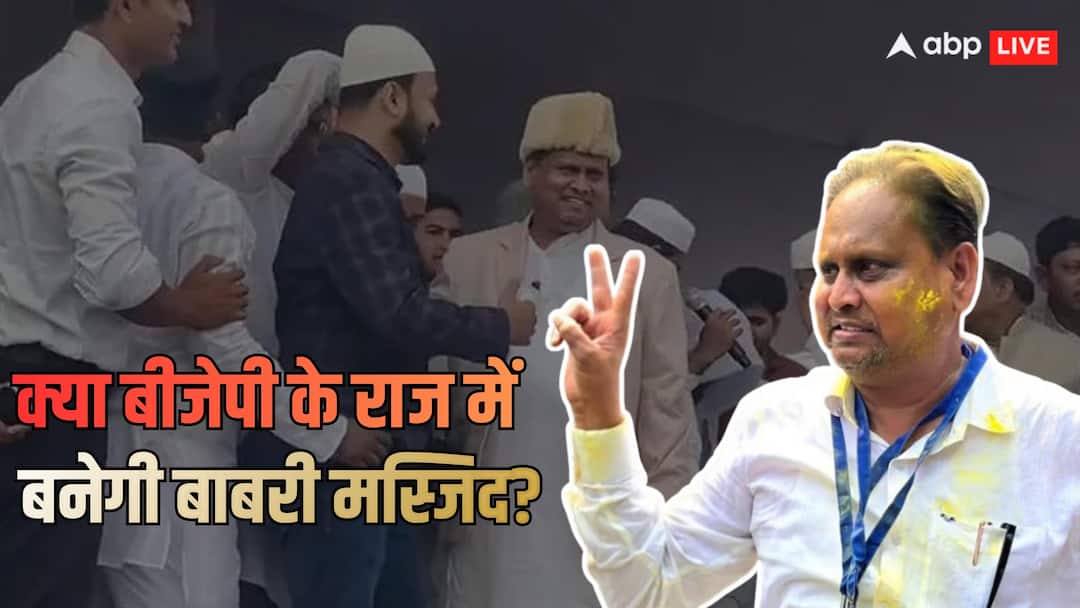
An unexpected face became the biggest topic of discussion in the politics of West Bengal – Humayun Kabir. This leader, who was suspended from Mamata Banerjee’s TMC, registered a spectacular victory not only in Rejinagar but also in Nauda seat on the banner of his newly formed Aam Janata Unnayan Party (AJUP). The promise to build Babri Masjid in Murshidabad has also pushed him towards a big crisis in BJP ruled Bengal. Now the biggest question is whether Humayun Kabir will be able to fulfill his promise, or will Babri Masjid remain a permanent election issue for the next 5-10 years?
Humayun Kabir’s historic victory: Big blow for both BJP and TMC
Humayun Kabir created a stir in Bengal politics by winning two seats in the 2026 assembly elections. In Rejinagar seat, he defeated BJP candidate Bapan Ghosh by a huge margin of 58,876 votes. Kabir got 1,23,536 votes, while BJP got only 64,660 votes and TMC slipped to third place with 41,718 votes.
In Nauda seat also, Kabir defeated BJP’s Rana Mandal by a margin of 27,943 votes. This victory is very important because all the 6 seats won outside BJP-TMC in Bengal were won by Muslim candidates. Among these, Humayun Kabir alone has two seats. Kabir himself described this victory as an answer to the injustice done to the minorities and said that his party was formed only four months ago, hence this mandate is even more special.
Dream of Babri Masjid: The foundation has been laid, but the path is not easy
Humayun Kabir deliberately used the issue of Babri Masjid as an election weapon. He laid the foundation stone of the mosque at Beldanga in Murshidabad on 6 December 2025, the 33rd anniversary of the demolition of Babri Masjid in Ayodhya. This land is on approximately 11 acres of private land and the estimated cost of the entire project is Rs 86 crore. Kabir has claimed to complete the mosque in two years and help is also being taken from Bangladesh and the Middle East to raise funds.
But now the biggest hurdle is that there has been a change of power in Bengal and the BJP government has come to power. Home Minister Amit Shah had clearly said during the election campaign, ‘This is India and no man can build Babri Masjid here. If BJP government is formed then we will not allow Babri Masjid to be built on the land of Bengal, no matter what we have to do for it.
web of legal-administrative hurdles
Although the land is private, the BJP government has several ways to stop the construction:
- First way: Permission for land use and building construction. To build any big religious structure, approval from the local municipal bodies and the state government is mandatory, which the BJP government can easily stop.
- Second way: There is an argument for breach of peace and communal tension. The government can impose a ban on construction saying that it is likely to spread communal tension in the area.
- Third way: Investigation of funding through Enforcement Directorate (ED) and Income Tax Department. Kabir already has allegations of his relatives being linked to drug smuggling and assets worth Rs 10 crore have been attached.
So will Babri Masjid remain an election issue for the next 5-10 years?
This is where this question becomes even more interesting. Political experts clearly believe that the issue of Babri Masjid will remain a permanent story in the politics of Bengal, which will resonate in every election. There are several solid reasons for this:
- For Humayun Kabir, this mosque has become the pivot of his entire politics. If he backs down, he will lose credibility among his supporters. Their political compulsions will force them to keep this issue alive.
- This issue is no less than a boon for BJP also. Murshidabad has 66% Muslim population. The opposition to Babri Masjid there has become the strongest weapon to polarize Hindu voters. While in 2021, BJP had got only 8 out of 43 seats in Murshidabad, Malda and North Dinajpur, in 2026 this figure will increase to 19. BJP would also like to capitalize on this issue in the upcoming municipal and panchayat elections.
- Kabir has now started trying to make himself the face of Muslim identity politics at the all-India level. His alliance with Asaduddin Owaisi’s AIMIM (which was later broken) shows that he does not want to be limited to Bengal only. Even in the event of Babri Masjid not being built, this issue will continue to be a tool to carry forward the narrative of ‘injustice to Muslims’ and ‘BJP’s Hindutva agenda’.
- The issue of Babri Masjid will once again become a central issue in the 2028 Lok Sabha elections and the next assembly elections in 2031, whether the mosque is built or not. Congress and Left parties can also use it to attack BJP, while BJP will use it as a tool to strengthen its Hindutva agenda.
However, it seems difficult to complete the construction of Babri Masjid under the BJP government. If Kabir fights a legal battle, this matter will drag on in the courts for years and no concrete results will emerge till 2030. On the other hand, every action of the BJP government will continue to give the opposition an opportunity to prove that the BJP is ‘anti-Muslim’.