
 By Admin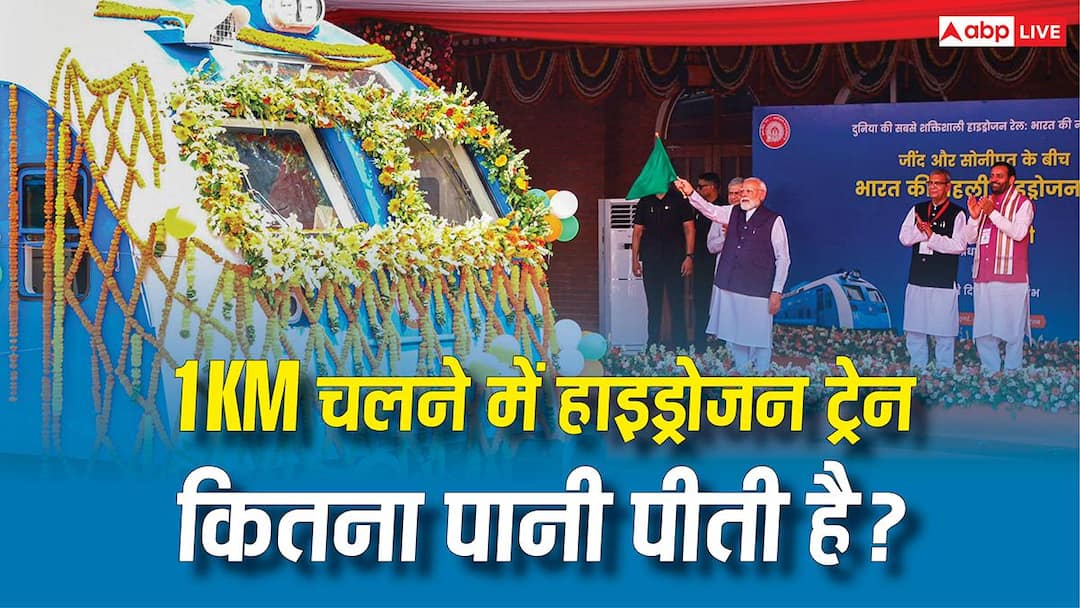
India’s First Hydrogen Train: July 17, 2026 was a special day for Indian Railways, when Prime Minister Narendra Modi flagged off the country’s first indigenous hydrogen train from Jind, Haryana. This train will run on a route of about 89 kilometers between Jind and Sonipat and the most important thing is that its fare has been kept between only Rs 5 to Rs 25.
Another special thing about it is that this train does not run on diesel or electricity but on hydrogen gas, and instead of smoke coming out, only water vapor comes out from it while running. But have you thought how much water is spent in making hydrogen to run this train? Let us know complete information about it.
How is hydrogen made and how much water does it require?
For this train, a special hydrogen plant has been built in Jind, where electrolysis water is separated into hydrogen and oxygen. This hydrogen is filled in the tanks of the train, which runs the train by generating electricity through fuel cells. According to railway estimates, this train will make two trips daily and during this time will cover a distance of about 356 kilometers, for which about 300 kg of hydrogen will be required daily. That means for every kilometer the train requires about 0.8 kg of hydrogen.
If we talk about the requirement of water, then according to science, approximately 9 liters of water is required to make 1 kilogram of hydrogen, because oxygen weighs more than hydrogen in water. According to this, the train requires about 7 to 8 liters of water to produce hydrogen for every kilometer of travel.
Also read: Pending visible in records even after filling e-Challan? fix it in minutes like this
Why is this hydrogen train special?
The cost of making this train is around Rs 82 crore and let us tell you that it has been prepared in the Integral Coach Factory of Chennai. This train with 10 coaches can carry about 2,600 passengers at a time and its maximum speed has been kept at 75 kilometers per hour.
Also read: How to know if your car or bike supports E20 fuel? Get information like this