
 By Admin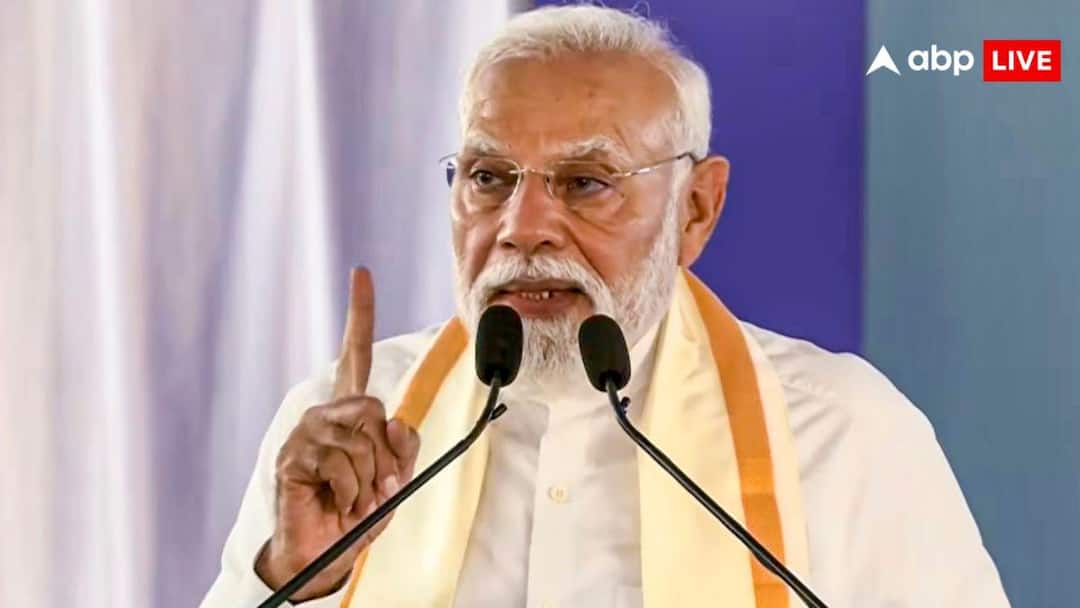
A new controversy has arisen in the politics of West Bengal regarding language, identity and history. TMC has launched a sharp counterattack after Prime Minister Narendra Modi’s statement in Cooch Behar. The issue is ‘advertisement’, but in its pretext a direct political fight has now started over the identity of Bengal. This time in the electoral politics of West Bengal, the issue has become not development or employment, but one word – ‘advertisement’. This word is now not just synonymous with manifesto, but has also become the center of political allegations and counter-allegations. BJP has started cornering Trinamool Congress (TMC) by directly linking it to the disputed history of Bengal of 1905.
“PM does not know respect for mother tongue” – Kunal Ghosh’s attack
TMC candidate from Beleghata seat Kunal Ghosh made a direct attack on the Prime Minister. He said, “The Prime Minister does not know how to speak in his mother tongue. If he does not know how to give a speech in Hindi, then his words have no importance. He is insulting Bengal. He is completely insulting the Bengali language. This is not right. He is crossing the limits.”
PM Modi’s allegation – “Bengal’s identity is being erased in the game of appeasement”
In the rally in Cooch Behar, Prime Minister Narendra Modi raised questions on the manifesto of TMC and made a big allegation. He said, “In this game of appeasement, the great identity of Bengal is being tarnished. You must have seen that TMC has just released its manifesto, but it has not been named in Bengali language, rather it is being called ‘Ishtehaar’. Just think, how the identity of Bengal is being changed.”
Linking the word ‘advertisement’ to history, the Prime Minister made even more serious allegations – “In 1905, religious forces in Bengal had issued ‘Red Advertisement’, after which a massacre of Hindus took place. TMC wants to remind us of the same… Such a disgusting appeasement game is a conspiracy to destroy the honor and culture of Bengal.” He appealed to the public that now “enough is enough” and Bengal will have to take a decision to save its identity.
Political battle on ‘Ishtehaar’ – opposition’s counterattack
After this statement of the Prime Minister, the opposition called it “misleading and unnecessary”. TMC MP Sagarika Ghosh wrote on social media – “This is a completely absurd statement by PM Modi. ‘Ishtehaar’ is just the Bengali word for ‘manifesto’. A common word used in many languages. This is not politics – it is a display of intellectual bankruptcy and ignorance. It is stupid, dangerous and confusing.”
At the same time, Kirti Azad also cornered the PM on the same issue and said – “I present to you ‘Sapna Sapna’. It is an uneducated and absurd statement by PM Modi. This is not politics. It is a display of intellectual bankruptcy and ignorance. It is foolish, dangerous and confusing.”
BJP’s attack – “Not words, but signals”
Raising this issue, BJP leader Sudhanshu Trivedi said that the ‘advertisement’ was not used just like that. According to him, this word reminds of a sensitive incident in history. He asked, “TMC should clarify why it chose the word ‘Ishtehar’ for its manifesto? Is it an original Bengali word? It is a word from Persian, which is used more in Urdu.” BJP claimed that during the reign of the Nawab of Dhaka in 1905, the same word was used for such pamphlets, whose purpose was to divide the society and create an atmosphere against one community.
The context of 1905—from history to the present
If we look at history, the period between 1905 and 1907 was full of turmoil for Bengal. After Lord Curzon’s partition of Bengal, the wave of ‘Swadeshi Movement’ and ‘Vande Mataram’ had intensified. At the same time, a pamphlet named ‘Lal Ishtehar’ appeared, which was written by Ibrahim Khan. This document was distributed in the areas under the influence of the Nawab of Dhaka. According to historians, the purpose of this pamphlet was to mobilize the Muslim community against the Swadeshi movement and Hindus. BJP is now connecting this historical context with today’s politics.
Language vs politics, heat increases before elections
Before the assembly elections in Bengal, this controversy is no longer just a matter of words. The debate over ‘Ishtehaar’ has now turned into politics of language, history and identity. On one hand, BJP is making it an issue of “appeasement and cultural change”, while on the other hand, TMC is presenting it by linking it to “respect for Bengali identity and language”.