
 By Admin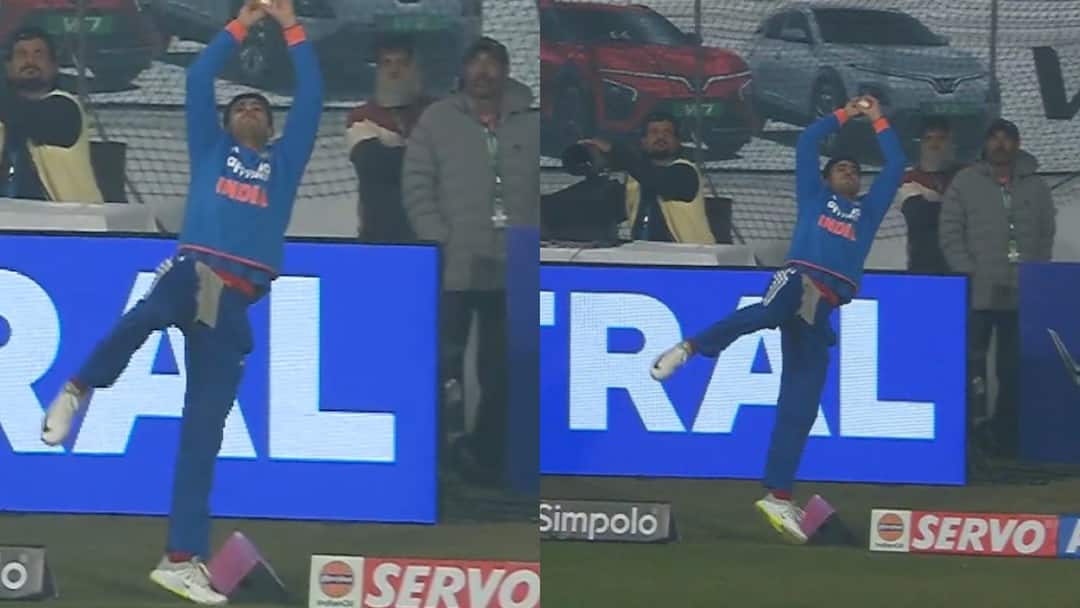
India vs South Africa second T20 match was played in Mullanpur, in which Shubman Gill came into limelight due to his fielding. Actually, in this match, Gill had stopped the ball from going outside the boundary line, yet the umpire declared it a six. Why did this happen, and due to which rule did the umpire signal a six? Understand its rules here.
This incident is of the 15th over of the South African innings. Shivam Dubey was bowling, Dewald Brevis was in front. Brevis hit an aerial shot towards long-off, but Shubman Gill jumped and stopped the ball from crossing the boundary. So what happened after all, due to which the umpire signaled six.
Even before Shubman Gill could catch the ball, Gill’s foot hit the boundary cushion. Gill’s foot was above the boundary line, so it did not matter whether Gill pushed the ball into the field or not, because at the time of touching the ball his foot was above the boundary line. Therefore the umpire declared it a six.
The good thing for the Indian team was that Dewald Brevis could not stay in the field for long after that. He was dismissed by Akshar Patel on the score of 14 runs. Let us tell you that in this match, Quinton de Kock alone overpowered the Indian bowling, who played a stormy innings of 90 runs in 46 balls. During this, 5 fours and 7 sixes came from his bat.
If De Kock had completed 100 runs, it would have been his first century against India in T20 International. However, this was De Kock’s highest score against India in T20 matches.
Also read:
Discord within the Indian team! Gautam Gambhir remained silent even after the amazing performance of Rohit-Virat, questions raised on the coach