
 By Admin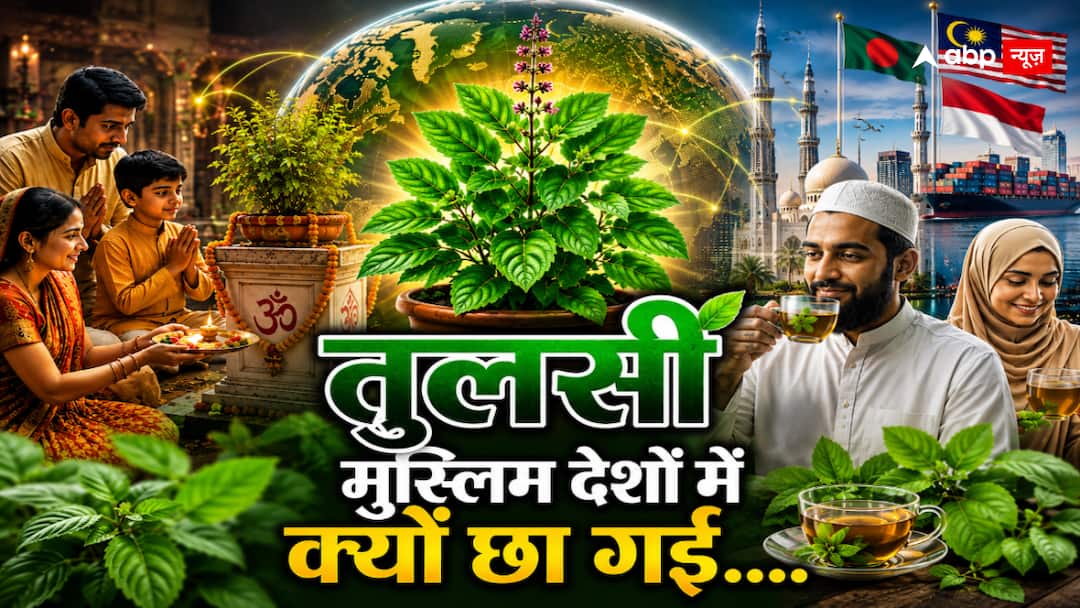
Tulsi Demand: The fragrance of India’s soil is now mingling with the climate of those countries across the seven seas, whose culture and traditions are completely different from ours. Have you ever thought that Tulsi (Holy Basil) which we consider as the goddess of our courtyard, whom we worship by offering water in the morning and evening, the same ‘Vrinda’ has now become the first choice of the big Muslim countries of the world?
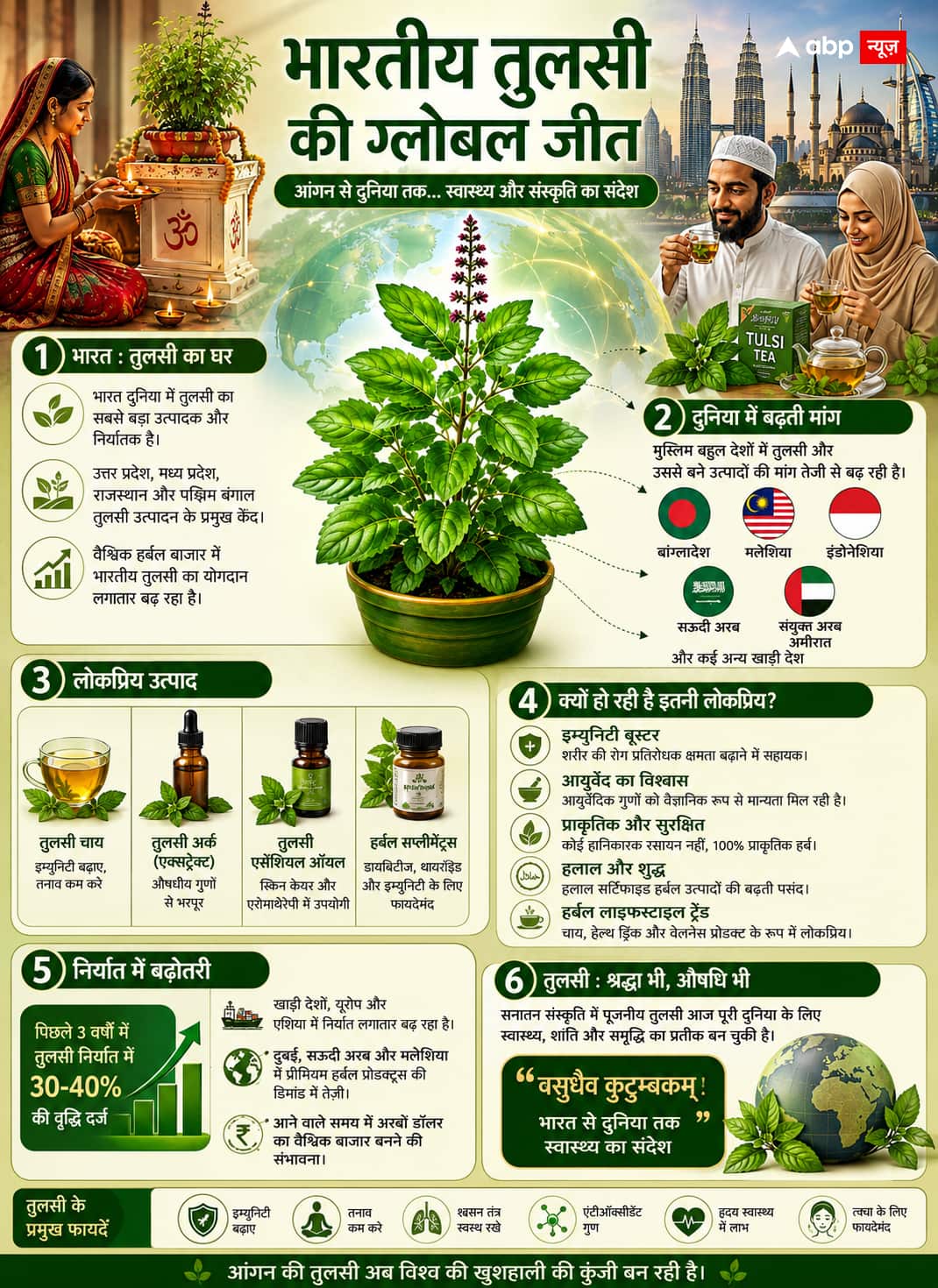
Recent figures and business reports have revealed a shocking truth. There has been a huge surge in the demand for Indian basil in countries like Bangladesh, Malaysia and Indonesia. This is not just business, but it is a ‘cultural victory’ which needs to be put into words.
Journey from courtyard’s reverence to foreign corridors
In Sanatan Dharma, Tulsi is not just a plant but is considered to be the form of ‘Sakshat Lakshmi’. It is mentioned in the scriptures that negative energy cannot enter the courtyard of the house where Tulsi resides. But today this faith has crossed all limits.
According to recent reports, Tulsi and its extracts are being exported on a large scale from India to neighboring countries like Bangladesh and South-East Asian countries like Malaysia. The surprising thing is that these countries are accepting it not just as a plant but as a ‘divine medicine’.
Why is ‘Tulsi’ being celebrated in these countries?
There are many deep and logical reasons behind this, which show the union of science and spirituality. Panacea for incurable diseases: Trust in Ayurveda has increased in these countries. The scientists there have also accepted the effect of Tulsi in cancer, diabetes and respiratory diseases.
Halal-Certified Herbal Revolution: ‘Halal’ products have special importance in countries like Malaysia and Indonesia. The products made from Tulsi are natural and pure, in which no banned chemicals are used. This is the reason why it is becoming increasingly popular among the Muslim community there.
Tulsi Tea (The Miracle Drink): From Dhaka to Kuala Lumpur, Indian ‘Tulsi Tea’ has now become a status symbol. To reduce stress and increase immunity, people there are now abandoning caffeine and turning to basil extract.
Is it just business or something else?
From a religious point of view, this news is going to fill every Indian with pride. Today, the fragrance of the plant which we call ‘Vishnupriya’ is reaching homes where prayer methods are different. This is proof that every part of nature worshiped by ‘Sanatan Culture’ is for the welfare of humanity.
‘Tulsi is compared to Tulsi, hence Tulsi’ Meaning: The one which cannot be compared with anyone else is Tulsi.
When we travel to Malaysia and Indonesia or any other country and see a Muslim businessman putting up a board of ‘Indian Holy Basil’ at his shop, he is, albeit unknowingly, paying homage to the ancient sage tradition of India that had recognized the importance of Tulsi thousands of years ago.
Tulsi’s growing stature in the global market
Experts believe that in the coming time, Tulsi’s contribution to the global herbal market will be worth billions of dollars. In the last three years, there has been an increase of 30-40% in Tulsi exports to Gulf countries.
Face masks and oils containing basil are now being used as ‘premium services’ in luxury spas and beauty parlors in Dubai and Saudi Arabia.
Nature has no religion
It is important to understand that even though Tulsi may be like a revered ‘mother’ for us, its usefulness is a boon for the entire world. Tulsi Prem of Bangladesh and Malaysia proves that when it comes to ‘life’ and ‘health’, the walls of borders and religious distances start disappearing.
This ‘Green Revolution’ of India is giving the message of health to the world today. This is not just an export of a plant, but it is an extension of the spirit of Vasudhaiva Kutumbakam, where India is sharing its most sacred wealth with the whole world. The fragrance of basil in the courtyard, that is, your faith, is making the whole world healthy today.
FAQ
Q1. Is the demand for Indian Tulsi increasing in Muslim countries?
Yes, the demand for Indian Tulsi and herbal products made from it is continuously increasing in Bangladesh, Malaysia, Indonesia and many Gulf countries.
Q2. In what form is Tulsi used abroad?
Basil is used in herbal teas, extracts, essential oils, skin care and wellness products.
Q3. Why is Tulsi called ‘Queen of Herbs’?
In Ayurveda, Tulsi is considered full of medicinal properties. This is why it is called the queen of herbs.
Q4. Is Tulsi only a religious plant?
No. Apart from religious significance, Tulsi is also used in Ayurveda, herbal medicine and modern wellness industry.
Q5. What is the religious importance of Tulsi in India?
In Sanatan tradition, Tulsi is considered a sacred plant associated with Goddess Lakshmi and Lord Vishnu. Tulsi worship has special religious significance.
Q6. Why is the demand for Indian Tulsi increasing in Muslim countries?
The demand for Indian basil is increasing in Bangladesh, Malaysia, Indonesia and Gulf countries as it is being seen as an Ayurvedic, natural and healthy herb. Teas, extracts, oils and herbal products made from basil are becoming increasingly popular in the immunity, stress management and wellness sectors.
Also read- Historic decision of Yogi government: Fazilnagar has now become ‘Pavagarh’, do you know two big secrets hidden in this name, 2500 years old?
Disclaimer: The information provided here is based only on assumptions and information. It is important to mention here that ABPLive.com does not endorse or confirm any information. Before implementing any information or belief, consult the concerned expert.