
 By Admin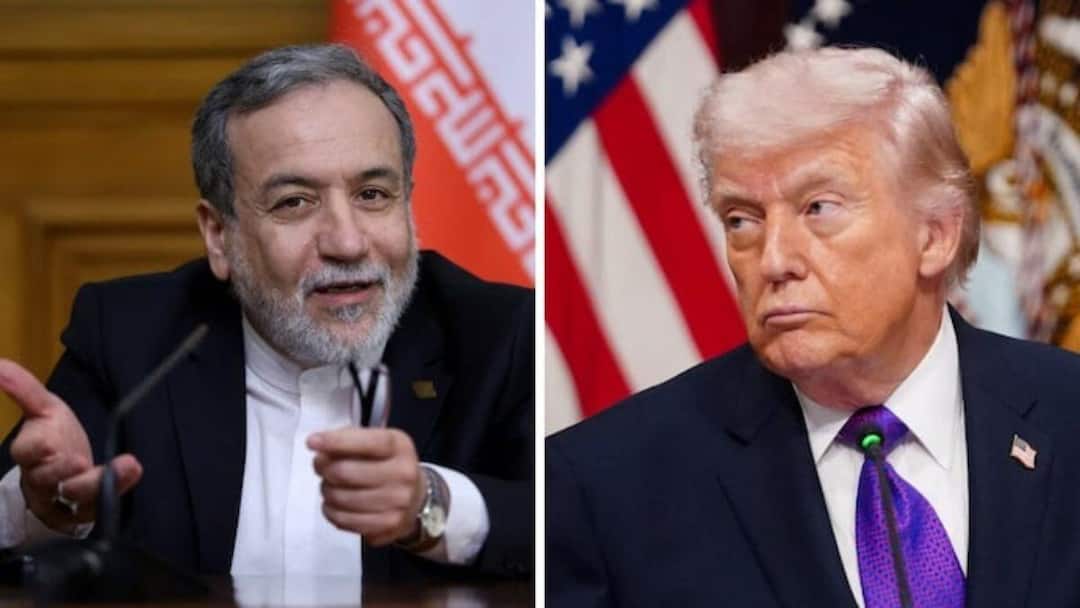
US Iran Peace Deal: New information has come to light regarding the proposed peace agreement between America and Iran. According to reports, the price of this deal could be at least 300 billion dollars. Iranian media claims that Tehran has demanded compensation for war damages, relief from sanctions and access to its assets stuck abroad. In return, Iran has agreed to end the ongoing tension in the region and take forward the peace process.
US President Donald Trump has already announced that the deal with Iran has been completed. Trump has called it a major diplomatic success. He says that this will stabilize the energy markets and the Strait of Hormuz will be fully reopened. However, the details emerging from the agreement are also raising many new questions for America. While America is calling this package an investment and reconstruction program, Iran is presenting it as compensation for the losses caused by the war.
Signing can take place in Switzerland on June 19
The preliminary MoU is likely to be signed on June 19 in Switzerland. However, the document has not yet been made public and many of the information coming to light has not been independently confirmed. Yet the $300 billion package has made this agreement a bigger issue than just a ceasefire. Now it has become a topic related to Iran’s political power, economic pressure and America’s strategic position.
Iran’s big demand – $300 billion reconstruction package
According to Iranian state news agency Mehr News, Iran’s negotiating team has demanded a reconstruction program worth at least $300 billion from the US and its allies. Apart from this, Iran has demanded the release of Iranian assets worth $24 billion stuck abroad during the 60-day negotiation period, in which it has been said that half of the amount will be given in advance. Also included is the demand to remove restrictions on oil, petrochemical products and their related business and to give Iran full access to its financial resources.
Iran said- this is compensation, America said- investment plan
Iranian media is calling this package as compensation for the damage caused by the war. Iran has been demanding compensation for war damages for a long time. In some estimates, this loss has been said to be up to one trillion dollars. Iran says that without economic relief, any peace agreement will not last long. At the same time, in the reports of American officials and Western media, especially the New York Times, this 300 billion dollars has been presented as an international investment fund and reconstruction program.
Witkoff and Kushner’s plan also in discussion
According to reports, Trump’s special envoy Steve Witkoff and his son-in-law Jared Kushner had previously made suggestions like building real estate projects and investment funds in Tehran. Analysts say that this model matches Trump’s old thinking in which he wants to pursue post-war reconstruction through private investment and big economic projects instead of government compensation.
Is America negotiating from a weak position?
Iran is trying to show itself in a strong position, while America wants to end the war and present it as a diplomatic victory. The conflict that started in February became an economic and political challenge for America and Israel. Global energy markets were also affected due to disruption in oil supply. Analysts believe that the discussion of such a huge investment package after the war indicates that America is having to change its strategy according to the ground realities.
War also became a political challenge for Trump
Trump wrote on social media, “Congratulations to all, let the oil flow.” He described this agreement as a major success for global stability and energy markets. But many people in America are looking at it from a different perspective. The war and its economic effects have become a political headache for Trump ahead of the midterm elections in November.
Questions still remain over authenticity of agreement
The London-based Iran International Network said the draft agreement had not yet been independently verified. American officials have also not publicly confirmed the $300 billion claim. Washington has earlier termed some leaked information as fabricated or misleading.
Protest in both Iran and Israel
Radical groups in Iran are worried about this agreement and are raising questions on possible concessions. On the other hand, Israel is also said to disagree with some parts of the agreement, especially regarding issues related to Lebanon and Hezbollah.
Lebanon could become the first big test
Former US diplomat and Middle East expert Aaron David Miller believes that Lebanon could become the first major test of this agreement. He says that the proxy conflict present in Lebanon can weaken the ceasefire at any time.
Future will depend on Iran’s politics
Former US Assistant Secretary of State Elliot Abrams says that the real future of this agreement will depend on Iran’s internal politics. He said that the biggest question is in which direction the people of Iran take the future of their country.