
 By Admin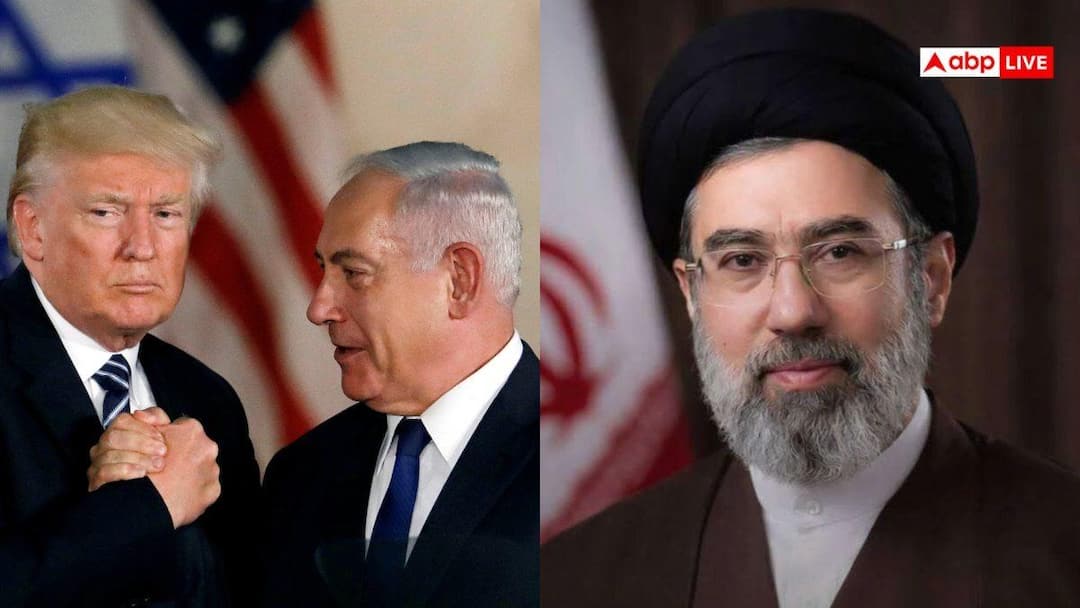
Middle East Tensions: The matter is over… the war begins… US President Donald Trump’s recent statement has once again increased the concern of the entire world. Just 22 days after the US-Iran agreement, which was considered a big step towards reducing tension in the Middle East, the situation between the two countries seems to be becoming explosive again. Trump clearly said that he no longer has confidence in any agreement with Iran. On the other hand, Iran also made it clear that if respectable talks are not held then it is not going to bow down to any kind of pressure. In such a situation, the question is arising that what happened after the agreement made 22 days ago that both the countries again returned to the path of conflict.
The smell of gunpowder is once again being felt in the air of the Middle East. Military activities have again intensified in the war zone which seemed calm for the last few days. The activation of American fighter jets, naval and military resources has increased around the Strait of Hormuz. Meanwhile, the news of American attacks on Bandar Abbas, Bushehr, Qeshm and Sirik islands of southern Iran took the tension in the entire region to a new height. Smoke and flames rising after the attacks on Shahid Haqqani port of Bandar Abbas became a picture of this escalating conflict.
Spark flares up again in West Asia
Iran also claimed retaliatory action. According to the Iranian Revolutionary Guard (IRGC), US military bases in Bahrain and Kuwait were targeted. After this, the biggest question that arose was whether the ceasefire between America and Iran has now ended and whether the Middle East is once again moving towards open war.
Amidst this atmosphere of tension, Trump’s statement proved to add fuel to the fire. During the NATO summit, he said that according to him the agreement with Iran is now over. Trump accused the Iranian leadership of not being trusted and said that one thing is said during the talks while other statements are made in front of the world. He claims that America wanted a clear agreement on the issue of nuclear weapons, but Iran retreats from its stand every time.
In fact, there is a deadlock between America and Iran on two major issues. First, Iran’s nuclear program and second, its impact on the Strait of Hormuz. Trump has been continuously claiming that Iran will not make nuclear weapons, while Tehran has repeatedly rejected this claim. Similarly, no consensus could be reached between the two countries regarding the strategic importance of Hormuz. Trump wanted the talks to proceed entirely on American terms, but this did not happen. After this he started increasing pressure at both economic and military levels.
America also canceled the temporary license allowing it to sell oil to Iran. Along with this, the US administration alleges that Iran attacked three commercial ships passing through the Strait of Hormuz, which were to pass through Oman. The American administration considered this a violation of the agreement and called retaliatory military action as the result.
US officials claim that the recent campaign targeted Iran’s air defense systems, command and control networks, coastal radar stations, anti-ship missile capabilities and naval capabilities of the IRGC deployed around Hormuz. On the other hand, Iran says that America is continuously pursuing the policy of creating pressure under the guise of agreement and is violating its sovereignty.
Responding to Trump’s allegations, Iranian President Masoud Pezeshkian said that threats, pressure and deception have become part of American policy, but Iran will not step back from its rights. Meanwhile, Iranian Parliament Speaker Mohammad Bagher Ghalibaf accused America of adopting double standards and said that Iran cannot be swayed by sanctions, threats and military action.
US-Iran ready for war
The tension did not stop here. Iran claimed to target US military bases in Bahrain and Kuwait and warned that if regional countries supported the US, their military and energy infrastructure could also be targeted. Due to this, the entire Gulf region seems to be once again in the grip of instability.
Meanwhile, another discussion has gained momentum. Political analysis has also started regarding the huge crowd gathered at the funeral of Supreme Leader Ali Khamenei in Iran and the presence of representatives of many countries of the world. Iran alleges that America tried to divert international attention from the funeral by taking military action during this period. However, America has not given any official response to this claim.
During Khamenei’s last visit to Iran, anti-American slogans continued to echo and a large number of people took to the streets. At the same time, Trump described the Iranian leadership as “dangerous” and said that America is ready to respond to any challenge. It is clear from the statements of both sides that the diplomatic distance has increased more than before.
The effect of this increasing tension is also visible on the global economy. There was a sharp rise in the prices of crude oil and Brent crude reached around $ 78 per barrel. It also affected the Indian stock market. There was a big fall in Sensex while Nifty also closed under heavy pressure. Investors are concerned that if tensions in the Strait of Hormuz increase further, global energy supply may be affected, which will impact economies around the world.
Overall, the agreement which gave hope 22 days ago now appears to be in serious trouble. The lack of trust between the two countries has increased more than ever. Now everyone’s eyes are on whether a new path for dialogue will emerge or whether the Middle East will once again move towards a long and dangerous conflict.
Also read: India’s first reaction came amid increasing tension between US-Iran, said – ‘This dispute…’