
 By Admin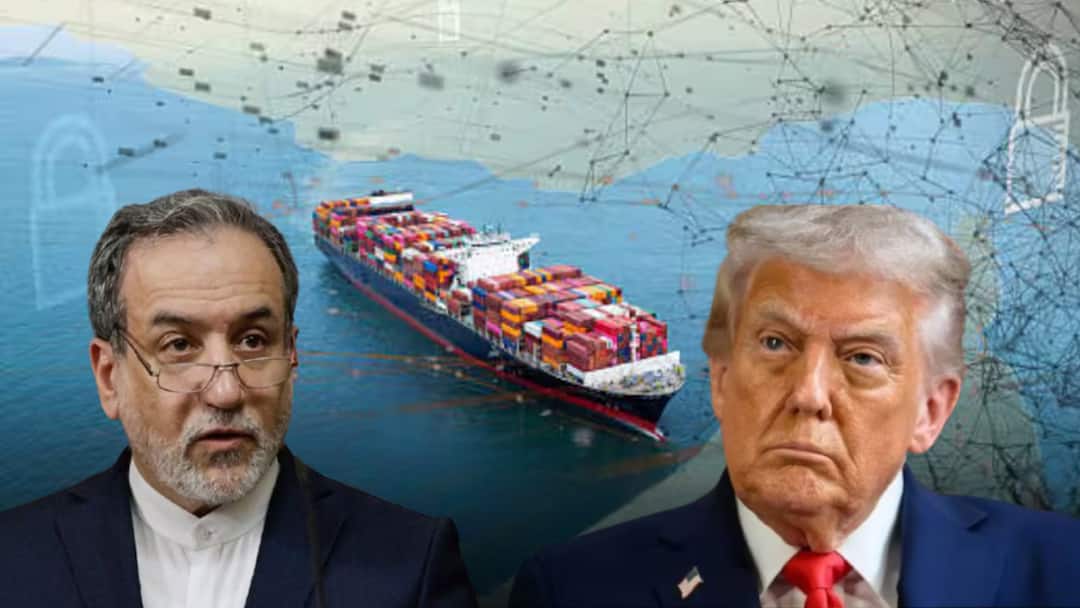
Once again America and Iran are seen standing face to face regarding the Strait of Hormuz. The increasing military tension between the two countries has increased the concern of the whole world, because a large part of the global oil supply passes through this waterway. After US President Donald Trump’s indications of increasing security arrangements and military pressure in Hormuz, Iran has also made it clear that it will not accept any foreign interference in this region. The increasing tension between the two countries has created instability in Western Asia.
According to reports, America has attacked several strategic targets around the Strait of Hormuz with the aim of weakening Iran’s military capabilities. These are said to include areas like Bandar Abbas, Qeshm Island, Bushehr, Chabahar, Jask, Konark and Abu Musa, where a large part of Iran’s naval and missile capabilities are present. The American says that the purpose of these actions is to ensure the security of international maritime trade, while Iran considers them a direct attack on its sovereignty.
What is Trump’s claim?
Donald Trump has also claimed that America will ensure the security of the sea route by eliminating Iran’s military capability in the Strait of Hormuz. Along with this, the discussion has also intensified that America may in future implement a system of charging fees in exchange for the security of ships passing through this sea route. However, no international consensus or legal recognition has emerged regarding such a system and there is widespread controversy regarding it.
Iran warned US
Iran has strongly opposed these steps of America. The Islamic Revolutionary Guard Corps or IRGC says that America has no right to interfere in the security and operation of the Strait of Hormuz. Iran has warned that it will take retaliatory action if its national security is threatened or its security norms are violated. The Iranian Foreign Ministry has also reiterated that ensuring the security of Hormuz has been and will continue to be Iran’s responsibility.
Impact of tension is also visible on international trade
The effect of increasing tension in the sea is now visible on international trade also. Many shipping companies have started changing the routes of their ships. Due to reduced movement of ships, uncertainty has increased in the global energy market and crude oil prices are rising again. Experts believe that if this tension continues for a long time, it may have a direct impact on fuel and transportation costs around the world.
Iran US War: Will kill with such force…, When Iran threatened to retaliate on US, Netanyahu came into action
Meanwhile, Iran has also claimed to target American military bases present in the entire Gulf region. Many claims and claims of counterattack have come to light regarding American military bases located in Qatar, Bahrain, Kuwait, Jordan, Iraq and United Arab Emirates. The impact of war is no longer limited to the sea only. Tension has also increased between Iran-backed Houthi rebels and their opponents in Yemen. Regional equations are changing rapidly and it is feared that if the situation does not improve, the entire Gulf region may fall into the grip of a major regional conflict.
Now Donald Trump’s U-turn from 20% recovery on Hormuz, announced new plan, said- Middle East…