
 By Admin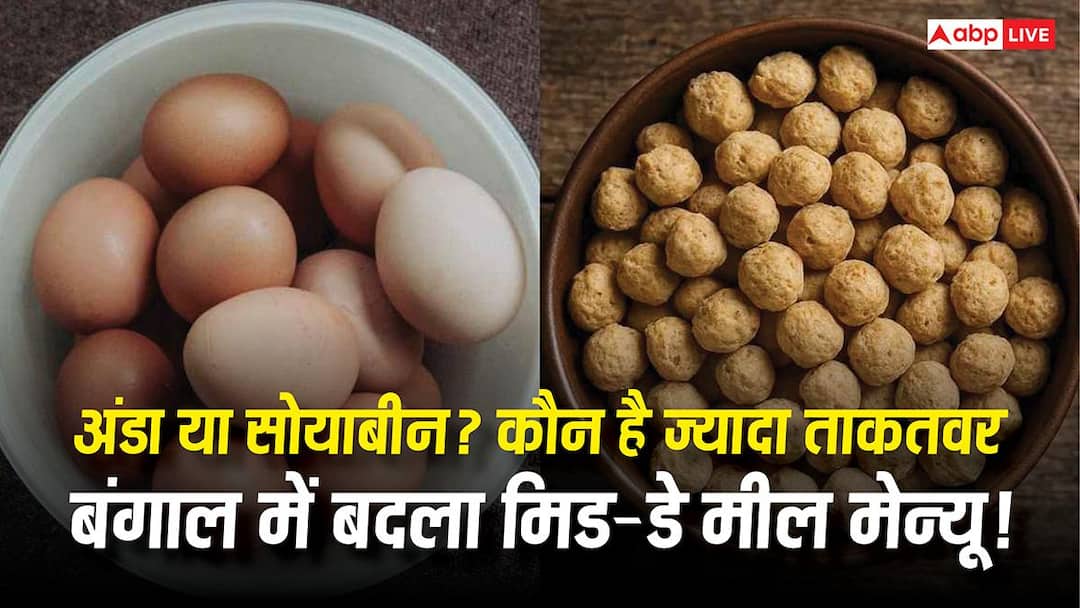
Eggs vs Soybeans: After a decision of the government in West Bengal, a big debate has started regarding mid-day meal. The government has decided to hand over the responsibility of running this scheme to the Annamitra Foundation associated with ISKCON. After this, the biggest question that arose was that if eggs were removed from children’s plates and food items made from soya were given in their place, would children be able to get the same nutrition?
There are many important issues behind this controversy like nutrition of children, their growing needs, government schemes and quality of food. At present, eggs are given to children once a week in the mid-day meal of government schools in West Bengal. Egg has been an important part of this scheme for a long time. It provides good quality protein at a low cost. In such a situation, when the issue of alternatives like soya, paneer or kidney bean came to the fore, the debate intensified as to which is the better option for children. So let us know who is more powerful in terms of egg or soybean protein.
Why is soybean considered a good protein source?
Soybean is counted among the best protein sources available from plants. Unlike most vegetarian protein foods, soybean contains all 9 essential amino acids required by the body. For this reason it is called complete protein. In this case it is included in categories like eggs, milk and meat. Soya chunks, tofu and soya granules are rich in protein. These can be delivered to a large number of people at low cost. This is the reason why they are considered the best option in big nutrition programs.
How much protein is there in soybean?
100 grams of dry soya chunks contain about 52 grams of protein. It contains all the 9 amino acids essential for the body. Also, about 13 grams of dietary fiber is found in 100 grams. There is very little fat in it. Its glycemic index is low. Apart from this, it is considered good for weight control and heart health.
Why was egg included in the mid-day meal of schools?
In the last several years, many states of the country have included eggs in the mid-day meal. It is cheap, easily available and rich in nutrients. An egg not only provides protein to children, but also provides many essential nutrients, which include protein, vitamin B12, vitamin D, choline, healthy fat. Deficiency of these nutrients is often seen in the food of children from economically weak families. Therefore egg is considered very useful for them. Almost the entire protein present in eggs is easily absorbed by the body. This is why nutritionists count it among the most effective protein sources.
Also read – Oral Cancer: The risk of oral cancer is increasing rapidly among youth, tobacco-vaping is becoming fatal, know the symptoms.
How much protein in egg, cheese and soya?
According to nutritionists, one egg contains about 6 grams of protein. At the same time, about 9 to 10 grams of protein is found in 50 grams of cheese. Apart from this, about 13 grams of protein is found in 25 grams of dry soya chunks. If we look only at the amount of protein, soya is at the forefront. After this comes cheese and then egg. According to nutritionists, the quality of protein depends on whether all the essential amino acids are present in it or not, and how easily the body can digest and use it. On this basis, eggs have long been counted among the best protein sources. Almost all the essential amino acids are found in eggs. Also its protein is easily digested and absorbed by the body. This is why egg protein is often considered the standard in nutrition science.
Which is more powerful in terms of protein, egg or soybean?
If we talk only about the quantity of protein, then soya chunks provide more protein than eggs, but in terms of protein quality, digestibility and overall health, egg is still considered the best. Paneer is also a strong option in this case, while soya comes after it. Soy is a good source of protein, but some of the nutrients present in eggs are either not present in plant foods or are found in very small quantities. These mainly include vitamin B12 and choline. In such a situation, if only soya is given instead of eggs, then other food items will have to be included in the diet to compensate for the deficiency of these nutrients.
Also read – Heart Health Tips: Gym or Yoga…which is better for heart health? Learn from experts
Check out below Health Tools-
Calculate Your Body Mass Index (BMI)
Calculate The Age Through Age Calculator