
 By Admin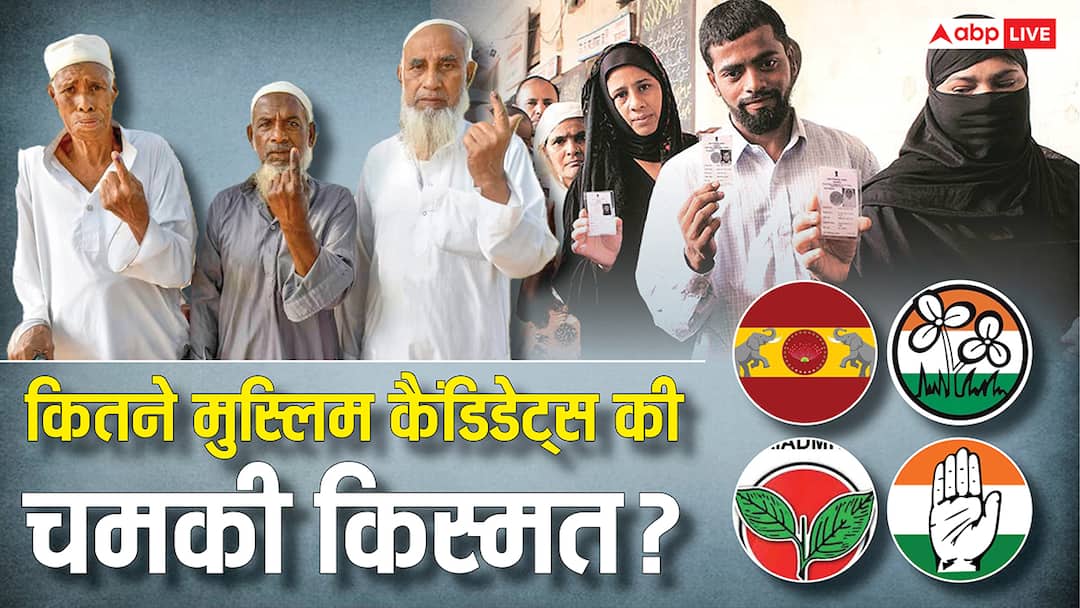
The results of the assembly elections 2026 of West Bengal, Tamil Nadu, Kerala, Assam and Puducherry have created a shocking political picture everywhere. On one hand, BJP made a strong comeback in West Bengal and Assam and formed the government, while on the other hand, Congress-led United Democratic Front (UDF) returned to power in Kerala after a decade. Amidst this entire election turmoil, the performance of Muslim candidates remained an important question. Out of the total 824 assembly seats in these five states, Muslim candidates have won about 107, but BJP does not have a single Muslim MLA in its account.
West Bengal: Maximum 40 Muslim MLAs, but TMC’s base slipped
This time 40 Muslim candidates have reached the assembly after winning the elections in the 294-member West Bengal Assembly. However, in the 2021 elections this number was 44, that is, the number of Muslim MLAs of TMC has reduced from 43 to 34. At the same time, the number of non-TMC and non-BJP Muslim MLAs has increased from 1 to 6. These include two MLAs from Congress, two from Aam Janata Unnayan Party (AJUP), one from CPI(M) and one from ISF. This time BJP did not give ticket to even a single Muslim candidate, which directly benefited the opposition parties.
Kerala: 35 Muslim MLAs, UDF’s dominance increases
35 Muslim candidates won in the 140-seat Kerala Assembly, which is 25 percent of the total MLAs. Of the 35 MLAs, 30 Muslim MLAs are from the ruling United Democratic Front (UDF), which includes 8 from Congress and 22 from Indian Union Muslim League (IUML). Four Muslim MLAs from the opposition CPI(M) and one from the CPI have also been elected. The number of Muslim MLAs in Kerala has increased by three seats compared to last time, which shows the strong hold of UDF.
Assam: 22 Muslim MLAs, 18 Muslim candidates of Congress get a chance
In the elections held on 126 assembly seats of Assam, 22 Muslim candidates have become MLAs. In the last assembly this figure was 31, which means this time a decline of 9 seats has been recorded. The most surprising thing is that out of total 19 Congress MLAs, 18 are from Muslim community. Apart from this, two MLAs from All India United Democratic Front (AIUDF), one from Raijor Dal and one Muslim MLA from Trinamool Congress have reached the Assembly. According to political experts, political equations and delimitation rather than statehood are considered to be the major reasons behind this change.
Tamil Nadu: 9 Muslim MLAs, representing DMK and AIUML
This time 9 Muslim candidates have won in the 234-member Tamil Nadu Assembly. These include three from DMK, two from Indian Union Muslim League (IUML), one from Congress and three Muslim MLAs from Vijay Thalapathy’s party Tamilaga Vetri Kazhagam (TVK). As compared to 5.86 percent Muslim population of the state, their share in the Assembly is about 3 percent, which is very low.
Puducherry: Only 1 Muslim MLA elected out of 30
This time only one Muslim candidate has been able to register victory in the 30-member assembly of the Union Territory Puducherry. DMK candidate A.M.H. Nazim has become the only Muslim MLA. He has won from Karaikal South seat. In this state with 6.05 percent Muslim population, this situation is believed to be the result of political parties not giving representation to Muslim candidates.
What do the total figures say?
| State | total seats | Muslim MLA |
| west bengal | 294 | 40 |
| Kerala | 140 | 35 |
| Assam | 126 | 22 |
| Tamil Nadu | 234 | 9 |
| Puducherry | 30 | 1 |
| Total | 824 | 107 |
Including the five states, 107 Muslim MLAs have been elected, which is about 14.40 percent of the total 824 (currently declared) MLAs. However, not a single one of them is a BJP candidate as the party had not given ticket to any Muslim. In Kerala and Assam, the victory rate of Muslim candidates was more than 80 percent, while in Tamil Nadu and Puducherry, Muslim representation was very weak. These figures show that Muslim voters have adopted different attitudes according to regional and national circumstances, but there is still a huge gap in the number of candidates they get from political parties.