
 By Admin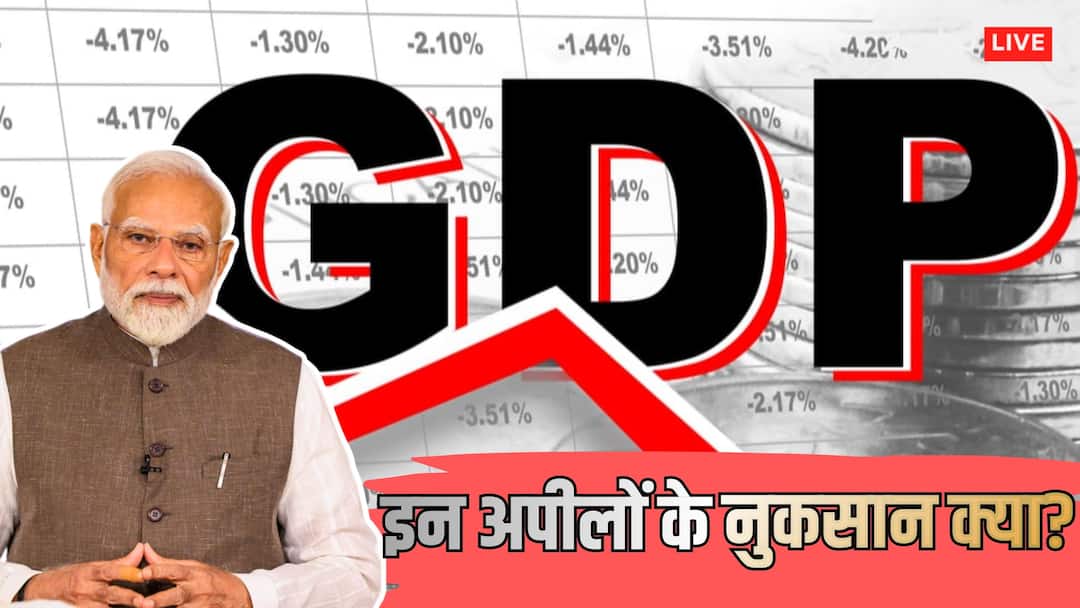
On May 10, 2026, Prime Minister Narendra Modi had made an emotional appeal to the citizens of the country and said that we all should together save the country’s foreign exchange. For this we will have to reduce expenditure on things coming from outside. This appeal came at a time when India’s foreign exchange reserves had come down to $ 690.69 billion, the rupee had touched an all-time low of 95.63 against the dollar and the price of crude oil had gone above $ 105 per barrel. In such a situation, the question arises that if PM Modi’s appeal is accepted, how much damage can be caused to the country’s economy?
Three big economic reasons behind PM Modi’s appeal
- Rising price of crude oil: India buys about 89% of its crude oil requirement from other countries. In the year 2025-26, India imported crude oil worth about $123 billion. This is the largest part of our total import bill. In the last one year, the price of oil increased from $ 70 per barrel to above $ 113. When oil is expensive, more dollars go out of the country’s pockets.
- Heavy import of gold: Every year 700 to 800 tonnes of gold is consumed in India, whereas in our country only 1 to 2 tonnes of gold is produced. We have to import the remaining gold from outside. About 72 billion dollars were spent on this in the year 2025-26. Buying gold means going out of dollars.
- Rupee is weakening and CAD is under pressure: On May 12, 2026, the rupee reached its lowest level of 95.63 against the dollar. When the rupee weakens, buying goods from outside becomes more expensive. This creates a danger of increasing inflation.
Understand in simple words: CAD means Current Account Deficit. When a country spends more than it earns from other countries, it is called CAD. This directly puts pressure on our foreign exchange reserves. A major reason for these three problems is the ongoing tension in West Asia, due to which the oil supply has been affected and the oil market of the entire world is unstable.
If the appeal is accepted, how big a loss is possible to the economy?
If the entire country starts implementing these things together, then foreign exchange will be saved, but the demand in many important parts of the economy will suddenly decrease. This can have a direct impact on jobs, business and the country’s growth rate (GDP growth):
1. Big impact on gold and jewelery industry
This is the area that will suffer the first and biggest blow. India is the second largest gold purchasing country in the world and imports more than 90% of its gold requirement. In the last financial year (FY26), India imported gold worth about $72 billion, which is about 10% of the total import bill.
loss estimate
- Threat to jobs: According to Rajesh Rokade, Chairman of All India Gems and Jewelery Domestic Council (GJC), this appeal may threaten the livelihood of more than 1 crore (10 million) people who are directly or indirectly associated with the jewelery industry.
- Impact on MSMEs and artisans: According to the Gem and Jewelery Export Promotion Council (GJEPC), about 3 lakh small businesses (MSMEs), artisans and traditional jewelery hubs (Mumbai, Surat, Jaipur, Kolkata, Hyderabad) will be affected by the prolonged decline in gold demand.
- stock market crash: Immediately after the appeal, shares of big jewelery companies fell heavily. Titan Company fell by 5.34%, Kalyan Jewelers by 7.43%, Senco Gold by 8.98% and PC Jewelers by 3.89%.
- Effect on gold price: Experts say that India is the world’s largest gold consumer, so if Indians do not buy, global gold prices may fall.
2. Impact on tourism, hospitality and aviation industries
The Prime Minister has appealed to ban foreign trips and promote work from home. This will have a direct impact on the travel, hotel and airline industries.
loss estimate
- Impact on foreign exchange expenditure: In the financial year 2025, about 58% of the total amount sent under the Liberalized Remittance Scheme (LRS) was spent on international travel.
- Pressure on domestic sectors: If people start working from home on a large scale, it will put short-term pressure on sectors like hospitality, aviation, logistics and commercial real estate which are dependent on the physical movement of people.
- Foreign Tourism Disadvantages: The appeal of holding weddings and programs within the country will save Indian expenditure on foreign tourist destinations, but the business of tour operators and airlines associated with it will be affected.
3. Eye on private consumption and economic growth
This is a matter of biggest concern. The contribution of private consumption in India’s economy is about 60%. This means that the speed of our GDP depends to a great extent on how much we all are spending together.
loss estimate
- Estimate of huge decline in GDP growth: On May 12, 2026, Moody’s Ratings reduced India’s 2026 GDP growth forecast by 0.8% to 6%. Their reasons were weak private consumption, slow capital formation and sluggish industrial activity. The estimate for 2027 was also reduced to 6%.
- CRISIL estimates: CRISIL has estimated GDP growth for the financial year 2026-27 at 6.6%.
- Worst case: According to JM Financial, if the oil supply disruption continues for a few more weeks, then in the worst case scenario GDP growth could fall to 6-6.5%.
- Economist’s warning: According to Anil Kumar Bhansali, head of Finrex Treasury Advisors, the short-term effect of the PM’s advice will be in the form of a slowdown in economic growth.
4. What will be the government finances and fiscal deficit?
When people reduce consumption, the taxes received by the government (like GST) also reduce. Also, the government’s budget may deteriorate due to high oil prices and the burden of subsidies.
loss estimate
- Nomura reports: Japanese financial institution Nomura estimates that India’s fiscal deficit may increase to 4.6% of GDP in the financial year 2026-27, which is more than the budget target of 4.3%.
- Losses of oil companies: Government oil companies (OMCs) are incurring a loss of Rs 30,000 crore every month due to keeping prices stable. If prices have to be increased even after reducing consumption, its political and economic damage will be different.
- Moody’s warning: Moody’s said higher fuel and fertilizer costs will put pressure on government finances, which could lead to cuts in planned capital spending (government investment).
5. Stock market and investor confidence
Immediately after the Prime Minister’s appeal, the stock market reacted very negatively, which shows that fear of economic slowdown has settled in the minds of investors.
loss estimate
- Disadvantages of Market Capitalization: On May 12, 2026, on the first trading day after the appeal, the Sensex fell 1,312.91 points (1.70%) and the Nifty fell 360.30 points (1.49%). In this decline, market capitalization of more than Rs 6 lakh crore of BSE listed companies was wiped out in just one day.
- Investors’ concerns: Nomura said in his note that the PM’s appeal is an indication that India’s fiscal situation is reaching a ‘tipping point’.
- Record fall in rupee: On the same day, the rupee fell by 82 paise and closed at a record low of 95.31 against the dollar.
6. What will be the impact on edible oil and agriculture sector?
PM Modi has also appealed to reduce the consumption of edible oil and adopt natural farming instead of chemical fertilizers. Although it has health and environmental benefits, there are also some challenges economically.
loss estimate
- Risks to Agricultural Productivity: Abruptly moving away from chemical fertilizers can have a short-term impact on crop production, leading to the risk of increasing food inflation.
- Additional pressure on imports: India’s fertilizer imports had already increased by 61% to $16 billion in FY26, which is a matter of serious concern.
Estimate of slowdown in economic activities
Professor Lekha Chakraborty of NITI Aayog and NIPFP says this is a ‘sensible economic stability strategy’, which encourages citizens to reduce import-heavy consumption. However, she also believes that fuel consumption is not completely dependent on the will of the people, because industry, logistics and transportation run on it. If there is a sharp decline in fuel consumption, it could mean a slowdown in economic activity.
Not increasing prices is also a problem
Rahul Ahluwalia, founding director of the Foundation for Economic Development, said that the PM’s address actually reflects the distortion of the delayed recovery in prices. If prices were allowed to rise in line with the market over time, people’s consumption habits would automatically change.
Is this a sign of a 1991-like crisis?
ORF’s economic expert Vivek Mishra believes that the situation now is not as bad as 1991. At that time, India’s foreign exchange reserves were equal to only three weeks of imports. But organizations like Nomura have warned that the government may have to ask ordinary households to share this economic burden. Its immediate effect can be seen in the form of increase in the prices of petrol and diesel.
Reduction in imports, a different perspective
Yes Bank Chief Economist Indranil Pan cautioned that the debate should not be limited to CAD only. The net inflow of foreign investment (FDI) is very weak. The policy response should focus on increasing capital flows rather than curbing consumption.