
 By Admin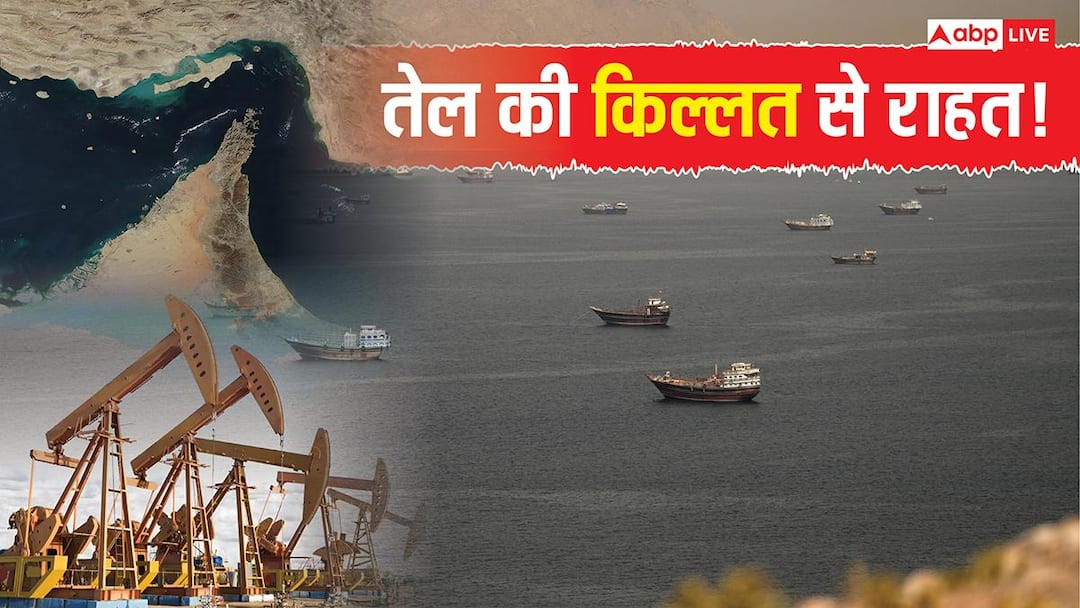
The morning of June 24, 2026 brought a big relief news for India. America has lifted the sanctions on Iran’s crude oil. But this is not just a diplomatic news for India, rather it is going to have a direct impact on the prices of petrol and diesel, inflation and the government treasury. Let us understand the explainer why India can benefit so much from this step of America…
First understand what has happened?
In 2018, when Donald Trump became the President of America for the first time, he imposed strict sanctions on Iran. Many countries including Iran were banned from buying oil from Iran. As a result, India had to give up its favorite and cheap Iranian oil. But now in 2026, the Trump administration has once again opened the same path.
A peace agreement has been signed between America and Iran in the Strait of Hormuz and under this, America announced the lifting of the ban on Iranian crude oil. This relaxation has been given till 21st August 2026, that is, it is a temporary relief, but it is of great importance for India even in a short time.
India’s oil story and Iran’s role
India is the third largest oil importing country in the world and imports more than 85 percent of its crude oil requirement from outside. There was a time when Iran was the second largest oil supplier to India. Before the sanctions, India used to buy about 4.5 lakh barrels per day of Iranian oil every month. But after 2019 this figure became absolutely zero. Since then, India has increased its oil purchases from Iraq, Saudi Arabia and especially Russia. After the Russia-Ukraine war, Russian oil came to the top in India’s basket.
The discount available on Russian oil is continuously decreasing. Many times its final cost increases due to problems in shipping and insurance. In such a situation, opening the route to Iran can prove to be four boons for India:
1. Cheap oil and low import bill
Iranian crude is usually 8 to 10 dollars cheaper per barrel than Brent crude. Iran also often offers better credit terms and lower freight charges on its oil, because India is an old and reliable customer for it. When you buy millions of barrels of oil, the savings of $8-10 per barrel directly reduces the import bill by billions of dollars.
If we look at the government data, India’s total crude oil import bill had crossed approximately $ 140 billion in the financial year 2025-26. If even some part of this amount is shifted to cheap Iranian oil, it will not only save foreign exchange but will also control the current account deficit. This has a direct impact on the strength of the rupee.
2. Effect on petrol-diesel and inflation
With the arrival of cheap crude oil, the costs of companies will reduce and if the government wants, it can extend its benefits to the common man. The prices of petrol and diesel have been stable for some time now, but the pressure of turmoil in the international market always remains. Iranian oil provides companies with the opportunity to improve margins and, if necessary, scope to cut prices.
This has an even bigger impact on inflation. Crude oil prices are not limited to just fuel, they make everything from vegetables to milk expensive by increasing transportation costs. Cheaper oil means cheaper transportation of all items, which can provide relief to the kitchen budget.
3. Opportunity to reduce dependence on Russia and the Middle East
For India, it is not just a question of price but also of strategy. At present, our oil imports are largely dependent on a few countries like Russia, Iraq and Saudi Arabia. Being too dependent on any one supplier is not good for the energy security of any country.
Iran’s withdrawal will give India an opportunity to further increase its oil sources. This is a kind of risk management, that is, if there is any interruption in supply from Russia or OPEC+ countries cut production further, then Iran will be a better option.
According to a Times of India report, India is also a good buyer of high-sulphur crude for its refineries. Iran’s oil fits perfectly in this context. India’s refineries like Jamnagar, Vadodara and Mangalore can easily process Iranian grades.
4. Easy way to pay
Earlier, India used to pay Iran in rupees, a part of which Iran used to spend on the purchase of Indian goods. This promoted two-way trade and reduced dependence on the dollar. However, the report of Financial Express clearly says that it is not yet clear how payment will be made in this temporary exemption.
Experts believe that the old rupee-riyal currency arrangement can be resumed. If this happens then it will be like icing on the cake for India. On one side, cheap oil and on the other side, shopping without spending dollars.
But is it so easy to buy oil?
Foreign affairs expert and JNU professor Rajan Kumar says, ‘This is not a completely rosy picture, because this relaxation is only till August 21, 2026. This means that there will be a limit to the amount of Iranian oil that India can buy in less than two months. Ordering so much oil in such a short time can pose challenges in shipping, insurance and logistics.
According to CNBC report, this relief is completely dependent on the implementation of the peace agreement. If tensions increase again, restrictions may be imposed.
Apart from this, the statement of the US State Department clearly states that this is a limited and conditional exemption. This means that India will have to take steps very carefully so that other aspects of US sanctions are not violated.
What steps did the Indian government take to purchase oil?
The Indian government and oil companies have already started preparations to get the first consignment from Iran as soon as possible. Big companies like Indian Oil Corporation and Bharat Petroleum have started talks on commercial terms. It is expected that if this exemption is extended, India can once again become Iran’s largest oil customer.