
 By Admin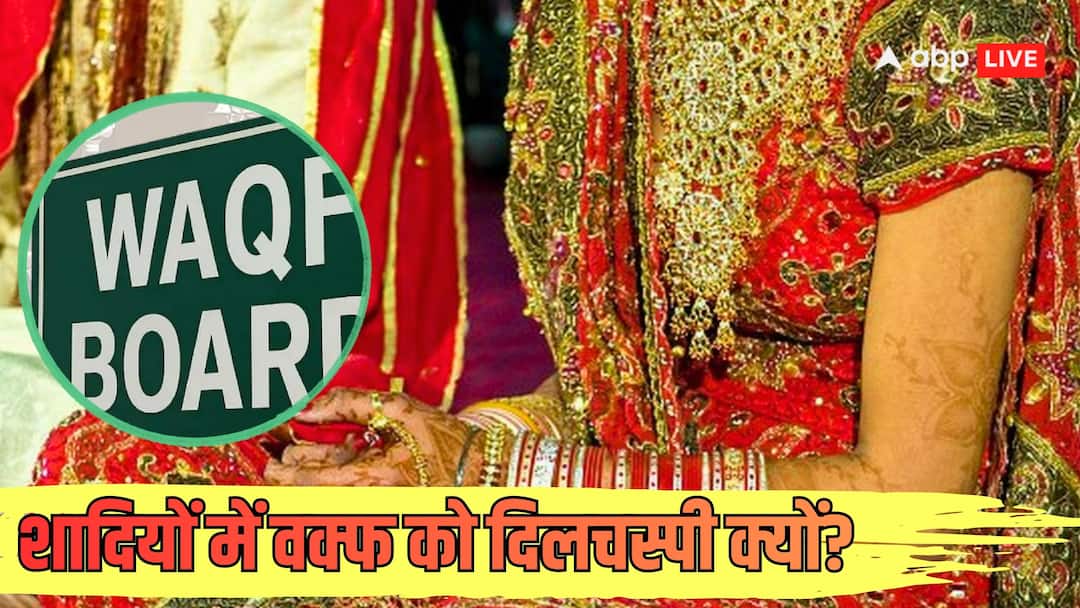
Chhattisgarh Waqf Board has made an announcement which has surprised everyone. The board has said that from August 2026, if any Muslim boy or girl wants to marry a non-Muslim, he will first have to take the permission of the Waqf Board. That means marriage cannot take place without the permission of the board. Not only this, all the Maulanas teaching Nikah will now have to register. Without registration, no Maulana will be able to perform Nikah. If anyone breaks these rules, action will be taken against him. After all, does the Waqf Board really have this right, does the Constitution allow it and why is the Board interested in someone’s marriage?
Can Waqf Board interfere in marriage?
To answer this question, ABP News spoke to senior Supreme Court lawyer Mukesh Kishore. Mukesh says- ‘This cannot happen at all.’
Mukesh said, ‘This proposal of the Waqf Board is like going beyond its limits. Under the Waqf Act 1995, the board has the right to manage only Muslim properties like mosques, cemeteries and donated lands. Nowhere in this Act is it written that the Board can control marriages or has the right to give permission to anyone.
Mukesh Kishore further said, ‘If the Board makes permission a condition of marriage, then it is a direct attack on the right to choose one’s life partner under Article 21 of the Constitution. Apart from this, it is also an unnecessary interference in the religious freedom given in Articles 25 and 26.
Does the Constitution allow this?
no way. The Supreme Court has clearly stated in many decisions in the past that any adult has the full right to marry as per his wish. This right is part of the freedom of life under Article 21. No board, no institution, no government can interfere in this right without legal basis.
Mukesh Kishore told another important thing, ‘There can be two types of debate on Articles 25 and 26. One side will say that the board is only monitoring the observance of Muslim law. The other side will say that the board cannot interfere in anyone’s religious freedom. But I believe that this proposal will not pass the legal test and will not be implemented.
Such a case has come before the court also
In November 2024, the Karnataka High Court had seen a similar case. There also the government had given the Waqf Board the right to issue marriage certificates. But the court immediately put a stay on that notification. The court clearly said, ‘Waqf Board has no right to register marriages. This is against the law and has never happened before. That is, what the Chhattisgarh Waqf Board is trying to do has already been rejected by the court in Karnataka.
What rights will the non-Muslim party have?
This is the most confusing question. Suppose a Hindu girl wants to marry a Muslim boy. So will that Hindu girl also have to take permission from the Waqf Board? Or only the Muslim side? There is no clear answer to this in the board’s proposal.
Mukesh Kishore says, ‘The board cannot make any new rules on its own. When Parliament has not made any such law in the Waqf Act, then the Board cannot add conditions for permission on its own.
Is the registration of Maulanas wrong?
Things are a little different here. Mukesh Kishore says, ‘The Waqf Board can do the work of registration of Maulanas and standardizing the Nikahnama in its capacity, because mosques and religious institutions are Waqf properties. The board can keep their records.
Yet Mukesh clarifies, ‘Making prior permission mandatory for inter-religious marriages is legally very weak and will not hold up in court.’
Why has Waqf Board started taking interest in marriages?
The thinking of the Waqf Board behind this may be that mosques and cemeteries are Waqf properties. Religious ceremonies like Nikah are held on these properties. The Board feels that such permission is necessary to prevent ‘misuse’ of these religious places or to decide its responsibility in case of dispute in case of marriage with a ‘non-Muslim’. But legally this argument is very weak because Nikah is a personal and religious act and not a property management matter.
Waqf Board Chairman Salim Raj says that this is being done so that the record of the marriage remains safe. There should be no dispute regarding identity or marital status in future. The board will also issue a uniform Nikahnama and bilingual (Hindi-English) form.
So is permission bigger than consent?
There is a whole controversy on this. It is the fundamental right of two adult persons to marry with mutual consent. The requirement of ‘prior permission’ of the Board makes this consent secondary and gives rise to an administrative hurdle. Mukesh Kishore considers this as a great example of ‘administrative overreach’. No statutory body can arbitrarily extend its powers or create such legal obligations which are not permitted in the Basic Law.
However, there is a catch in this whole matter. Mukesh Kishore also says that if the board had talked only about registering the Qazis, maintaining the records or standardizing them, then it could have been legally correct. But making ‘Ijazat’ mandatory for marriage will not stand in the eyes of the law.
So what will happen to this proposal?
If Chhattisgarh Waqf Board tries to implement this rule, it will first be challenged in the court. Supreme Court lawyer A. P. Singh believes that the court will ban it because:
- The board has no such right in the Waqf Act.
- This violates Articles 21, 25 and 26 of the Constitution.
- Karnataka High Court has already rejected a similar attempt.
A. P. Singh says, ‘A board cannot increase its powers at will. If the board starts giving permission, then the first question will be which law gave you this right? When Parliament did not give, how can you give?
Political expert Rashid Kidwai says, ‘More than a conspiracy, this case seems to be the result of a legal confusion in which the Waqf Board crossed the limits of its powers. Yes, there is no doubt that the time and circumstances are such that the government definitely seems to be getting political benefit from this decree.
This decree strengthens the same narrative of strictness against ‘Love Jihad’ which the government has been continuously raising, but there is no concrete link to prove it as a well-planned conspiracy. At present, it is a game of law versus politics whose final decision will be taken at the doorstep of the court.