
 By Admin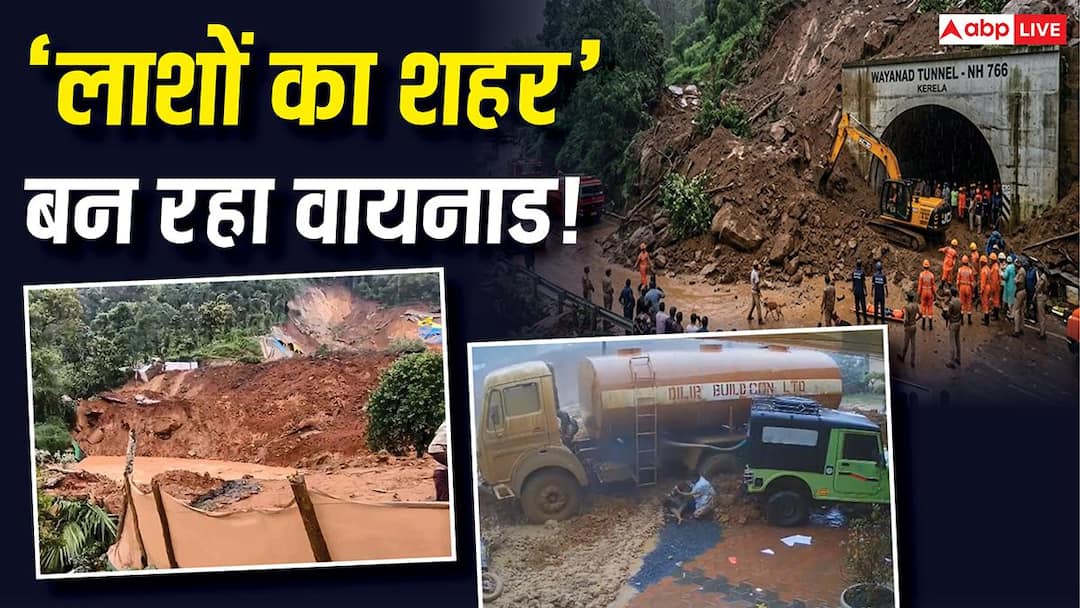
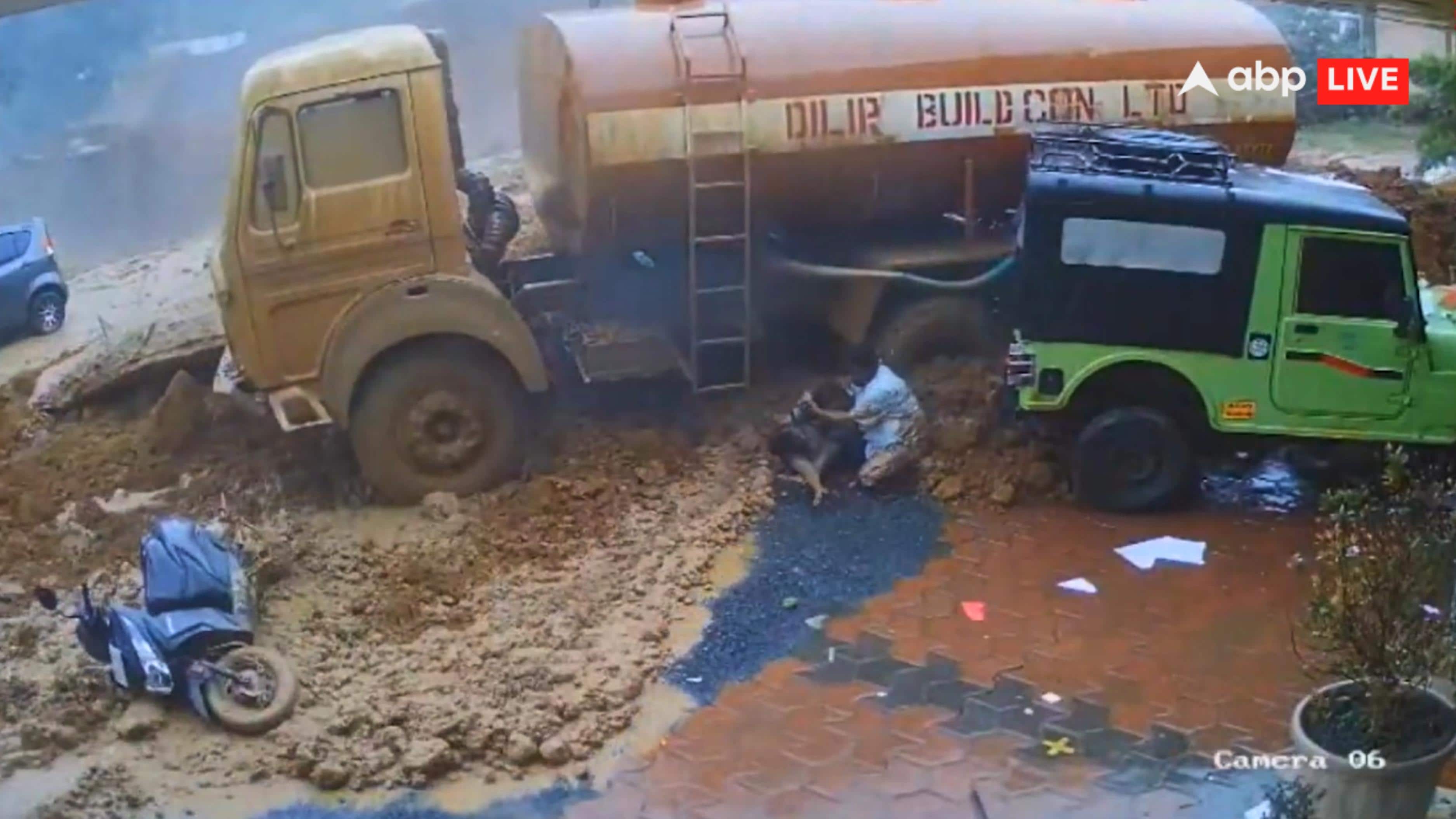
7 July 2026 morning… Suddenly the earth cracked near Meenakshi Bridge at Kallady near Meppadi in Wayanad district of Kerala. The debris from the excavation of the under-construction tunnel road project (Anakkampoyil-Meppadi Twin Tunnel) fell down. In this accident, one laborer died, seven were injured and seven are still missing. Relief and rescue teams rescued six people from the debris, but more than 10 people are still feared buried under the debris. Even two years ago, more than 400 people had died in the tragedy. Why is Wayanad becoming a graveyard and where has the government failed?
Dilip Buildcon is responsible for the project work.
This accident also hit a mosque, a house and a bus stop. The tunnel project is being built by Dilip Buildcon, while the project is being monitored by Konkan Railway Corporation.
Chief Minister V.D. Satheeshan clearly said, ‘This is the negligence of the contractor.’ He told that on June 20 itself, the District Collector and Disaster Management Authority had ordered the contractor to remove the excavation debris, but the contractor ignored it. Agriculture Minister T. Siddiq directly called it a ‘man-made disaster’.
In the last 24 hours, 265 mm of rain was recorded in this area. This rain was not such that it could not be predicted in advance. The weather department had already issued a yellow alert.
But this is not the first tragedy
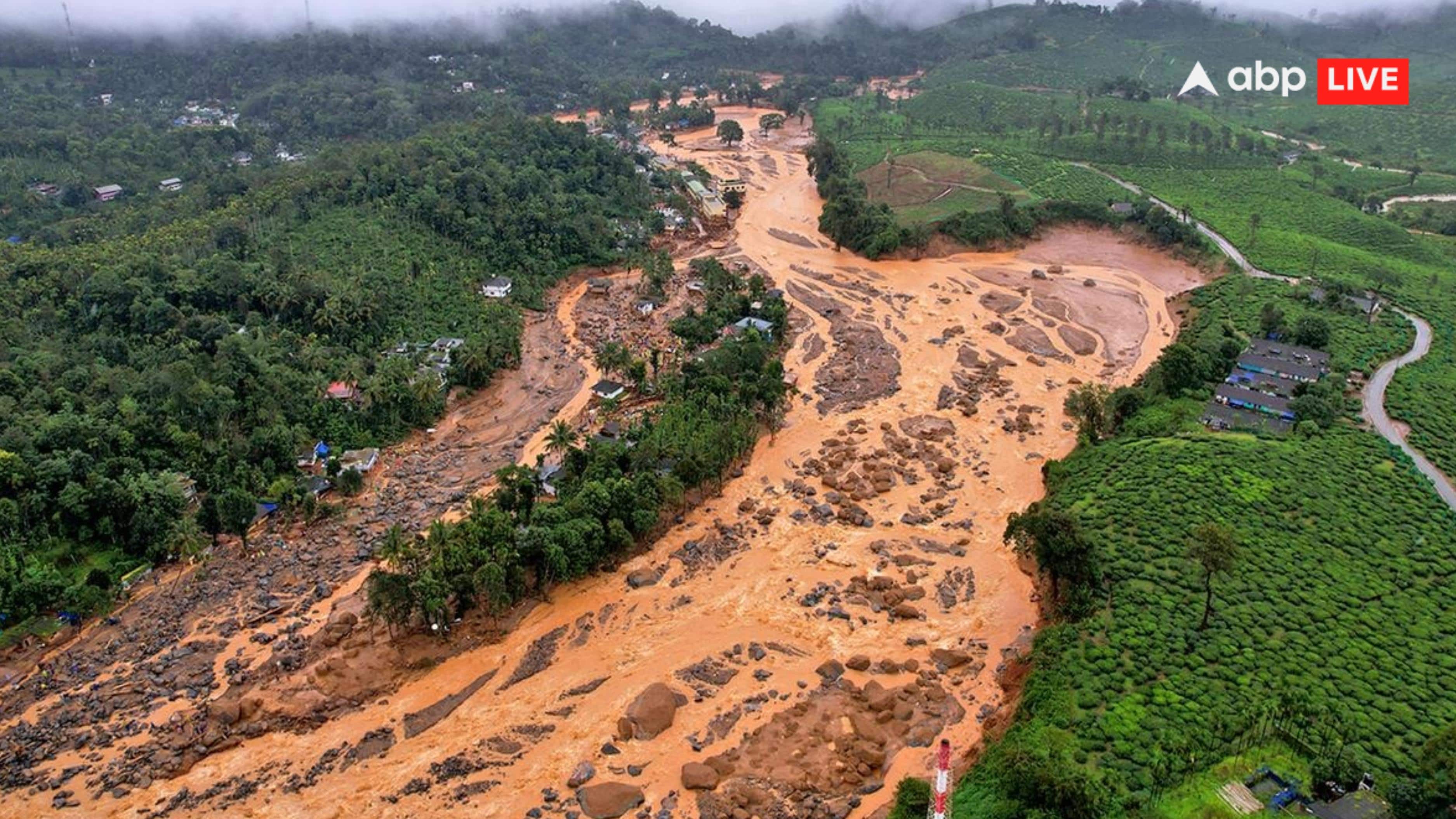
On July 30, 2024, Wayanad witnessed the worst natural disaster in its history. Between 2 and 4 in the night, several landslides occurred one after the other in Mundakkai, Churalmala and Punchirimattam. The debris, which started from a height of 1,550 meters, flowed for 8 kilometers and destroyed an area of 86,000 square meters.
In April 2025, the government told Parliament that 298 people had died, including 32 missing people who were declared dead. However, this is a government figure. The reality is much worse than this. According to relief agencies, more than 400 people were killed.
1,721 houses were affected in a single night. 1,247 people from Mundakkai, 2,162 people from Churalmala and 1,424 people from Attamala were rendered homeless. 6,759 people had to take shelter in 53 relief camps. The main bridge collapsed, hampering rescue operations. 212 bodies and 140 body parts were recovered.
Why is Wayanad being called ‘cemetery’?
There are three big reasons for this:
- Geography and Geology: Wayanad is situated on the very sensitive eco-system of the Western Ghats. The rocks here are gneiss and schist i.e. of Precambrian era, which are very fragile. There are natural cracks in these rocks, which become weaker by absorbing water during rains. In the 48 hours before the 2024 landslide, 572.6 mm of rain fell, which was 200 percent more than the IMD’s forecast. Vythiri taluk of Wayanad was declared Eco-Sensitive Zone-1 by the Western Ghats Ecology Panel, but the development work did not stop.
- Warnings ignored: In 2011, the Madhav Gadgil Committee had warned that large infrastructure projects and mining in sensitive areas of the Western Ghats should be banned. The Kerala government put that report on hold. The Hume Center for Ecology had issued a warning 16 hours before the 2024 landslide, but the district administration ignored it because it was not part of the official system. The central government had also warned of heavy rains and landslides on 23, 24, 25 and 26 July, but the state government did not take it seriously.
- Ignoring the environment in the race for development: In the last few years, resorts, roads, tourist facilities and plantations have expanded rapidly in Wayanad. Trees were replaced by concrete and gardens. The land that can absorb rain water decreased and the pressure on unstable slopes increased. According to ‘Sliding Earth, Scattered Lives’, a report published in September 2025, ‘The Wayanad landslide was not the anger of nature, but was a direct result of careless interference by humans and the failure of the government.’
How did the government fail?
There are 4 major reasons for the government’s failure:
1. Not taking warnings seriously
In three decades, landslides had occurred in Wayanad in 1984 (14 deaths), 1992 (11 deaths), 2007 (4 deaths) and 2019 (Puthumala). Despite this, ward-level evacuation plans were not made. The Kerala State Disaster Management Authority did not have any site-specific plan for Meppadi Panchayat. Evacuation was limited to only one ward.
2. Negligence in relief and rehabilitation
After the disaster of 2024, the Kerala government sought immediate assistance of Rs 1,202 crore from the Centre. In November 2024, Chief Minister Pinarayi Vijayan said that the Center gave disaster relief to other states without their asking, but Wayanad’s demand was ignored. The Center refused to declare the disaster as a ‘disaster of serious nature’, blocking aid from international agencies and loan waivers from banks.
In October 2025, the Kerala High Court accused the Center of ‘failing the Wayanad victims’. The court said, ‘The central government has disappointed the people of Wayanad by refusing to use its powers.’ The court also condemned the ‘Shylockian methods’ of loan recovery from banks.
3. Same mistake repeated in 2026 also
The accident of July 7, 2026 shows that even after two years have passed, no lesson has been learned. On June 20, the District Collector ordered the contractor to remove the debris, but the contractor procrastinated. Konkan Railway was already warned about the landslide, but no action was taken.
4. Politics of not giving the status of ‘national disaster’
The Center refused to declare the 2024 landslide as a ‘national disaster’. This simply meant that help could not be received from the National Disaster Response Fund (NDRF), the path to international aid remained closed and no legal basis could be created for loan waiver of the victims.
Wayanad is not just a natural disaster, it is a system failure
In Wayanad the earth does not slip just because of rain. It slips due to carelessness, ignoring warnings, ignoring the laws of nature and the failure of the government. Madhav Gadgil had said in 2024 itself, ‘Wayanad disaster is man-made.’ The accident of 2026 is proof that both the Kerala government and the central government together allowed Wayanad to become a ‘cemetery’. More than 400 deaths, thousands homeless, parents swept away in the debris in front of their children. Even after two years, same circumstances, same mistakes and same carelessness.