
 By Admin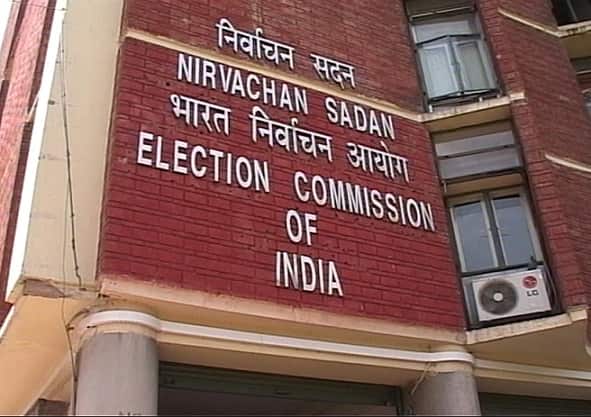
Bengal Assembly Election 2026: Just before the second phase of West Bengal Assembly elections, the Election Commission has made it clear that this time any kind of irregularities will not be tolerated. Unprecedented security arrangements have been made on 142 seats for the voting to be held on April 29, so that voters can exercise their rights without fear.
Like the first phase, this time too peaceful and fair voting will be ensured at all costs. According to sources, the Commission has given clear instructions that separate deployment should be done in each assembly constituency and ‘area dominance’ should be increased in sensitive areas. That means security forces will not only be present, but will also actively patrol and control the environment.
Under this strategy, Central Armed Police Force (CAPF) personnel riding on 160 motorcycles will patrol continuously. There will be two soldiers on each bike, so that immediate response can be given in case of any emergency. Its objective is fast response, strong presence and trust among voters.
Also read- West Bengal Elections 2026: Amit Shah is overjoyed at the bumper voting in Bengal, predicted the seats, told who will be the CM.
CCTV cameras will be installed at every polling station and deployment of central forces will be ensured. Also, no unauthorized person will be allowed to come within 100 meters of the polling station.
Chief Electoral Officer Manoj Kumar Aggarwal clearly said, “We have requested everyone to ensure peaceful and normal voting. Fake voting or booth capturing will not be allowed. People should exercise their democratic rights without any fear. Action will be taken against anyone who tries to stop it.”
Why is this face special
This face-off on 142 seats is special because these areas are considered the core strongholds of Chief Minister Mamata Banerjee-led TMC—the urban belt of South Bengal and Kolkata, where the party has long had a strong hold. The record 93% voting in the first phase has clearly indicated that voters are very active this time. This is the reason why the competition has become more intense in the second phase.
Prime Minister Narendra Modi, Home Minister Amit Shah and the top leadership of BJP are continuously campaigning on these seats. BJP’s strategy is clear – to make a dent in South Bengal, cross the mark of 77 seats in 2021 and strengthen itself in the race for power. The importance of this phase also increases because voting is to be held on many high-profile seats. Most of the attention is on Bhawanipur seat, where Chief Minister Mamata Banerjee has a direct contest with Leader of Opposition in the Assembly Suvendu Adhikari.
Voting on which most important seats
The 142 seats to be voted in the second phase of West Bengal elections cover the most important political areas of the state. These seats are spread across eight electoral districts—Kolkata North, Kolkata South, Howrah, Nadia, North 24 Parganas, South 24 Parganas, Hooghly and East Burdwan. This is the reason why this phase is being considered as the ‘nerve center’ of the elections.
If we look at the figures, the dominance of Trinamool Congress (TMC) was clearly visible in these areas in the 2021 elections. Despite aggressive campaigning by BJP, TMC had won 123 out of 142 seats. BJP was reduced to only 18 seats, while Left ally Indian Secular Front (ISF) got one seat. The distribution of seats also shows the importance of this phase. There are 11 seats in Kolkata North and South together, 16 in Howrah, 17 in Nadia, maximum 33 seats in North 24 Parganas, 31 in South 24 Parganas, 18 in Hooghly and 16 in East Burdwan.
The fate of big faces will be decided
The biggest feature of the second phase is that many big and influential faces are in the electoral fray, whose victory or defeat can affect the entire political equation. This phase is especially important for Trinamool Congress (TMC), because many senior leaders of the party are putting their credibility at stake.
Everyone’s eyes are on Chief Minister Mamata Banerjee’s seat, but apart from this, big names like Mayor Firhad Hakim from Kolkata Port, Minister of State for Finance Chandrima Bhattacharya from Dumdum North, Industries Minister Shashi Panja from Shyampukur, Electricity Minister Arup Biswas from Tollygunge, Education Minister Bratya Basu from Dumdum and Minister of State for Fire Sujit Basu from Bidhannagar are also in the fray. The performance of these leaders will decide how strongly TMC is able to defend its urban stronghold.
On the other hand, BJP has also made this phase a battle of prestige. The party has fielded the mother of a junior doctor from Panihati, who was raped and murdered at RG Kar Hospital in Kolkata in October 2024 – a decision that gives an emotional turn to the elections. Apart from this, BJP has fielded former Rajya Sabha MP Swapan Dasgupta from Rashbehari and actress-politician Roopa Ganguly from Sonarpur South, making the contest more interesting.
Battle of Bhawanipur: A battle of prestige, mathematics and pressure
Bhawanipur seat of South Kolkata has become the most high-profile battle of this election. Here Chief Minister Mamata Banerjee is in direct competition with her former aide and now BJP leader Suvendu Adhikari. Adhikari is also contesting from Nandigram—the same seat where he defeated Mamata by about 1,900 votes in 2021. This background has made the battle of Bhawanipur more symbolic.
Also read- Exit Poll 2026 Date: First phase ends in West Bengal, voting completed in Assam-Kerala-Tamil Nadu, when will the exit poll come?
This time the equations have changed. After the Special Intensive Revision (SIR) of the Election Commission, names of about 51,000 voters in Bhawanipur have been removed from the list, which is about 21% of the total voters. This cut is being considered a challenge for Mamata Banerjee, especially because her victory margin in the 2021 by-election was around 58,800 votes.
In the last phase of elections, Mamata has intensified her focus on Bhawanipur. She is not only holding regular meetings with party workers, but for the first time she is also conducting a comprehensive campaign at the grassroots level. To attract the large number of non-Bengali voters here, Mamata is reaching out to Jain temples and Sikh Gurudwaras. Also, direct communication is being established with voters living in high-rise societies through closed-door meetings and padyatras.