
 By Admin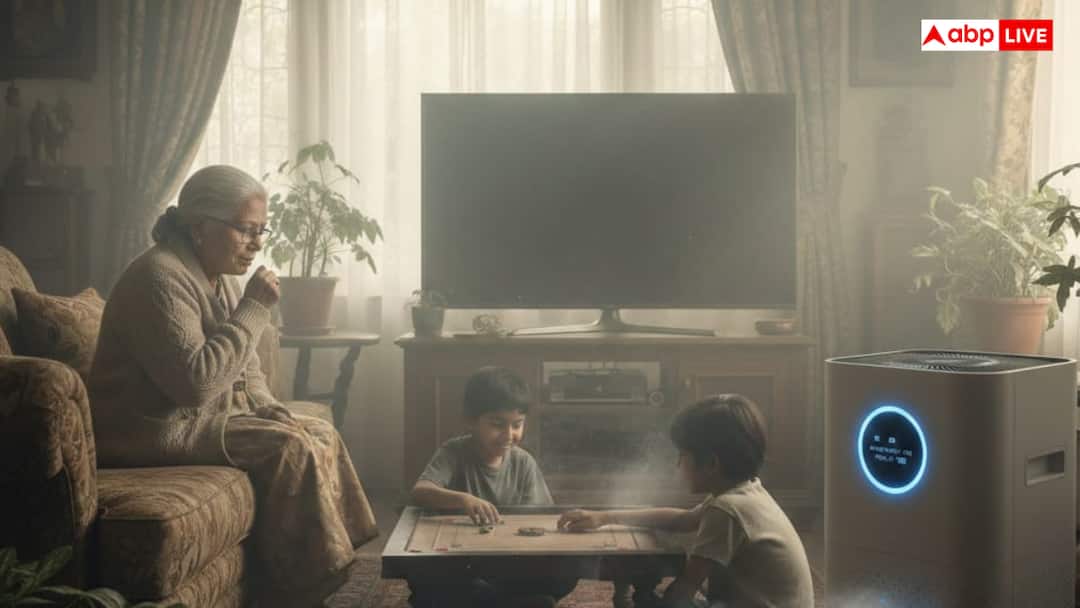
Nowadays the problem of pollution has increased so much that people often think that the air inside the house will be safe. But recently, scientists from BITS Pilani, IIT Jodhpur and NIT Warangal have shown in a research that indoor air is often two to five times more polluted than the outside air. According to research, this condition can be more dangerous especially in cities, where houses are smaller and have less ventilation.
Scientists have developed India’s first Indoor Air Quality (IAQ) index. Its purpose is to get an accurate estimate of the harmful pollutants present in the indoor air. Earlier people used to think that we can avoid poisonous air by staying indoors, but research has found that the amount of particulates like PM2.5 and PM10 in indoor air can be very high.
Increasing pollution from kitchen, cleaning and household work
Research has found that everyday activities like cooking, sweeping, handling dirty garbage or disposing of unsorted waste increase the amount of pollutants in the air. Small homes, poor ventilation and lack of exhaust systems allow these pollutants to accumulate quickly, causing indoor pollution to reach dangerous levels.
Seasonal and external reasons are also responsible
Fog and smog in winter, smoke from firecrackers during festivals, smoke from nearby dustbins or stubble burning also spoil the indoor air. Research head Atul Roy Choudhary says, “Our study shows that we spend about 90% of our time indoors, so it is very important to pay attention to the quality of indoor air.
Western standards do not work for India
Researchers say that due to the peculiarities of home and lifestyle in India, IAQ standards of western countries are not applicable. Professor Shankar Ganesh of BITS Pilani says that our homes, our cooking habits, our festivals and climate are all different. That’s why we need a special indoor air quality scale for India.
How data was collected
The team collected real-life air data from homes in Indian cities, especially in construction and renovation areas. Then he analyzed and gave different importance to the pollutants and created a simple IAQ scale, which the householders could easily understand. With the help of this scale, families can know the quality of air inside their house and can adopt measures to improve it.
effect of outdoor pollution
The research also revealed that outdoor pollution such as stubble burning, smoke from garbage dumps, and improper disposal of garbage have a major impact on indoor air quality. Methane released from unsorted waste not only pollutes indoor air but is also a threat to climate change.
Also read – Why 90 percent students in Vaishno Devi Medical College, Jammu are Muslims, what is the reason for this?
Education Loan Information:
Calculate Education Loan EMI