
 By Admin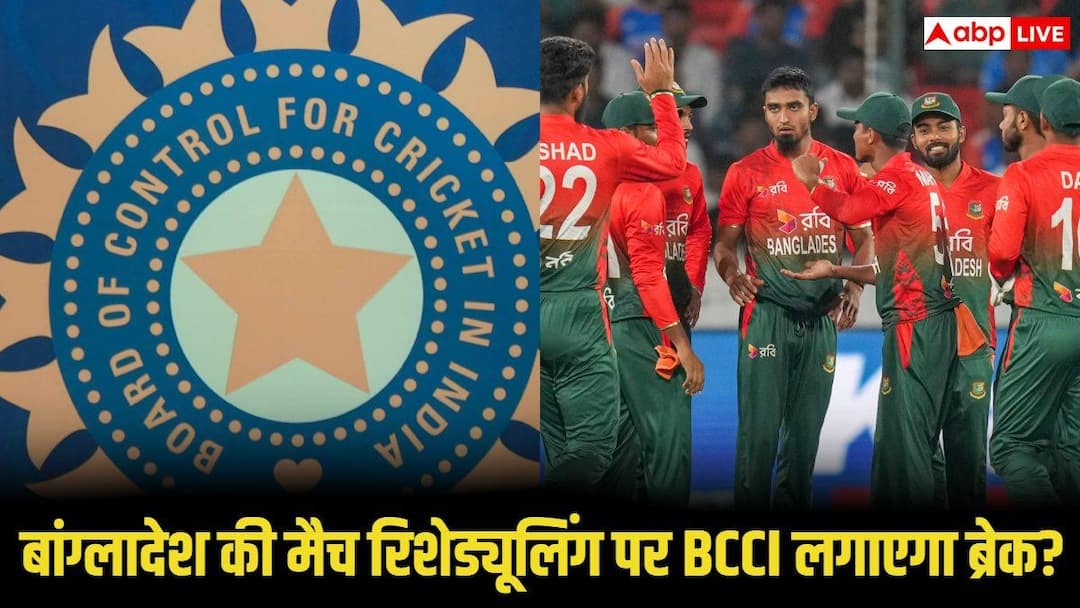
The controversy that started regarding Mustafizur Rahman is no longer limited to just one player or one team. This matter is gradually becoming a big issue related to international cricket and India-Bangladesh relations. Bangladesh Cricket Board (BCB) has clearly said that it does not feel safe in India and hence it has demanded from ICC that its matches in T20 World Cup 2026 should be held in Sri Lanka instead of India. After this demand, the biggest question is whether BCCI can stop this rescheduling and what will be the role of Government of India in this.
ICC’s silence increased the suspense
Till now no official statement has come from the International Cricket Council on this entire matter. Although media reports are claiming that ICC Chairman Jay Shah has indicated to reconsider the schedule, but until a written or official decision comes from the ICC, it is not clear whether Bangladesh’s demand will be accepted or not. There may be a meeting between ICC, BCCI and BCB in the next few days, after which the picture is expected to be clear.
How strong are the rights of BCCI?
T20 World Cup 2026 is being hosted by India and Sri Lanka. In such a situation, BCCI is responsible for the ground level of the matches to be held in India. BCCI is looking after all the arrangements like stadium, security, ticketing, hotel and travel. If the matches are shifted to another place at the last moment, it will affect both logistics and revenue. In such a situation, BCCI has every right to say that it is not easy to change the schedule now.
Why is the entry of Government of India important?
This matter is no longer limited to cricket only. The Bangladesh government has already taken strict steps like banning the telecast of IPL 2026. In such a situation, the decision to reschedule the World Cup matches can also affect the diplomatic relations between the two countries. BCCI can take advice from the Government of India before taking any major decision. Recently former Bangladeshi PM Khaleda Zia passed away. After that, India’s Foreign Minister S. Jaishankar had reached Bangladesh for his funeral. During that time a positive message was sent from both sides. Therefore, the government’s stance on issues like foreign policy and security will be very important.
ICC can take action against Bangladesh?
There are many such examples in the history of cricket, when a team refused to play the match due to security reasons and had to suffer losses. This has happened in the 1996 and 2003 World Cups, where the teams that did not play the match had to lose points. Even in the 2016 Under-19 World Cup, Australia was thrown out of the tournament. In such a situation, if Bangladesh refuses to play the match then ICC can take action, although the decision will not be easy due to the example of India-Pakistan matches.
Problems of other teams will also become an issue
If Bangladesh’s matches are shifted from India to Sri Lanka then other teams of its group will also face problems. He will have to travel frequently between India and Sri Lanka, which is difficult in the tight schedule. In such a situation, other teams can also raise objections.
Overall, accepting Bangladesh’s demand is not an easy decision for ICC. The interests of BCCI, Government of India, other teams and crores of fans are all involved in this.