
 By Admin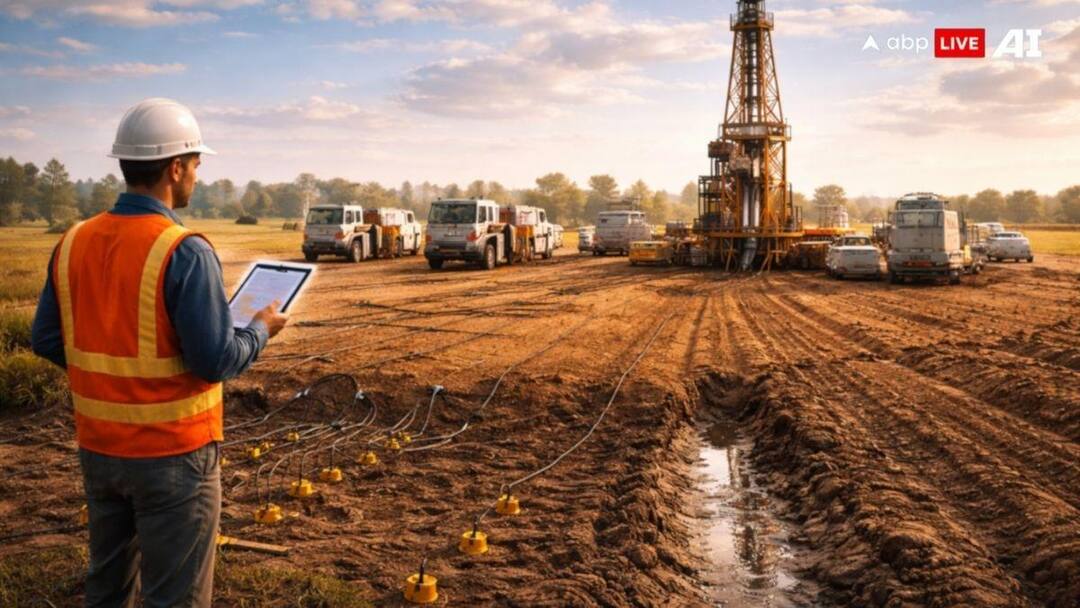
Crude Oil Detection: Indications of crude oil reserves have been found in some parts of Uttar Pradesh, especially Farrukhabad, Auraiya and Kannauj. Meanwhile, a question is arising in the minds of people that how do scientists actually find oil under the ground. Let us know what is the answer to this question.
how does it start
This process starts above the ground. Geologists study the surface terrain, rock formations, and soil structure of an area. They look for sedimentary rocks. These types of rocks are the only rocks that can contain oil. Evidence such as fossilized sea creatures, ancient vegetation and layers of rock formed millions of years ago help scientists determine whether a site was once under the sea or under dense forest. These are some of the conditions that are necessary for the formation of petroleum.
Survey is done through earthquake
The most important step in detecting oil is seismic survey. In this process, a controlled amount of vibration is created on the ground. For this, small explosive charges or special vibration trucks are used. These earthquake waves go deep under the ground and return when they collide with different rock layers. With the help of this sensor called Geophone, these returning signals are recorded and scientists are able to make 2D and 3D pictures of the surface below. These photographs help in identifying the oil trapping structure.
Analysis of gravity and magnetic fields
Along with earthquake studies, scientists also conduct gravity and magnetic surveys. This technique measures small changes in the Earth’s gravitational and magnetic fields due to differences in the density of rocks underground. Oil-bearing rocks are usually much less dense than surrounding formations.
Drilling starts
If survey data gives a definite indication of the presence of oil, then companies move towards drilling. This is a very risky and expensive task because digging a well can cost hundreds of crores of rupees.
Well Logging and Reserve Testing
When signs of oil are found, engineers lower electronic instruments into the well. This process is called logging. With the help of these tools, porosity, pressure, temperature and fluid saturation of rocks are measured. At this stage it is known how much oil is present and whether it can be extracted economically or not.
Let us tell you that even if oil is found under private land, it does not belong to the owner of the land. All petroleum resources in India belong to the government. If production begins, land owners are usually compensated through lease payments or compensation from the government.
Also read: Which is the biggest company of Bangladesh, who is the Ambani there?