
 By Admin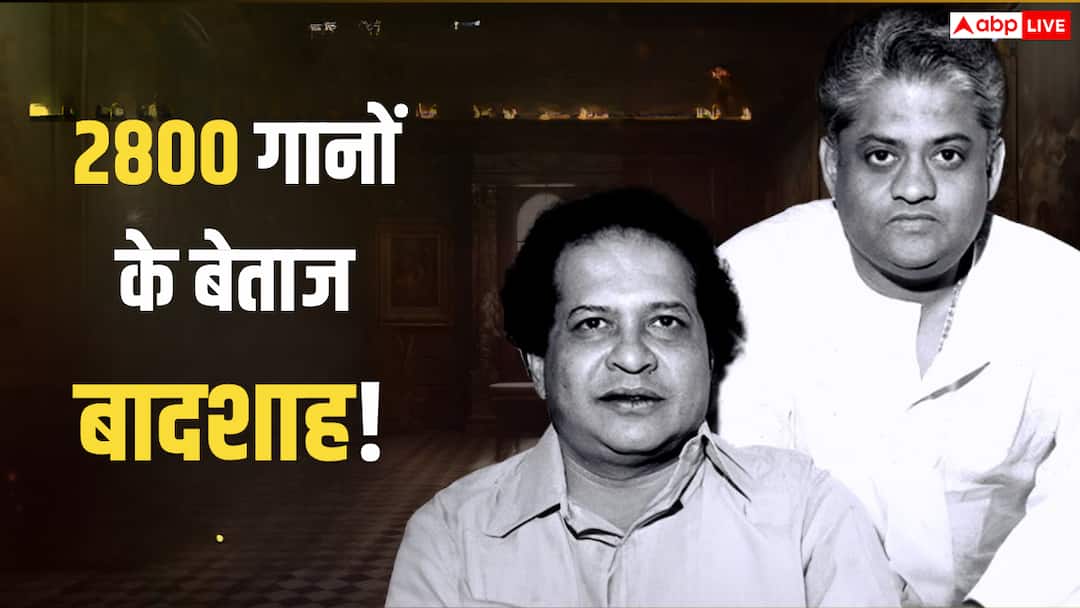
Whenever “Chahunga main tujhe sanjh savere, dheere dheere…” or “Hansta Hua Noorani Chehra…” is played even today, one remembers those two composers who gave Indian film music its most melodious ‘Golden Age’. We are talking about Laxmikant Shantaram Kudalkar. Together with Pyarelal, he ruled Indian cinema for almost three and a half decades.
Laxmikant was born on 3 November 1937 in Vile Parle, Mumbai. It was the night of Diwali, when lamps were burning all around. Since it was the day of Lakshmi puja, the parents named him ‘Laxmikant’.
He was still very young when his father’s shadow disappeared from his mind. The family drowned in debt and Laxmikant had to leave his studies midway.
During this time, a musician friend of his father advised, “Teach children music, there will definitely be some means of earning their living.” It was from here that at the age of just ten, Laxmikant got the mandolin in his hands. He learned its nuances from Ustad Hussain Ali and later Bal Mukund Indorkar. He also acted as a child artist in films like ‘Bhakta Pundalik’ (1949).
Watch Video: Aishwarya Rai was talking to fans, daughter Aaradhya reacted like this, video went viral
The biggest turning point in Laxmikant’s life came when Sur Kokila Lata Mangeshkar herself saw this 11 year old boy playing the mandolin during a concert in the Radio Club of Colaba. Lata Mangeshkar was stunned to hear that amazing performance. He immediately learned about Laxmikant’s family situation and recommended him to the then veteran musicians like Shankar-Jaikishan, SD Burman and Naushad.
During this struggle, Laxmikant met Pyarelal Ramprasad Sharma in ‘Surile Bal Kala Kendra’. Pyarelal himself was an excellent violinist, and the circumstances of his house were also not good. Same age, same struggle and same passion for music.
There came a time when Pyarelal, overcome by poverty, started thinking of leaving the country and going to Vienna. Then Laxmikant held his hand and said affectionately, “Don’t worry friend, together we both will make a big name for ourselves in this industry one day.”
The low budget film ‘Parasmani’ released in 1963 made this pair famous overnight. After this, the 1964 film ‘Dosti’ created history. The songs of this film won Laxmikant-Pyarelal their first Filmfare Award.
After this, a series of success started which was not stopping. During the Shankar-Jaikishan era, this duo wrote a new definition of modern youth music through Raj Kapoor’s film ‘Bobby’ (1973). Be it the classical raga Darbari of ‘Satyam Shivam Sundaram’, the throbbing disco music of ‘Karz’, or the songs of ‘Tezaab’ and ‘Khalnayak’, Laxmikant-Pyarelal composed songs according to the changing mood of every era.
He composed more than 2,800 songs for about 750 films. Even after being at the peak of professionalism, Laxmikant remained connected to the ground. He was a great human being as much as he was a great musician. Producer Boney Kapoor once admitted that he wanted to pay the pair a higher fee, but Laxmikant refused, saying, “Not every producer can afford such expenses.”
His pairing with lyricist Anand Bakshi was brilliant. Together they gave memorable songs in about 302 films.
This music emperor breathed his last on 25 May 1998. After the death of Laxmikant, Pyarelal Ramprasad Sharma definitely became alone, but till date he has not performed alone on any stage. Wherever he works, he always writes his name as ‘Laxmikant-Pyarelal’.
Also read- Saving her from fire on the set of Mother India was just an excuse, Sunil Dutt was heartbroken over this ‘one habit’ of Nargis.