
 By Admin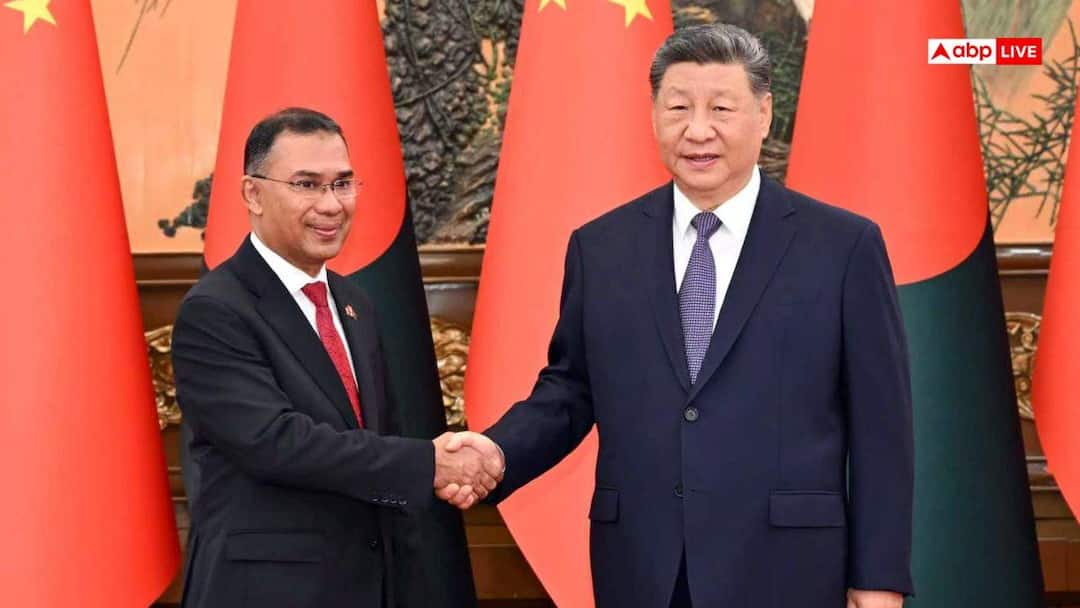
China has again activated its decade-old connectivity, but this time it has completely excluded India from it. Beijing is now preparing to build the China-Myanmar-Bangladesh Economic Corridor (CMBC). Through this corridor, China wants to directly access the Bay of Bengal, although this route will pass through one of the most active war zones in the world at present.
Plan made during Bangladesh PM’s visit to China
The issue of China-Myanmar-Bangladesh Economic Corridor came up during Bangladesh Prime Minister Tariq Rahman’s four-day visit to Beijing that began on June 22. According to China’s Foreign Ministry, after meeting Xi Jinping, there was discussion on taking CMBC forward with the aim of promoting regional connectivity. Yao Wen, China’s Ambassador to Bangladesh, said, we had proposed the Bangladesh-China-India-Myanmar Economic Corridor about 15 years ago and it had gained momentum. Then we did not get the success that we expected.
When the Chinese Ambassador was asked whether India could participate in this? In response to this he said that this corridor is also open for other countries, if they want to join then they can. He said that the sole objective of this corridor is to promote connectivity and regional economic cooperation.
What will be the path of the new corridor?
This proposed corridor will start from Kunming, the capital of Yunnan province of China and will go to Mandalay in Myanmar. After this this route will be divided into two parts. The first route will go towards Yangon, Myanmar. The second route will go to Kyaukphyu deep sea port located in Rakhine state of Myanmar. China plans to extend this route beyond Rakhine and connect it to Chittagong and Cox’s Bazar in Bangladesh. With this, China will get a direct road route to Chittagong and Mongla Port located in the Bay of Bengal.
This new corridor (CMBC) is actually a changed form of China’s old plan. In the 1990s, the Bangladesh-China-India-Myanmar (BCIM) corridor was proposed, which aimed to connect Kunming to Kolkata via Mandalay and Dhaka. The BCIM project remained incomplete due to India’s concerns regarding China’s ‘Belt and Road Initiative’ (BRI) and the deterioration in relations between the two countries. In 2019, China removed it from the list of official BRI corridors. Due to insecurity on this route
The biggest challenge for the new corridor
The biggest obstacle in the way of this 1,700 kilometer long corridor is the internal situation of Myanmar. This route passes through Rakhine State of Myanmar, which is currently in the grip of a fierce civil war. According to a 2026 report by the United Nations Security Council, Myanmar’s military government (junta) now controls only about a fifth of the country. About 42 percent of the country is controlled by rebel forces and ethnic armed groups, while fierce fighting is going on in the remaining parts. According to the Memorandum of Understanding signed between Myanmar and China in 2021, the timeline for the construction of the related Mandalay-Kyaukphyu Railway has not yet been decided.
Bangladesh’s stance regarding the new corridor
Bangladesh Foreign Minister Khalilur Rahman said on 27 June that Bangladesh is currently examining the proposal and no final decision has been taken on it. Bangladesh has placed a condition that any land connectivity through Myanmar is possible only when peace is completely restored in Rakhine State.
What does this mean for India?
This effort of China is being considered as part of the strategy to surround India on both the eastern and western fronts. China has already reached the Arabian Sea and Gwadar Port by building the China-Pakistan Economic Corridor (CPEC) through Pakistan. India strongly opposes the CPEC corridor as it passes through Gilgit-Baltistan, which is part of Pakistan-occupied Kashmir (Pok).
Now China is making inroads into the Bay of Bengal on the eastern end of India through Myanmar and Bangladesh. This move by China is a major attempt to bypass the maritime area under India’s influence and strengthen Beijing’s presence in the Indian Ocean region.
Also read: Will Ukraine surrender? Kiev shaken by Russia’s attacks, Zelensky returns after leaving Ireland trip midway