
 By Admin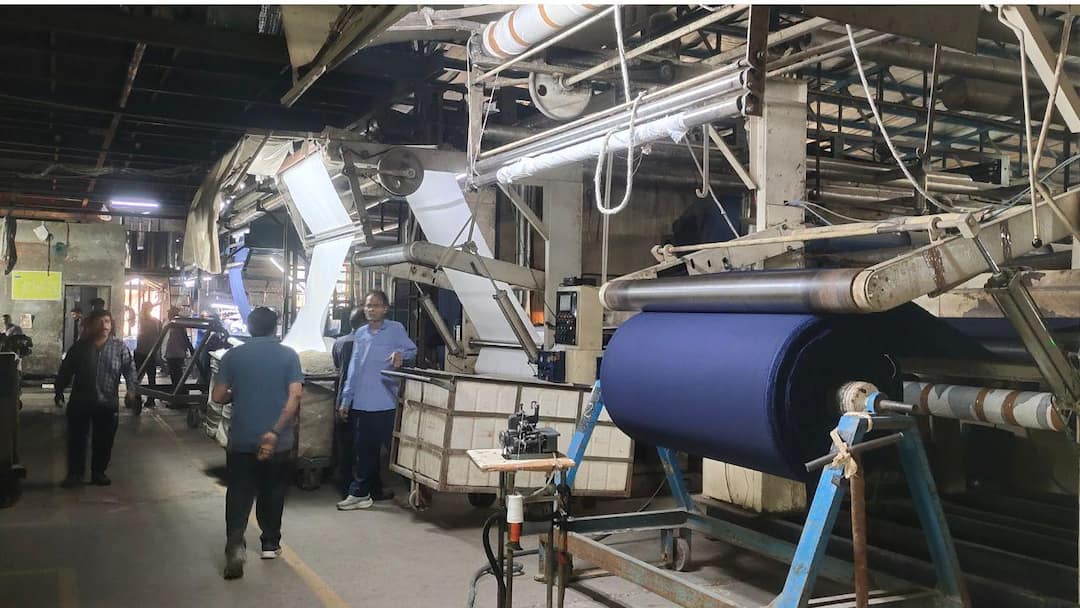
Inflation in Textile Business: The impact of the ongoing war in West Asia is now visible in different ways on the pockets of the common people of India. From food items to driving and its maintenance, everything is becoming expensive. Now another big revelation has come to light in the ground report of ABP News. Now in the coming time you can get clothes which will be costlier by 20 to 25 percent.
ABP News conducted a ground investigation in a textile mill located in Delhi-NCR, where Kamal Mishra, Delhi President of Textile Association India, tells in an exclusive conversation with ABP News that the biggest impact of this war on our industries has been on the cost of fuel and raw materials. Processing of cotton fabric has become expensive, while due to the cost of crude oil used in synthetic fabric, the prices of polyester have increased by about 25 percent in the last two-three months. Due to non-availability of gas cylinders and increase in energy costs, there has been additional pressure of 8 to 10 percent on the total cost of the industry.
40 to 45 thousand containers are stranded at different ports.
Kamal Mishra says that the shipping cost has also become expensive, where earlier the cost of a 40 feet container used to be 1200 dollars, now it has reached 1900 to 2000 dollars and due to this war, at least 40 to 45 thousand containers of the textile industry are stuck at different ports, which has created huge uncertainty in the entire supply chain.
Talking to ABP News, Pawan Kumar Gupta, owner of a cotton mill, says that due to this war, the production in his unit has fallen by 40 percent. Earlier, his mill used to make 15 lakh meters of cloth every month, now it has come down to 8-9 lakh meters. Pavan further explains that the shortage of PNG, increasing chemical cost and decreasing labor availability have worsened the situation in this industry. In the last one month, the processing cost has increased by about 20 percent, which used to cost Rs 40 earlier for printing, now it has increased to Rs 50.
More than 100 chemicals are used
In the same mill, Devansh Gupta, director and son of Pawan Gupta, told ABP News the entire process of how this cloth is processed and then how it reaches the common consumers. Devansh explains that the entire process of making a cloth consists of many stages like spinning, weaving, dyeing and printing. More than 100 chemicals are used in all these and only then they take the manufacturing from our mill and make the garment and only then it reaches the common consumers.
Aayega Devansh tells that their raw material comes from China and Türkiye. In the current situation due to war, the supply of these raw materials is disrupted and prices have increased by 40 to 50 percent. Its direct impact is on common consumers in the form of inflation on the final product.
Prices increased by 25 to 30 percent
Yogesh Mahajan, Vice President of Textile Association India, says that the prices of synthetic filaments have increased by 25 to 30 percent in the last 1 to 2 months. He says that many textile mills have reduced the production time from 18 hours to 10 hours, the effect of which is also visible on products like carpets, blankets and bedsheets. Yogesh says that the government has given relief in custom duty on petroleum products, but the rising prices of raw materials have increased the production cost.
Laborers are returning to their villages in large numbers
At the same time, Textile Association General Secretary DK Singh further clarified the ground reality. He says that due to shortage of gas cylinders and inflation, a large number of workers from mills are returning to their villages. Giving an example, he said that in industrial areas like Silvassa, labor has reduced by 20 percent, due to which polyester production has declined by 30 percent. According to him, about 20 percent of textile mills across the country have been closed, while 30 to 40 percent of the units are working at half their capacity.