
 By Admin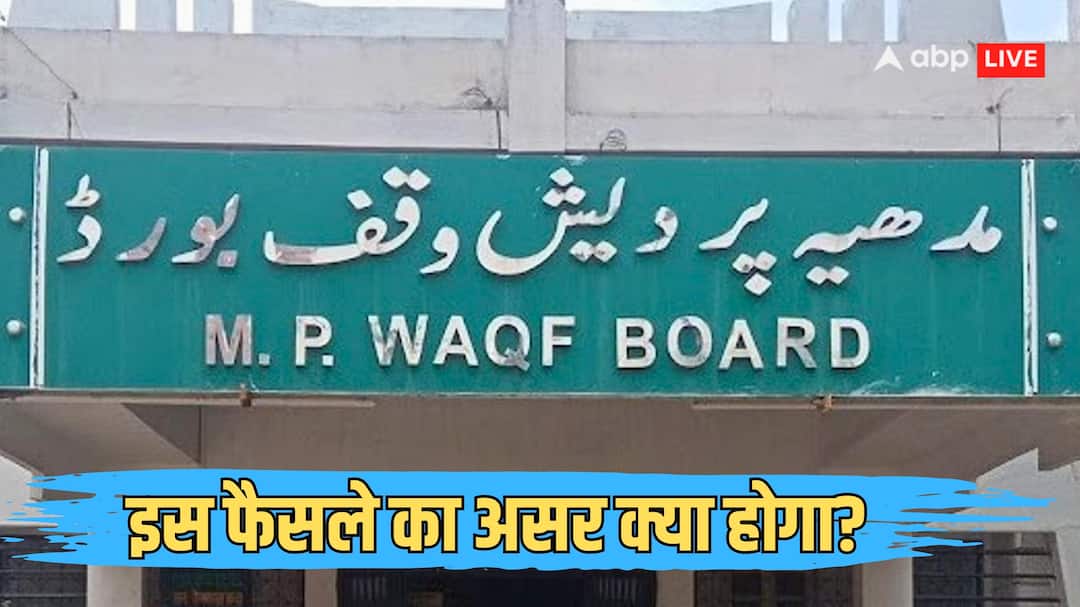
Madhya Pradesh Government reconstituted the State Waqf Board by issuing a notification in the Gazette. This new board has 10 members, in which for the first time two Hindu members Manoj Malpani (Indore) and Animesh Bhargava (Raghogarh) have been included. Board Chairman Dr. Sanwar Patel has been re-appointed. With this, Madhya Pradesh has become the first state in the country to reconstitute the Waqf Board under the Waqf (Amendment) Act, 2025. But now the question arises whether the inclusion of 2 Hindu members will have a good or bad effect?
Earlier, under the Waqf Act, 1995, it was mandatory for all members of the State Waqf Board to be Muslims. The provision was added in the Waqf (Amendment) Act, 2025 that every State Waqf Board will have at least two non-Muslim members. Madhya Pradesh Government has constituted the Board under Section 13(1) and Section 14 of the Waqf Act, 1995.
The full team of the new 10-member board includes:
Dr. Sanwar Patel (Indore) is the president, Hindu members are Manoj Malpani (Indore) and Animesh Bhargava (Guna). Apart from these, Najma Heptulla (New Delhi), Atif Aqeel (MLA from Bhopal North), Faizan Khan (Ujjain), Sister Fatima Chaudhary (Indore), Shaista Sultan (Bhopal councilor), Shabana Khan (Ratlam councilor), Backward Class and Minority Welfare Commissioner are included.
What good will come from this decision?
According to experts, this decision provides 4 major benefits:
1. Transparency and accountability will increase
Waqf Board Chairman Dr. Sanwar Patel and Minister Vishwas Sarang say that this decision has been taken for the purpose of transparency, better management and security of Waqf properties. The government claims that this will bring transparency in the functioning of the board and improve the management of Waqf properties.
2. Control on Waqf mafia
New Hindu member Animesh Bhargava has termed the protesters as Waqf mafia. He said that the game of those who are protesting is coming to an end now because transparency and legal monitoring is coming to the board. That is, this decision is expected to stop the irregularities in Waqf properties.
3. Law will be followed
This decision has been taken under the law passed by the Parliament. The Board Chairman has clearly said that this country will be run by the Constitution. That means the government is following the legal provisions.
4. Women also got representation
According to the Board Chairman, this time along with two Hindu members, two women have also been included in the board, which is a positive step.
Will this decision also lead to bad consequences?
1. Strong opposition from Muslim organizations
All India Muslim Festival Committee has expressed strong objection to this decision. He says that Waqf is a religious and social institution of Muslim society, where people leave their property for the sake of Allah. In such a situation, appointment of non-Muslim members is not right.
2. Protest in Bhopal
On Monday (July 6), officials and members of the All India Muslim Festival Committee demonstrated at Budhwara intersection in Bhopal. The protesters demanded the government to withdraw the decision.
3. Fear of interference in religious matters
Muslim organizations say that this is like interfering in religious matters. Some local Muslims have warned of unrest and said that if Muslims are not included in Hindu temple trusts, then Hindus should also not be included in the Waqf Board.
4. Muslim scholar’s question
Muslim scholar Imran Khokhar has raised the question that what message does the government want to give by making people who have no knowledge about Islam as board members?
aspect of law and constitution
It is important to note that the Supreme Court, while hearing the constitutional validity of the Waqf (Amendment) Act in April 2025, had raised the question whether non-Muslim members could be included in the Waqf Board. The court had clearly said that all the members of the Waqf Board should be Muslims, except the ex-officio members. However, Parliament amended the law in 2025 and added the provision for non-Muslim members.
Clarifying on this issue, the Waqf Board Chairman said that the Waqf Board and mosques are different institutions, that is, the Waqf Board is not only for the management of mosques but also for the management of Waqf properties (which can be mosques, graveyards, dargahs, madrassas, land etc.).