
 By Admin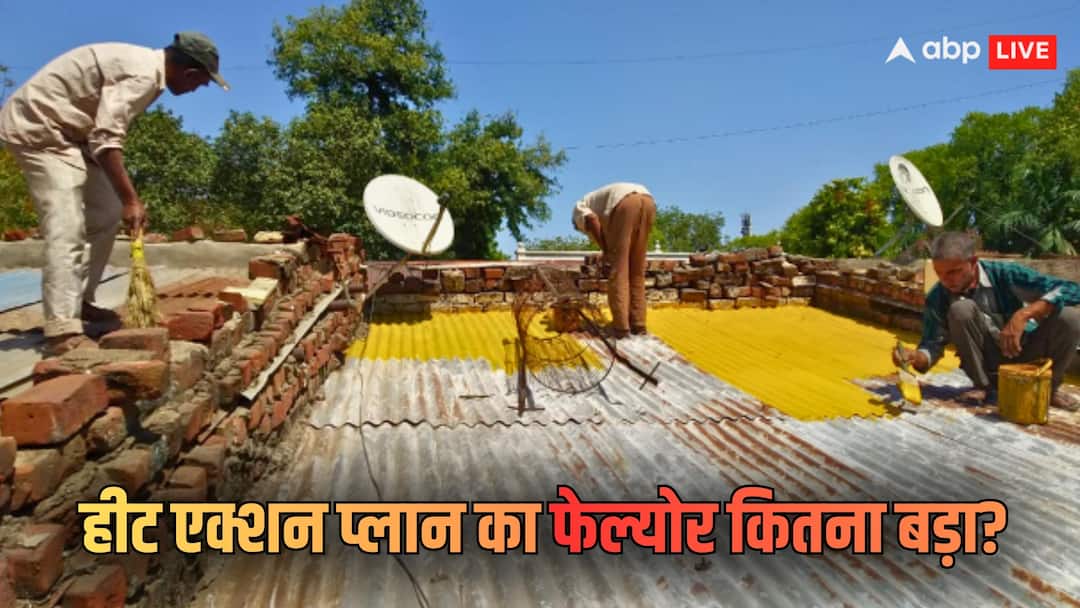
The truth of the ‘Heat Action Plan’ which was started by the government in the year 2016 to save 20 big cities of the country from the scorching heat, is very shocking. Even after ten years, this plan is either incomplete or running only on paper in 19 cities including Jaipur and Bhopal. Ahmedabad is the only city in the entire country which implemented this scheme seriously and created a model. Let’s consider every aspect, so that the picture can be clear…
What is Heat Action Plan and why was it started?
In the year 2016, the government made a special plan for 20 cities like Delhi, Ahmedabad, Indore, Bhopal, Jaipur and Chennai. Its direct objective was to reduce the havoc of heat waves and to ensure that the normal life of cities does not come to a halt even in the scorching heat.
Why is the heat action plan of 19 cities incomplete?
Most cities limited this plan to only some temporary arrangements. 9 important steps were to be taken under the plan, but the ground reality turned out to be different:
- early warning: Issuing heat wave alert 3 to 7 days in advance.
- Health Preparation: Availability of heat stroke wards, additional beds and ORS in hospitals.
- Cooling Centre: Building cold sheds for daily wage laborers and rickshaw pullers.
- Construction Site: Provision of water, rest and shade for the workers.
- awareness: To give information about the symptoms and prevention of heat wave.
- Protection: Conservation of water bodies and green belts.
- Coordination: Coordination between Municipal Corporation, Health Department and disaster management agencies.
- Budget: Creating a strong budget and accountability system.
- Ignoring measures for a long time: No concrete work has been done on long-term beneficial steps like cool roof (painting the roofs of houses white), planting trees to increase the green cover of the city and identifying the most sensitive areas in terms of heat.
Apart from this, focus was placed on temporary arrangements. That is, in most of the cities the work was managed by just setting up pews, issuing advisories to avoid heat and making some temporary arrangements in hospitals. The plan was successful only in Ahmedabad. The remaining 19 cities were ignored.
Different stories of 4 important cities
| City | what did you do | what not done |
| Delhi | A target of 11,000 ‘cooling points’ was set, signs were put up at metro stations and bus stops. | The actual number of cooling centers was much less than the claims. Cool roofs were not made. |
| Bhopal | Instructions were given to make ‘loo wards’ in hospitals. | No concrete plans like shed, cool roof, heat wave alert system or plantation were implemented. The green cover of the city was 66% in 1990, which has now fallen to only 6%. |
| Indore | Loo centers were set up in 12 hospitals and the red light timings at traffic signals were reduced in the afternoon. | Cooling sheds were not installed at sensitive places. Green cover was 33% in 1990, which will reduce to 10% in 2026. |
| Jaipur | Special wards and ORS corners were created in hospitals. Change in construction hours was advised. | Adequate shelters and public cooling stations were not built for the workers. |
Why did only Ahmedabad become the model out of 20?
The concrete steps taken by Ahmedabad, learning lessons after 1200 deaths due to heat wave in 2010, are an example for the entire country:
- Mission Million Tree: Under this, one crore trees were planted and 128 oxygen parks were developed.
- Cool Roofing Campaign: The roofs of more than 15,000 houses and more than 1000 government buildings were painted white, due to which the temperature of the houses reduced by 2 to 5 degrees.
- Strong Budget: Ahmedabad Municipal Corporation, out of its total budget of Rs 15 thousand crore for the financial year 2025-26, kept aside Rs 6 thousand crore only for ‘Climate Action Plan’. This creates a big difference from other cities.
Then what are the reasons for the failure of this plan?
Senior environmentalist Dr. Professor Subhash C. Pandey says that there are several major reasons behind the failure of the schemes:
- Severe shortage of funds: Funding for the Heat Action Plan comes from different departments and is divided into very small pieces. Research by the Indian Institute of Public Health (IIPH) has shown that cities that have formal heat plans have fewer heat deaths, but this is only possible if the plan is accompanied by consistent and adequate funding.
- No disaster status: Heat stress is still not classified as an emergency in India’s disaster management framework, like floods, earthquakes and cyclones. However, the 16th Finance Commission has recommended declaring heat wave a national disaster, which could pave the way for a dedicated central fund.
- Copying of plans: NDMA itself admits that the quality of plans of many cities is uneven and many of them are mere copies of plans of other cities. Even where these plans are sometimes implemented, it is limited to short-term measures such as water kiosks, public consultations and shaded waiting stops at bus stops.
- Structural Weaknesses: Experts say that most heat action plans are just guidance documents on paper. There is a severe lack of continuity and institutional capacity.
According to Subhash C Pandey, although guidelines are issued at the national level, local municipal bodies are neither given adequate budget to implement them nor are dedicated staff provided for this work. The result is that in most cities the Heat Action Plan remains a mere paperwork. Whereas the truth is that the temperature of the city can be reduced by 2-5 degrees through cool roof and by large scale plantation by 3 degrees Celsius in 10-15 years.
What is the status of Heat Action Plan in the states of India?
According to the report of Down to Earth, heat action plans are implemented in more than 250 cities and districts of 23 states, but their reality on the ground is very different.
- Tamil Nadu: The state has declared heatwave a state-level disaster, paving the way for the use of the State Disaster Response Fund for relief operations. Under the state’s urban greenery policy, at least 15% green cover is mandatory in urban areas.
- Maharashtra: Here Amravati Municipal Corporation has made cool roof mandatory for big buildings.
- Uttar Pradesh: The state has adopted heat action plans in most districts and set district-specific temperature limits.
How scary are the heat stroke statistics?
The seriousness of the situation can be understood from the PIB report that the graph of heat stroke cases and deaths is continuously going up:
- 2024: There were 25,000 cases of heat stroke and 56 deaths were recorded.
- 2025: This figure rapidly increased to 40,000 cases and 110 deaths.
- Early 2026: So far, 236 cases and 6 deaths have been registered in Maharashtra alone, which is an indication that the situation will remain serious this year also.
Why the preparation to change the definition of ‘loo’?
In view of the increasing heat and the effect of ‘El Nino’, the Indian Meteorological Department is now preparing for major changes in the rules for declaring ‘heat wave’. Till now heat wave is declared only on the basis of maximum temperature, which is not accurate for coastal states like Kerala. There is a plan to also include humidity and ‘heat stress’ (stress caused by heat on the body) in the new standards. Its advantage will be that correct warning can be given even in those areas where the temperature may be low, but due to humidity the effect of heat is more dangerous.