
 By Admin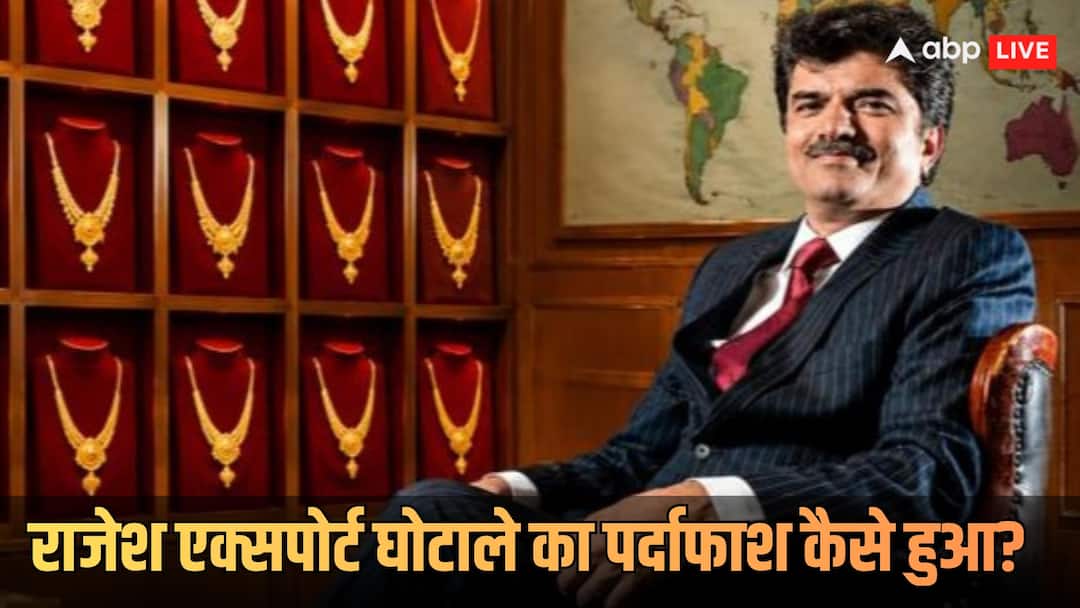
Rajesh Mehta… This name was a brand in the gold market of India. Rajesh Exports was seen as the world’s largest gold refinery and a strong company in the gold business. But in the beginning of June 2026, when SEBI made its investigation report public, this ‘golden brand’ became the face of such a financial fraud. This shook the entire market.
SEBI alleges that the company exaggerated its revenue to Rs 15 lakh crore. This amount is more than the economy of many states. The most surprising thing in this game was that while on one hand most of the mutual funds had distanced themselves from this company in the last ten years, on the other hand, the country’s largest insurance company LIC increased its stake five times to 10.8%. Let us understand in the explainer what is this scam, how did SEBI expose it and what is the role of LIC in this?
What is Rajesh Exports and why was this company so famous?
Rajesh Exports was founded in 1989 by Rajesh Mehta. This company used to call itself a global leader in the business of gold refining, jewelery manufacturing and export. This Bengaluru-based company claimed that it refines about 500 tonnes of gold every year, which is a large part of India’s total gold demand. This company was also a big name in the stock market and at one time its market cap was in thousands of crores of rupees. But for the last few years, questions started being raised about the company’s business. Its share price had fallen from a high of Rs 900 in 2022 to below Rs 30 by 2026. The secret behind this fall in the shares was exposed by SEBI in its investigation.
How SEBI exposed Rs 15 lakh crore financial ‘scam’?
SEBI’s investigation exposed the business model of this company. Investigation found that Rajesh Exports had woven a complex web of fake sales and purchases to artificially increase its revenue. According to SEBI, the company had reported revenue of Rs 3.41 lakh crore in the financial year 2023-24, but in reality 98% of it was on paper.
The company used to buy and sell the same goods again and again, thereby inflating the revenue figures. In this game, many shell companies and related parties were used, through which only bills were prepared without any actual movement of goods.
SEBI caught this entire fraud by examining the financial records of the last ten years. The agency found that between 2014-15 and 2023-24, the company showed a total fake revenue of about Rs 15 lakh crore. SEBI said in its order that the company deliberately misled investors and tried to artificially increase the share price. As a result, SEBI banned top officials of the company including Rajesh Mehta from the stock market and imposed heavy fines.
Why have mutual funds kept their distance from Rajesh Exports in the last 10 years?
This is an interesting aspect of this scam. According to an Indian Express report, most domestic mutual funds avoided investing in Rajesh Exports in the last decade. The reason for this was the continuous questions being raised on the business model of the company. The company showed huge revenues, but its profits were very modest. This glitch was a warning signal for experienced fund managers.
Additionally, the large gap between the company’s share price and its actual performance also raised doubts. The mutual fund industry collectively shunned this company, which shows their wisdom. Although some small funds and portfolio management services had invested in it, overall the bulk of institutional investment stayed away from it.
Why did its stake in LIC increase five times to 10.8%?
While mutual funds were running away from the company, LIC, the country’s largest institutional investor, played the exact opposite bet. According to SEBI report, LIC continuously increased its stake in the last few years and it increased almost five times to 10.8%. The question is, why did LIC do this while other institutional investors were not even touching this share? Many possible reasons emerge for this.
- First, LIC often takes a long-term investment perspective. He hoped that the company’s core business of gold refining would eventually turn profitable.
- Second, LIC may not have thoroughly investigated the company’s financial claims and may have made the same mistake as many retail investors. Relying on big names and big revenue figures.
- Third, some experts also raise questions whether LIC’s investment decisions were based entirely on professional analysis or whether some other pressure was at work. However, LIC has not yet issued any public statement on this matter, but after the huge fall of the stock, LIC has now suffered a huge loss.
What is the wider impact of this scam and what next?
This scam of Rajesh Exports is important in many ways:
- This shows that there are still major shortcomings in the system of corporate governance and audit in India. If a company can show fake revenue of Rs 15 lakh crore for a decade, then questions are raised on the auditors and regulators also.
- This scam is a big lesson for thousands of small investors who buy shares just relying on big names and shiny figures.
- Such a huge investment by a government organization like LIC in this company raises the question whether adequate due diligence was done to safeguard public money.
Experts believe that SEBI’s investigation will continue in the future and it is possible that ED and CBI may also enter this matter. Criminal cases may be filed against Rajesh Mehta and his associates. The shareholders of the company may not get anything now, but this whole episode is a big warning for the financial markets of India. Unless the quality of monitoring and audit improves, such ‘paper’ empires will continue to flourish.