
 By Admin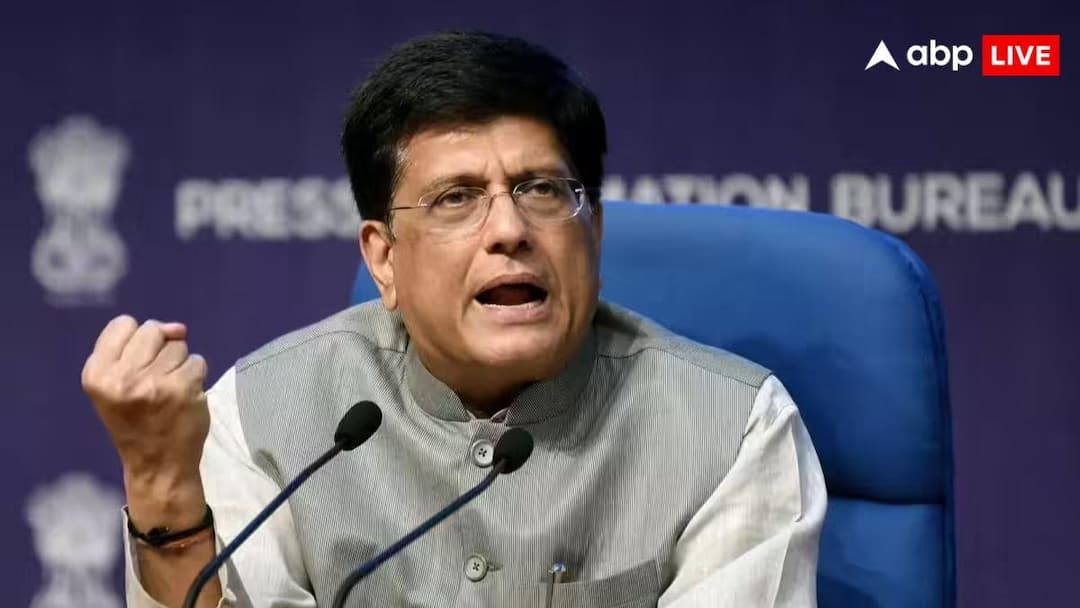
Big news has come out regarding the long proposed bilateral trade deal between India and America. It has been told that this first phase will start only when Washington restores India’s tariff competitiveness compared to competing exporting countries.
In this matter, Union Minister Piyush Goyal said on Wednesday, ‘The agreement reached between the two countries was based on the fact that India should get comparative advantage compared to competing economies including neighboring countries and countries in the ASEAN region. Once this condition is met, the agreement will come into force.
Speaking to reporters, Goyal said, ‘I have clearly and repeatedly expressed confidence that the first phase of the bilateral trade deal that we finalized with the US, which was announced by our leaders on February 3, will be implemented only if the US can ensure that we have an advantage over our competitors. These include countries in our neighborhood, countries in the ASEAN region and other countries with whom we compete.
He said. ‘India is confident of increasing its exports to the American market. Provided that its treatment in terms of tariff is favorable or at par with competing countries. He said that as long as we continue to have comparative advantage, I think India will continue to increase its exports. Will continue to take advantage of America’s big opportunity.
He said India had participated in the investigation under Section 301 of the Office of the United States Trade Representative related to labor concerns. Under that investigation, America has imposed 10 percent tariff on India.
All eyes fixed on a legislative proposal of the US administration
This statement of the minister has come at a time when all eyes are on a legislative proposal of the US administration. Under this, tariffs can be imposed on countries purchasing Russian energy. Introduced in the US Senate Lindsey O’Graham Sanctioning Russia and Iran Act of 2026 Under this, the US President will have the right to impose tariffs up to 100 percent on imports from major buyers of Russian crude oil and natural gas.
However, the proposed law will not automatically impose tariffs. Under Section 113, Trump will have the discretionary power to decide whether to impose tariffs or not. To which countries will this apply? What will be the tariff rate? This proposal has come at a time when the supply of crude oil from Hormuz has been disrupted due to the US-Iran conflict.