
 By Admin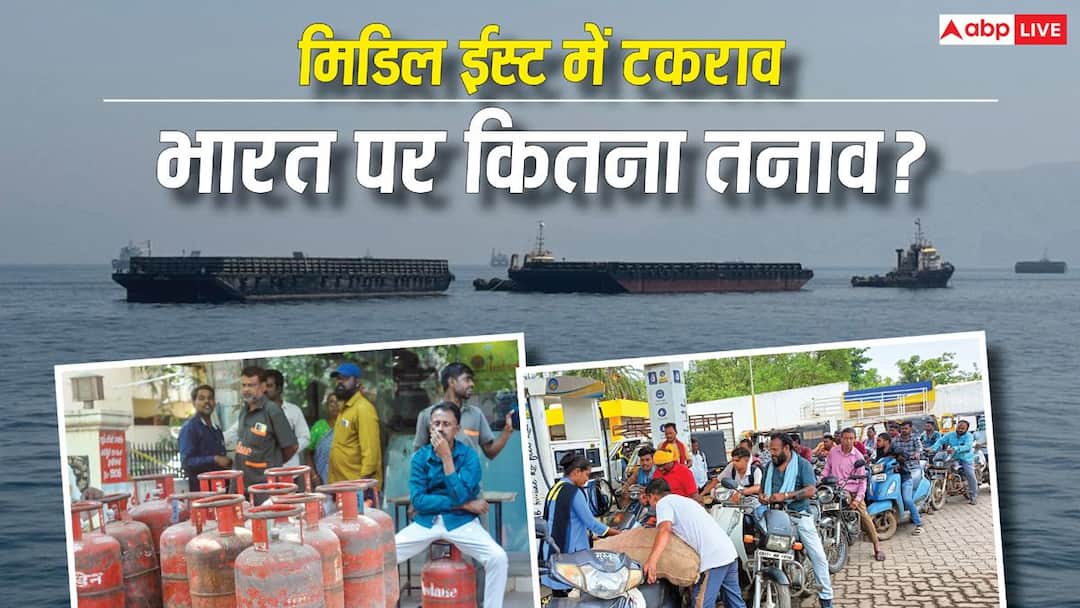
The ceasefire between America and Iran three weeks ago has now been broken. US President Donald Trump has made it clear that the ceasefire is over. After this, the US Army attacked more than 80 military bases of Iran while Iran also targeted American bases in Bahrain and Kuwait. The impact of this conflict is no longer limited to West Asia only. The eyes of the world are fixed on the oil market and the Strait of Hormuz because it will be decided from here in which direction the global economy will go in the coming days.
This period is also very important for India. The reason is not just oil but inflation, movement of rupee, LPG, stock market and festive season. America has now said that it will end the agreement made in June and now the next 40 days will decide whether the situation will become normal or the tension will increase further. If the situation worsens, it can have a direct impact on the pockets of the common man of India.
First front- Will petrol and diesel become expensive?
During the ceasefire, Brent crude had come down to $ 69-70 per barrel, but after increasing tension, it has again crossed $ 78 per barrel, that is, in a few days the price of crude oil has increased by about 7 percent. India imports about 85 percent of its crude oil requirement, hence every surge in the international market affects India.
At present the prices of petrol and diesel are stable in the country. Petrol is being sold at Rs 102.12 per liter in Delhi, but energy experts believe that if Brent crude remains between 75 to 78 dollars, then the pressure on oil companies to increase prices may increase in the next two to four weeks. If the prices reach 85 to 90 dollars per barrel then the possibility of fuel becoming expensive will increase further.
Second Front- Why is the Strait of Hormuz the biggest concern?
About 20 percent of the world’s maritime oil trade passes through the Strait of Hormuz. This is the reason why the increased tension on this sea route has become a concern for the whole world. India has changed its strategy in the last few years. Now about 70 percent of the country’s crude oil comes from alternative sources outside Hormuz, whereas earlier this share was about 55 percent, but according to experts, the real concern is about LPG and LNG.
Their supply is still largely dependent on the Gulf region. If the movement of ships in Hormuz is affected then the cost of LPG, CNG and PNG may be affected. Apart from this, increase in cost of marine insurance and shipping may also affect the prices of other imported goods.
Third Front- How much impact on inflation and rupee?
Expensive oil is not limited to petrol pumps only. India has to spend more dollars to buy oil. This increases pressure on the rupee. On Wednesday, the rupee fell by about 60 paise and closed at 95.56 per dollar, which was the weakest level in almost a month. Weak rupee makes electronics, edible oil, machinery and other imported goods expensive. Its effect is gradually visible on inflation also. The festive season starts in August and September. During this period the demand in the market increases. If oil remains expensive till that time and the rupee remains weak, then inflationary pressure may increase before the festivals.
Fourth Front- Why keep an eye on the stock market?
The effect of stress has also been visible in the stock market. Sensex fell by 1,677 points, investors’ wealth decreased by about Rs 9 lakh crore and India VIX registered a rise of about 30 percent. Experts say that the market will keep an eye on three things in the next 40 days. First- In which direction does the US-Iran tension go? Second- What decision does the US Federal Reserve take in July? Third- By mid-August, talks between the two countries progress or break down completely. If there is no relief on these fronts, market fluctuations may increase further.
Why are the next 40 days important for India?
India has definitely strengthened its position by increasing the sources of oil imports but it is not completely secure. If the tension subsides, the Strait of Hormuz remains open and crude oil again falls below 75 dollars per barrel, then India can get relief, but if the war continues for a long time and the supply is affected and oil reaches above 85-90 dollars per barrel, then its impact will not be limited to petrol and diesel only.
Pressure may increase on every front like LPG, CNG, inflation, rupee and stock market. That is, this conflict that broke out in West Asia is certainly thousands of kilometers away, but the next 40 days will decide how expensive oil will be in India, how much inflation will increase and how much burden it will put on the pockets of the common man.