
 By Admin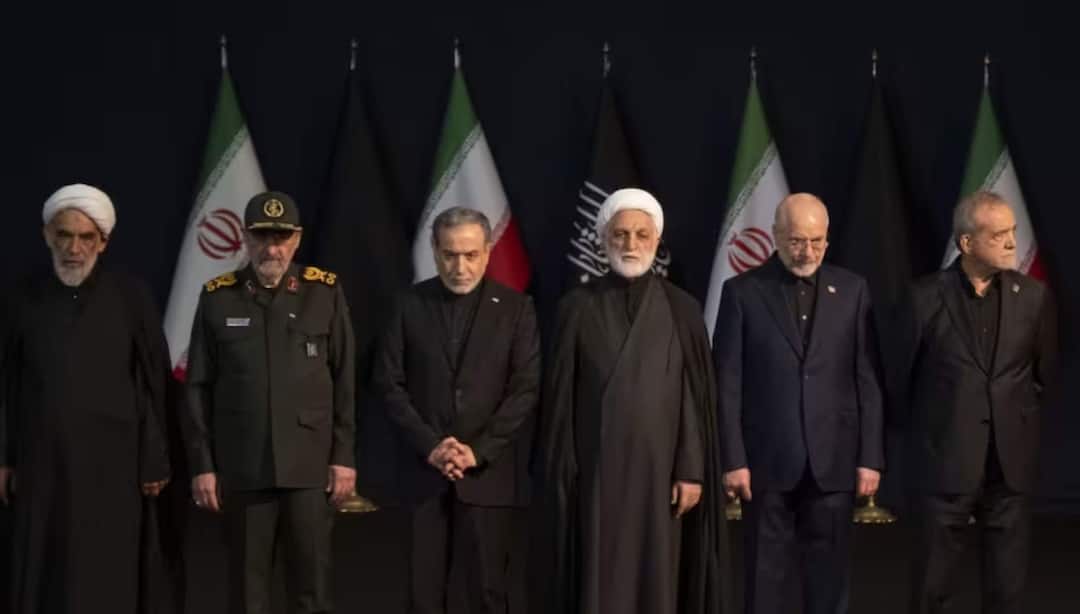
Iran Power Struggle: After the death of Iran’s supreme leader Ali Khamenei, political instability is deepening in the country. The continued public absence of new supreme leader Mojtaba Khamenei has intensified speculation about power. Meanwhile, fundamentalist factions are accusing President Massoud Pejeshkian, Parliament Speaker Mohammad Bagher Ghalibaf and Foreign Minister Abbas Araghchi of compromising with Khamenei’s policies by making an agreement with America and conspiring to seize power.
Protest was seen only in the last journey
The atmosphere became tense during Ali Khamenei’s funeral procession when the crowd chanted slogans such as “Down with the compromiser” against President Pezeshkian. At the same time, stones were thrown at Foreign Minister Abbas Araghchi and there were protests calling him a “traitor”. Araghchi had to leave the program midway. Fundamentalists allege that the ceasefire and sanctions relief agreement with America is against Iran’s revolutionary ideology.
Also read: After the increase in the price of crude oil, the central government took a big decision, increased the windfall tax on diesel and ATF.
Speculation increased due to the absence of Mojtaba Khamenei
The new supreme leader Mojtaba Khamenei has not yet appeared in public. Fundamentalists are raising questions about his silence and absence. They allege that Presidents Pejeshkian, Ghalibaf and Araghchi are taking decisions at their own level, ignoring the instructions of the Supreme Leader. Some leaders have even termed it a “political coup”.
Government on target of radicals
Radical MP Mahmoud Nabavian claimed on social media that a coup plot is underway in the country. Another MP Kamran Ghazanfari alleged that the government is trying to make the National Security Council more powerful by weakening the role of the Supreme Leader and Parliament.
Open threat to the President
The tension increased further when Mohammed Ali Bakshi, a religious singer associated with the security establishment, warned President Pezeshkian from a public platform that if the supreme leader’s conditions were not met, there would be serious consequences. However, no legal action has been taken yet on this statement.
Tension increased after the ceasefire broke
After the breakdown of the ceasefire between America and Iran, political differences have deepened. After Iranian action in the Strait of Hormuz, America retaliated, after which the fundamentalist faction started demanding to completely end the agreement and intensify military action against America and Israel.
Efforts to reduce the influence of fundamentalists
However, in recent times the government has also started limiting the influence of fundamentalist leaders. Mahmoud Nabavian has been removed from the National Security Committee of Parliament. Experts believe that the current leadership wants to maintain political control in the country by reducing the influence of fundamentalist groups. Despite this, the tension and uncertainty within Iran’s power is continuously increasing.