
 By Admin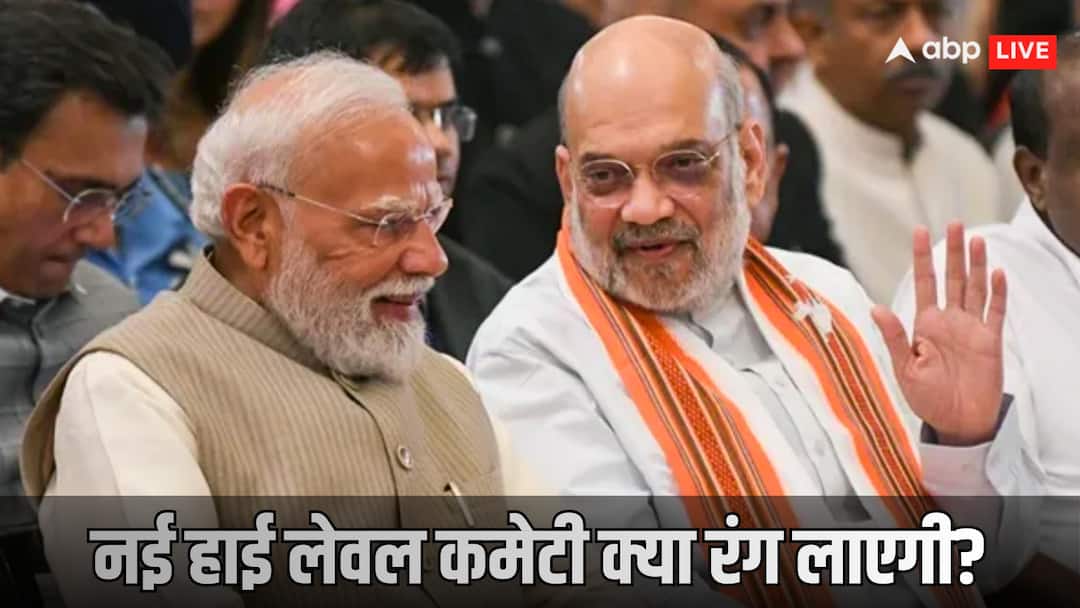
Understand, you live in your own house. Initially there were only a few people in the family, then gradually neighbors and relatives kept coming and one day you felt that the entire atmosphere of the house had changed. A similar situation is happening in our entire country, at least the government feels so. The government says that the structure of the country’s population is changing very rapidly and the biggest reason for this change is deliberate infiltration. To investigate this entire issue, the government has formed a special team, whose name is High-Level Committee on Demographic Change. After all, what is this committee, who are in it and what will be the impact on the common man?
What the hell is this committee?
This is not a court or parliament. Understand it like this, the government has set up an ‘official inquiry’ to investigate the changing face of the country. This team will tour the entire country, collect data and find out how the population structure is changing in which areas. After this, it will tell the government what to do next, so that the country’s security, law and order and social structure remain strong.
Who is in this team?
This team is not very big, but its members come from very strong backgrounds. There are total 6 people who have been entrusted with this responsibility:
- Team Head (President): Senior retired Justice of the Supreme Court Prakash Prabhakar Navalekar.
- Member: Mrityunjay Kumar Narayan. He is the Census Commissioner of our country, which means he keeps the accounts of the entire population of the country.
- Member: Durga Shankar Mishra. He is a retired IAS officer and has deep experience in matters of administration.
- Member: Balaji Srivastava. He is a retired IPS officer, the issues of investigation and security are in his hands.
- Member: Dr. Shamika Ravi. She is a well-known economist, who understands the data and the economy behind it very well.
- Member Secretary: Joint Secretary (Foreigners-I) of the Ministry of Home Affairs. These members look after the work of helping everyone in the team and keeping the entire proceedings smooth.
What powers and tasks are in the hands of this committee?
The government has not sent this committee empty handed. It has been entrusted with 5 major tasks:
- Complete calculation: This committee will closely assess the changes in population structure in every corner of the country due to illegal infiltration and other unusual reasons.
- Finding Pattern: To see whether there is any special pattern or pattern in the proportion of population changing in different religions and social communities.
- Getting to the root: Not just superficially, but the real reason behind this change will have to be solved by going to the bottom of the whole mystery.
- Suggest route: Once a complete investigation is done, a concrete, phased and time-bound blueprint will have to be prepared to deal with these changes.
- Suggesting new solutions: If necessary, to give suggestions to the government as to whether new laws may have to be made, what new policies have to be brought and what changes have to be made at the administrative level.
Was any such committee formed earlier also?
Yes, this is not the first time that the government has paid attention to the issue of population. Even before this, two big steps have been taken, which are important to mention:
- National Population Commission (NCP, 2000): The then Prime Minister Atal Bihari Vajpayee had constituted this huge commission, which had more than 100 members. Its job was to implement and monitor the ‘National Population Policy 2000’, so that the increasing population of the country could be stabilized in a voluntary manner.
- Prime Minister’s Economic Advisory Council (PM-EAC) Report, 2024: A very popular report came out, titled ‘Share of Religious Minorities: A Cross Country Analysis’. This was not a committee, but a deep study. According to this, between 1950 and 2015, the proportion of Hindu population in India decreased by 7.82%, while the proportion of Muslim population increased from 9.84% to 14.09%.
What has the government said so far on population change?
The government and its institutions have from time to time expressed concern over the changing face of the population:
1. Highlights of PM-EAC Report, 2024
- Data for 65 years from 1950-2015 showed that the proportion of majority Hindu population in the country has continuously decreased.
- There is a ‘favorable environment’ for minorities to live in India, which could be a reason for the increase in their population.
- In India’s neighboring countries like Pakistan and Bangladesh, the proportion of majority population has increased, while the number of minorities has declined drastically. This trend is completely opposite in India.
2. Approach to National Population Policy 2000
- The entire emphasis of this policy was on motivating people to have smaller families through family planning, better health services and education. There was no place for any kind of coercion in this.
3. Support of census data
- The government has also been presenting local level figures to prove its point. For example, the example of Santhal Pargana area of Jharkhand is given. The tribal population there declined from 45% to only 27% between 1951 and 2011, while during the same period there was a massive increase of 13% in the Muslim population.
Now on whom will this committee focus the most?
This committee will assess the entire country, but it is clear from the government’s statements and the committee’s work that its full emphasis will be on which issues and areas:
- Illegal Infiltrators: The Home Minister has clearly said that the population change taking place due to infiltration is a big challenge.
- Special attention on border states: The states which share borders with other countries will be at the center of this investigation. Among these, Assam and West Bengal are at the top because they are adjacent to Bangladesh. The situation in the entire North-Eastern states will also be closely watched. Jammu and Kashmir is also included in this list.
- Assessment of different religions and communities: The committee has been directly instructed to investigate the ‘abnormal changes’ taking place at the level of religious and social communities. Therefore, their focus will be on why and how the population of a particular community is changing rapidly in an area.
Can something like a special zone be created?
Experts believe that this question is in everyone’s mind, and its answer is not completely clear yet:
- No templates yet: The government has not yet mentioned any scheme like creating ‘Special Zone’ in any of its announcements. These are just the questions arising in people’s minds right now.
- But it is possible: Since one of the major functions of the committee is to suggest ‘new legal and administrative measures’, there is every possibility that in its future report it may definitely recommend some special arrangement or some scheme like ‘Special Zone’ for those areas which are most affected by demographic change. But all these are things hidden in the future. The whole picture will be clear only when the committee submits its report and the government takes some action on it.