
 By Admin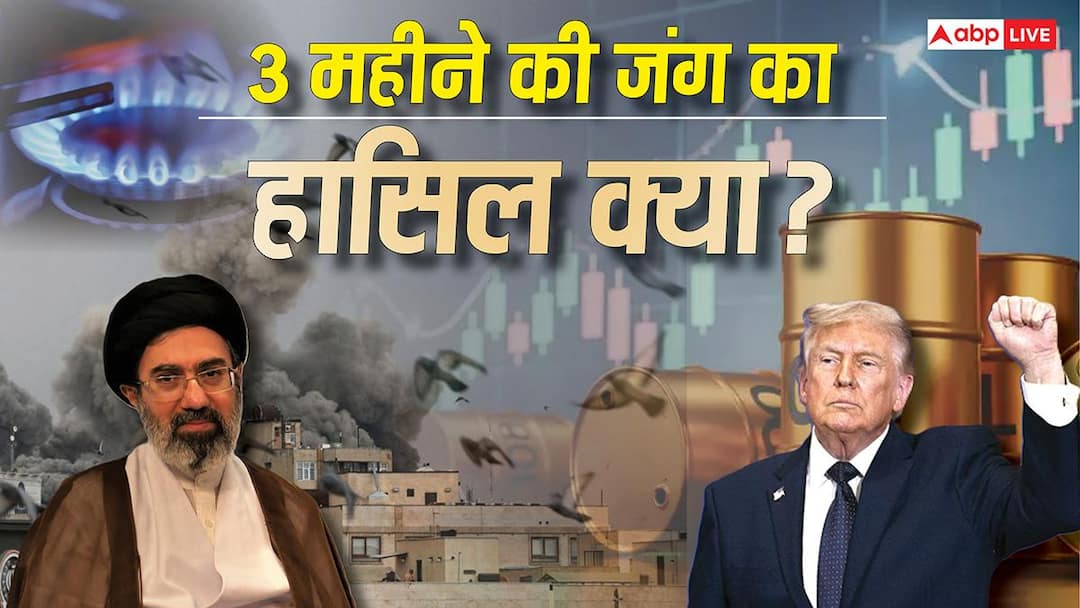
Today, 88 days have passed since the Iran-America war. On one hand in Doha, American and Iranian negotiators are tussling over the details of the peace agreement, while on the other hand, the US Central Command (CENTCOM) has launched new attacks on missile bases and mine-laying boats in southern Iran. Iran says that America ‘violated the ceasefire’ and it is ready to give a ‘heavy response’ to it. The Strait of Hormuz is still closed, oil prices are hovering around $100 per barrel and the IMF has warned that if the war continues, the world could fall into recession. Let us understand how this war changed the map of the world in the last three months…
February 28: When everything changed overnight
On February 28, 2026, American and Israeli fighter planes together attacked Iran. Rockets, missiles and drones started raining simultaneously on big cities like Tehran, Kermanshah, Tabriz, Qom and Isfahan. US President Donald Trump himself announced by releasing a video on social media, ‘We have started a major military operation on Iran.’ The White House argued that Iran’s nuclear program and missile system had become a direct threat to American security.
But what Trump was considering as ‘a short and victorious war’, turned into a regional storm in three months that broke everyone’s back, from the oil supply chain to the common man’s kitchen. According to BBC report, there were three big explosions in the downtown area of Iran’s capital Tehran, the sound of which was heard several kilometers away.
Iran gave a befitting reply
Iran was also not one to remain silent. Its elite Revolutionary Guards (IRGC) immediately retaliated and fired missiles and drones at US military bases in Bahrain, Jordan, Qatar, Kuwait, UAE and Saudi Arabia. According to the US Defense Department, America has so far targeted more than 10,000 Iranian military targets, while Israel has hit more than 3,000 targets. On the other hand, Iran claims that it has retaliated more than 87 times so far.
This war engulfed Lebanon, Yemen, Iraq, Syria and the entire Gulf region. According to Al Jazeera, by May 20, 2026, 3,468 people had been killed and more than 26,500 injured in Iran alone. In Lebanon, 3,042 people died and more than 9,300 were injured. 26 soldiers in Israel, 13 in America and more than 12 in Gulf countries lost their lives.
Hormuz blockade and crazy oil prices
The biggest and most immediately visible impact of this war was on the Strait of Hormuz. This is a narrow sea route, but about 20% of the world’s sea oil passes through it. According to the US Energy Information Administration (EIA), about 20.9 million barrels of oil would pass through this route daily in the first half of 2025.
Iran blockaded this route in the initial days of the war, after which the oil supply chain was completely disrupted. According to data from trade intelligence firm Kpler, only 144 commercial ships passed through Hormuz between March 1 and March 23, a massive 95% drop from before the war. As a result, the price of Brent crude jumped to $ 138 per barrel in late April. At present, on May 27, it is hovering around $100. According to EIA, production of about 10.5 million barrels per day of Iraq, Saudi Arabia, Kuwait, UAE, Qatar and Bahrain came to a standstill in April.
‘Perfect storm’ for India
India imports more than 85% of its crude oil needs and was worst hit by this war. The blockade of Hormuz directly hit India’s supply line. Constrained, Indian refineries turned to Africa and Latin America and started buying oil from Nigeria, Angola, Brazil and Venezuela. Not only this, after getting a temporary exemption from America, India also started buying crude directly from Iran for the first time after seven years. But this did not bring relief.
The burden of rising oil prices in the international market has finally fallen on the common Indian consumer. Government oil companies (OMCs) increased the prices of petrol and diesel for the fourth consecutive time in May 2026. In Delhi, petrol crossed Rs 102.12 per liter and diesel crossed Rs 95.20 per liter. ONGC Director (Exploration) Sushma Rawat told ANI, ‘The government gave relief to the public for 75 days, during which the price was not increased. But oil companies were incurring losses of around Rs 1,000 crore every day. How long can this be tolerated?’
Expensive oil also broke the back of the rupee. The rupee has continuously weakened against the dollar since the war started. According to media reports, the rupee has fallen by more than 7% so far in 2026 and on May 27 it reached the level of 95.75. Experts say that it may soon cross 100.
Shattering world: Crack in NATO, China’s advantage
This war has once again divided the countries of the world into two camps. On one side is America, which expected open support from its NATO allies, but exactly the opposite happened. Powerful European countries like France, Germany, Italy, Spain and Poland clearly refused to support America in this war. Spain did not even allow American fighter planes to use its airspace. Due to this resentment, the Trump administration has even threatened to take action against these ‘incompetent’ associates.
On the other side are China and Russia. China, which is already the largest buyer of Iranian oil, seems to be benefiting from this crisis as well. It is continuously buying oil from Iran at huge discounts and is challenging the supremacy of the dollar by paying through Yuan or barter system. Experts believe that the longer this war continues, the more China’s bargaining power will increase.
Fear of brakes and recession on the economy
The International Monetary Fund (IMF) had warned in April that if this war continues any longer, the world could enter a recession. Even in its most optimistic estimate, the IMF has reduced global growth forecast for 2026 to 3.1%. But in the second picture, global growth may fall to 2% and inflation may go above 6%.
The International Energy Agency (IEA) says that more than 80 energy facilities have been damaged during the war and their recovery may take up to 2 years. The IEA has also warned that even if the war ends next month, the oil market will remain ‘severely undersupplied’ until October 2026.
According to IMF, Iran’s GDP alone may shrink by 6.1% this year. At the same time, the economies of Gulf countries like Qatar (8.6%), Iraq (6.8%), Kuwait (0.6%) and Bahrain (0.5%) are also expected to be adversely affected.
A fragile compromise or towards disaster?
Dr. Prosenjit Biswas, expert on foreign affairs and professor of NEHU, says, ‘After 87 days of this conflict, now efforts for peace are intensified from both the sides. A delicate agreement is being negotiated in Qatar’s capital Doha, under which the Strait of Hormuz will be gradually opened and America will remove its naval blockade. In return, Iran would get access to billions of dollars of its frozen assets and be allowed to export limited oil. The most important issue is Iran’s nuclear program, in which Tehran can surrender its highly enriched uranium within 60 days.
On May 27, 2026, the US military once again carried out ‘defensive attacks’ in southern Iran, in which missile launch sites and mine-laying boats were targeted. Iran has warned of a strong response, calling it a ‘blatant violation of the ceasefire’.
US Secretary of State Marco Rubio said during his visit to India that ‘it may take a few more days for the deal to be made.’ At the same time, Iran’s Supreme Leader Mujtaba Khamenei says that ‘the hands of the clock cannot be turned back.’ Trump himself wrote on social media, ‘Either there will be a good deal or we will have to deal with it in another way.’
The world is watching with bated breath. At what point will this war, which has shown the reality of the price of oil and the division of the world, finally stop? At present the answer to this question is hidden in the waves of Hormuz itself.